

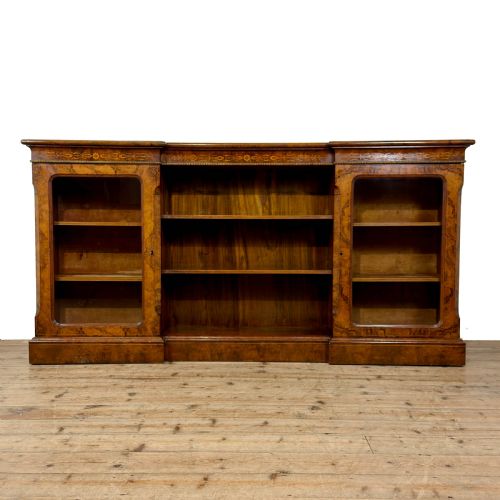
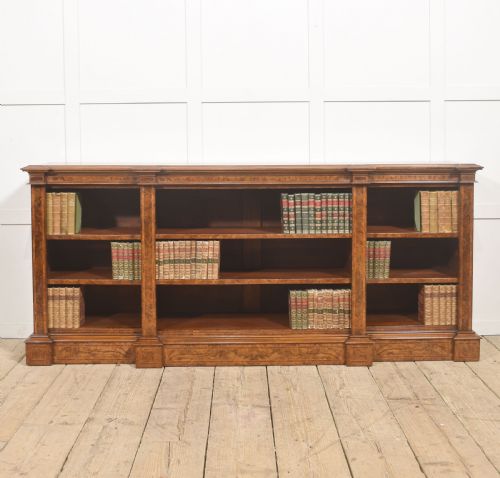

Low Burr Walnut Bookcase
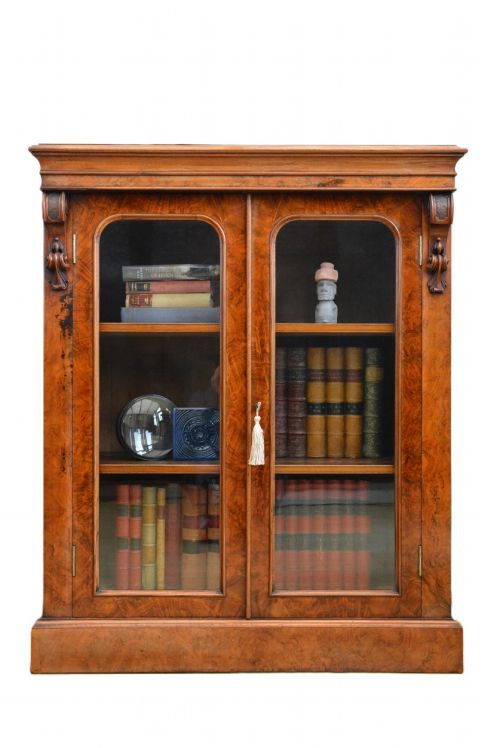
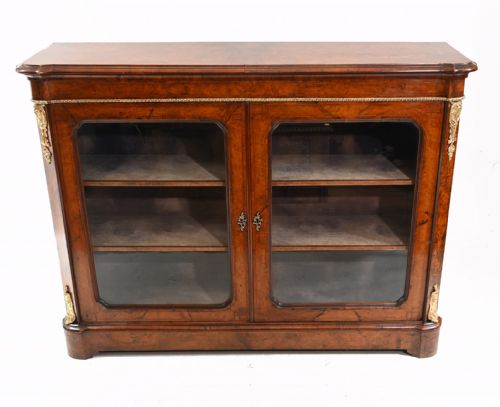
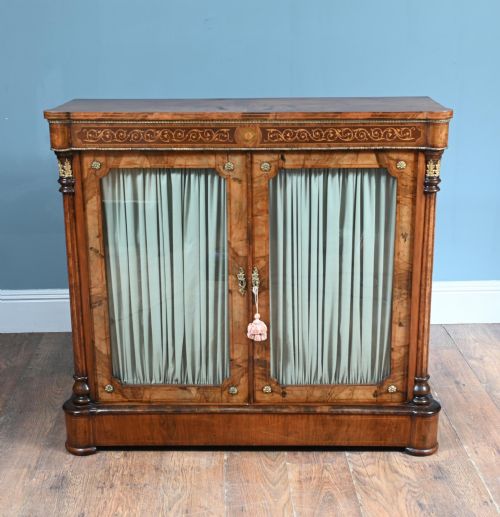
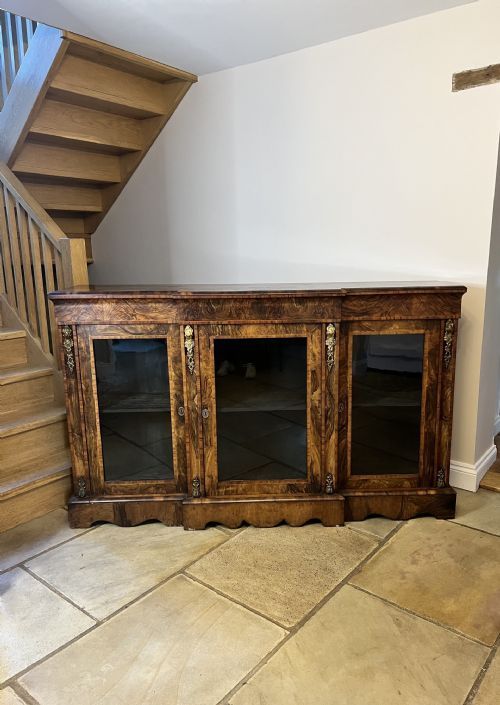
A low burr walnut bookcase brings figured timber and compact display space together, drawing the eye with rich grain patterns.
Low Burr Walnut Bookcase
When you search for a low burr walnut bookcase, you encounter compact library storage and display furniture designed to sit low in a room. These pieces appear primarily in Victorian and nineteenth-century forms, alongside later revivals and twentieth-century interpretations.
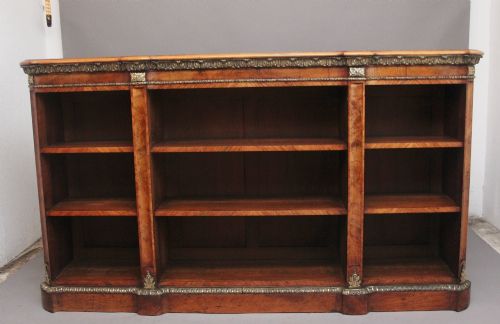
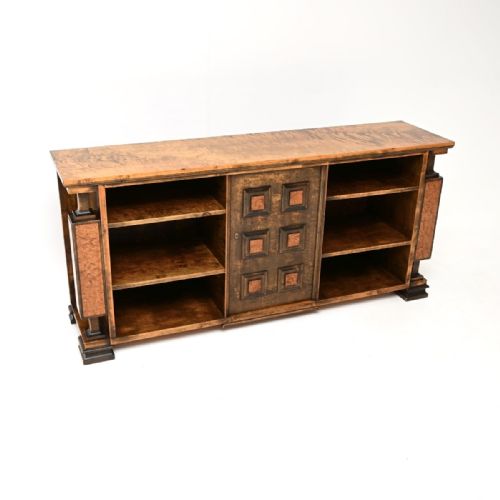
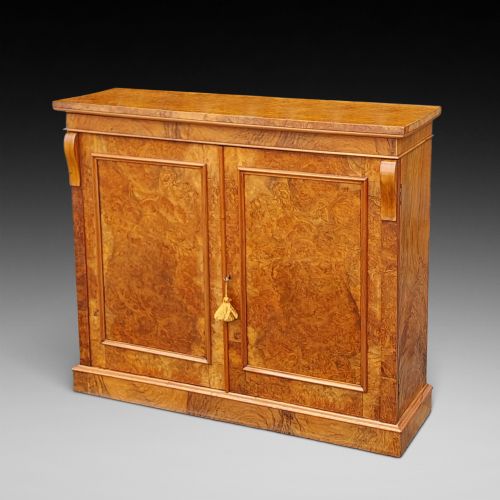
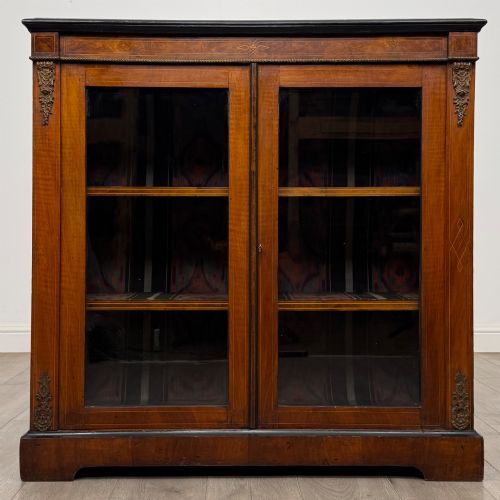
The material takes centre stage through figured and burr walnut veneers, sometimes paired with amboyna, satin birch or plain walnut carcases. Makers shaped these timbers into open bookcases, breakfront library cabinets, glazed pier cabinets and side pieces fitted with adjustable shelves.
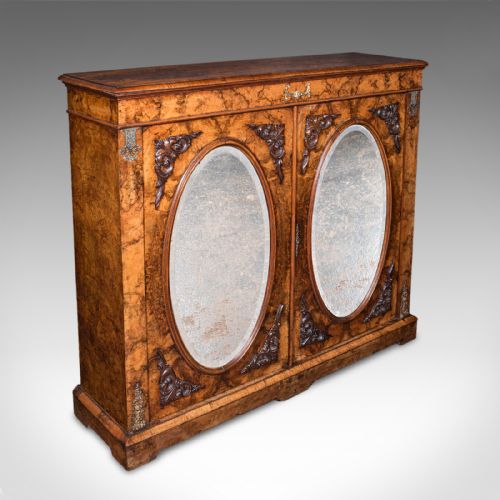
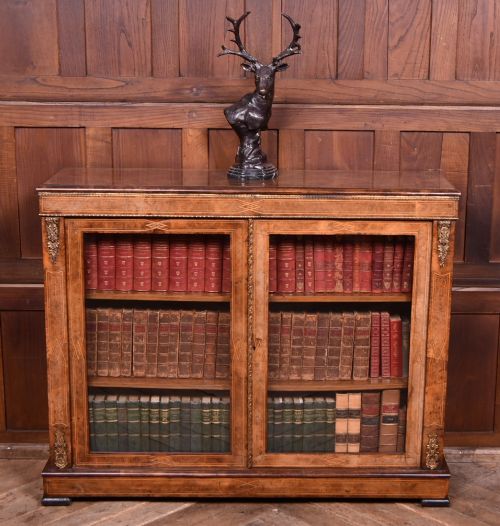
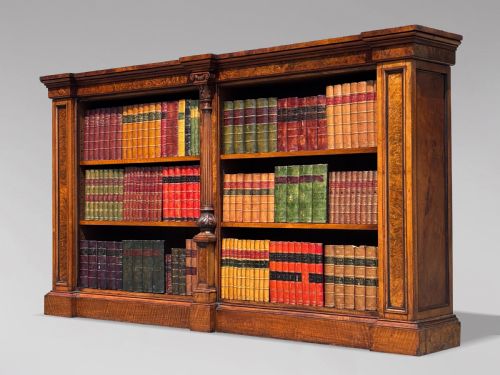
Victorian examples dominate the selection, offering breakfront proportions, marquetry inlay, and gilt metal or ormolu mounts. Alongside open shelf versions, you will find glazed doors, mirror fronts and lower cupboard sections designed for domestic display and storage.
How They Were Made
Cabinet makers utilised decorative burr and figured walnut veneers applied over solid timber carcases to create complex, swirling grain patterns across the front surfaces. Crossbanding in boxwood or other contrasting timbers often framed these panels, adding geometric definition to doors and friezes.
Construction frequently incorporated brass hardware, ormolu mounts, and gilt metal detailing to accent breakfront cornices and pilasters. Glazed doors utilised timber framing to protect books, while marble tops appeared on certain side cabinets of the period.
Materials recorded across the inventory include ormolu, brass, velvet, boxwood, marble, and satin birch.
What Varies in Quality
Quality rests heavily on the selection and matching of the burr walnut veneer across the primary surfaces. Finer pieces display symmetrical grain patterns that flow evenly across drawers and doors, whereas simpler examples rely on standard figured timber.
The crispness of marquetry inlay, the weight of brass or ormolu mounts, and the integration of secondary woods like satin birch separate standard production from exceptional cabinet work. Subtle details, such as finely rebated shelving and well-fitted glazed doors, distinguish the cabinet maker's hand.
Johnstone and Jeanes·Waring and Gillow·Gillows of Lancaster·Gillows
The Low Burr Walnut Bookcase Glossary
- Burr walnut
- A veneer taken from the gnarled growth or root of a walnut tree, prized for its swirling, highly figured grain patterns.
- Breakfront
- A cabinet design where the central section projects forward from the flanking wings, creating visual depth.
- Pier cabinet
- A narrow display cabinet designed specifically to fit the wall space between windows.
- Marquetry
- Decorative inlay work using various coloured woods to form pictorial or geometric patterns on the surface.
- Ormolu
- Gilded bronze ornamentation applied to furniture mounts, corners and cornices during the nineteenth century.
Low Burr Walnut Bookcase: Frequently Asked Questions
What rooms suit a low burr walnut bookcase?
These compact bookcases fit neatly into sitting rooms, studies and hallways where full-height library shelving would overwhelm the proportions. Their low profile leaves wall space free above for art or mirrors while keeping books at a comfortable reach.
The figured timber grain adds warmth and visual interest to domestic interiors, pairing easily with traditional and eclectic room schemes. Many examples incorporate glass doors or open shelves that serve equally well for display.
How do I date a burr walnut bookcase?
Dating relies on combining the stylistic period, construction methods, and secondary timbers visible inside the carcase. Victorian pieces often feature specific Victorian proportions and marquetry, while later revivals adopt Queen Anne or Regency styling cues.
Examining the backboards, drawer linings, and shelf supports reveals the manufacturing era. Nineteenth-century examples generally employ hand-cut dovetails and native secondary woods before later machine production methods emerged.
Are shelves adjustable on antique bookcases?
Many nineteenth-century and later bookcases feature adjustable wooden shelving supported by wooden ratchets or metal pins. This adaptability allowed owners to alter shelf heights to accommodate volumes of varying sizes.
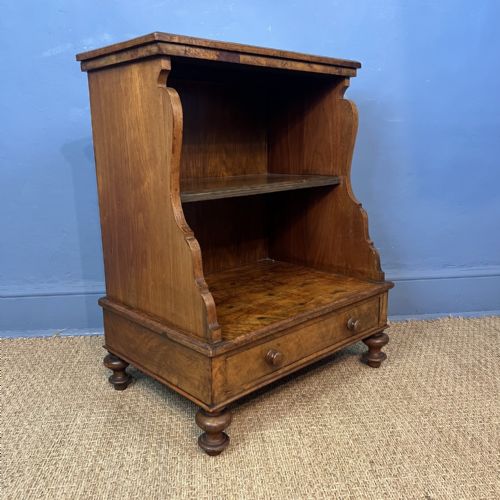
Some simpler or earlier open formats featured fixed shelves integrated directly into the vertical uprights during original construction. Checking the interior reveals whether the current shelf placement reflects the original design.
What is the difference between open and glazed bookcases?
Open bookcases provide direct, barrier-free access to books and present an open, architectural front to the room. They emphasise the arrangement of book spines and the craftsmanship of the inner carcase.
Glazed versions enclose the contents behind glass doors, protecting delicate bindings from dust and ambient moisture in the room. This enclosed format often incorporates lockable doors and more elaborate marquetry or ormolu decoration.