

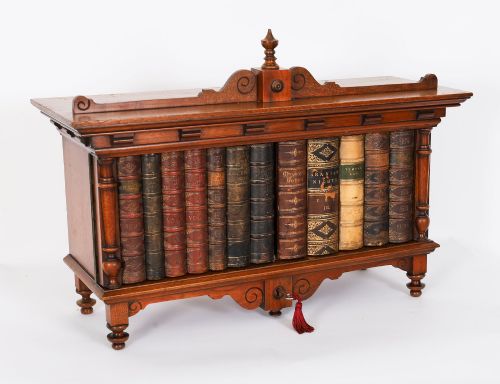
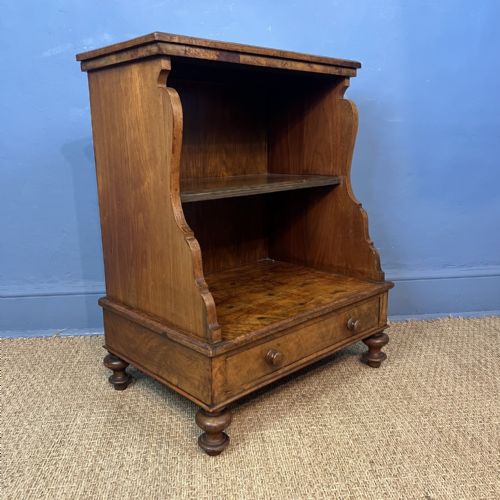


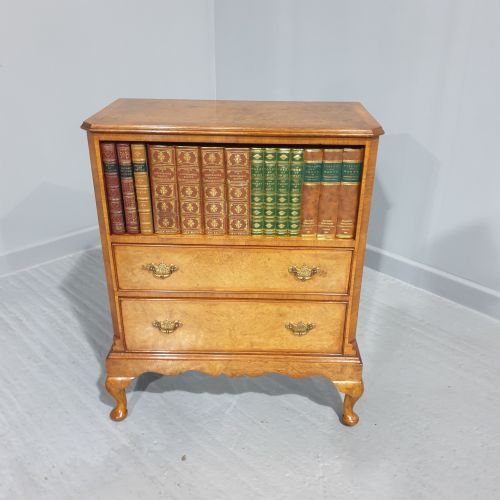


Small Walnut Book Cabinet
A small walnut book cabinet brings compact warmth and rich timber figure to an interior, housing favourite volumes within a restrained footprint.
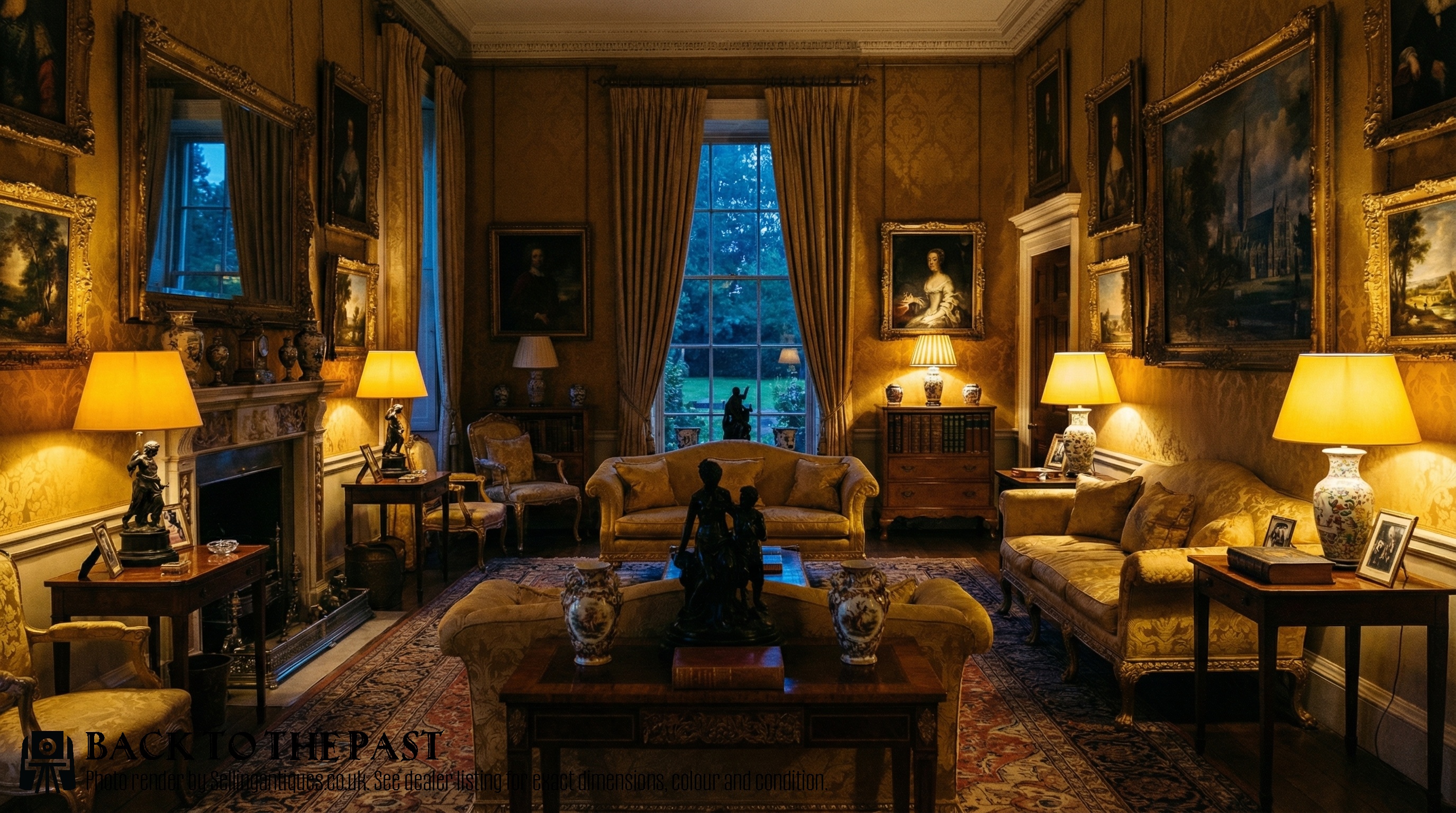
Small Walnut Book Cabinet
When buyers search for a small walnut book cabinet, they encounter pieces designed to store modest collections while serving as refined furniture in smaller rooms. The forms span open bookcases, low cabinets, glazed display pieces, and tabletop collectors' variants across Victorian, Edwardian, and later twentieth-century periods.
The versions most commonly met on this page include nineteenth-century pier cabinets, low open bookcases, and compact break-front examples. These pieces originate from British and French workshops, combining practical shelving with the decorative grain characteristic of walnut.
Makers and cabinetmakers utilised the dense timber to create functional storage that suited domestic sitting rooms and studies. The surviving examples demonstrate how modest proportions were achieved without sacrificing architectural detail or stability.
Materials and construction
Construction relies upon solid walnut and applied veneers, particularly burr and figured walnut, chosen for their lively grain patterns. Workshops employed cabinet-making techniques such as parquetry, hand carving, and precise joinery to shape open shelves, glazed doors, and fitted drawers.
Secondary elements include brass hardware, glass panels for display doors, leather accents, and ebonised wood details for contrast. These materials are combined to balance structural rigidity with decorative surface finish.
Small Walnut Book Cabinet Retail Price Guide 2026
Typical asking prices for small walnut book cabinet among the pieces listed under this phrase on Sellingantiques today, from the lower quarter to the upper quarter. They describe what is for sale here now, not the wider market.
Some nineteenth-century makers cleverly concealed tiny fitted drawers behind the lowest shelf for secret storage.
Distinctions in quality
Quality rests upon the selection and matching of walnut veneer, where symmetrical figuring across a break-front or door panel elevates the visual impact of the piece. The choice of timber, whether straight-grained walnut or highly figured burr, dictates the decorative ambition of the cabinet.
Refinement is further seen in the execution of hand carving, inlaid details, and the integration of functional elements like drawers and adjustable shelving. Superior examples maintain crisp architectural lines and balanced proportions regardless of their modest scale.
The Small Walnut Book Cabinet Glossary
- Burr walnut
- A veneer sliced from a tree growth, producing a swirling, highly decorative grain pattern. It was frequently used on principal surfaces of nineteenth-century cabinets.
- Pier cabinet
- A narrow cabinet designed to fit against the wall space between windows. These pieces often feature glass doors for displaying books or objects.
- Break-front
- A cabinet facade where the central section projects forward from the flanking sections. This technique adds depth and classical proportion to smaller bookcases.
- Parquetry
- Geometric wood mosaic work used for decorative surfaces on tabletops and cabinet panels. It relies on precise cutting of contrasting timber tiles.
- Ebonised wood
- Timber treated to imitate ebony, providing dark contrast against the warm brown tones of walnut. It appears on mouldings and trim work.
Small Walnut Book Cabinet: Frequently Asked Questions
How do I date a walnut bookcase?
Dating relies upon stylistic markers, construction methods, and timber preparation seen across different eras from the nineteenth century onward. Victorian pieces often display heavier proportions or applied carvings, while Edwardian and later examples tend towards lighter frames.
Hardware, joinery techniques, and the type of walnut veneer also assist in establishing the period of manufacture. Comparing these elements with documented examples helps narrow down the timeframe.
Where should I place a small bookcase?
These compact cabinets suit alcoves, hallways, and studies where floor space is limited. Their modest proportions allow them to sit beneath windows or alongside larger seating arrangements.
Keeping the timber away from direct sunlight and radiators preserves the walnut finish and prevents veneer from drying out over time.
Are these cabinets suitable for everyday use?
Sturdy construction and durable hardwood materials mean these pieces handle regular book storage and daily domestic interaction well. Adjustable shelves found in many examples accommodate volumes of varying heights.
Routine dusting and occasional wax maintenance keep the polished surfaces protected against normal wear.
What is the difference between open and glazed bookcases?
Open bookcases provide direct access to contents and showcase book spines as part of the room's decor. Glazed cabinets feature glass doors that protect volumes from dust and handling while allowing display.
Both forms utilise similar walnut carcases, differing primarily in how the front elevation is enclosed.