



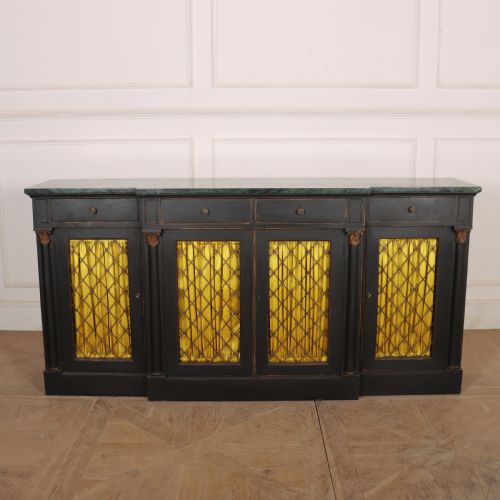
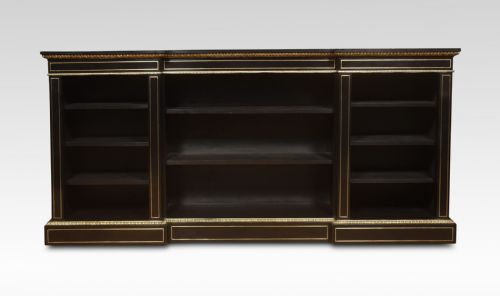
Low Black Bookcase
A low black bookcase brings dark elegance and practical display space to a room without blocking the light above.
Low Black Bookcase
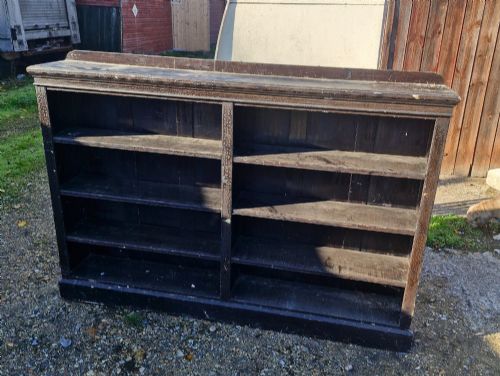
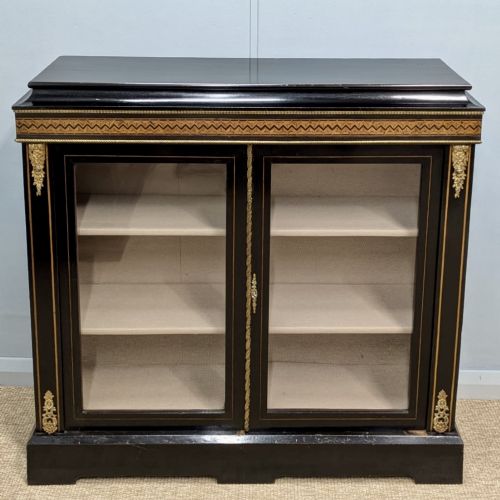
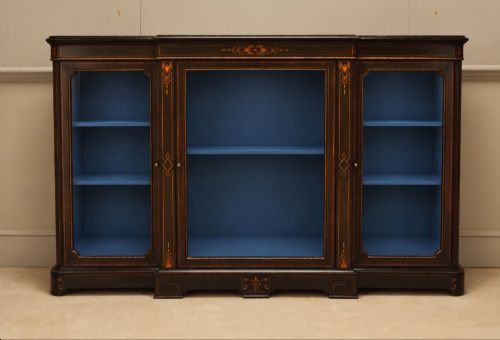
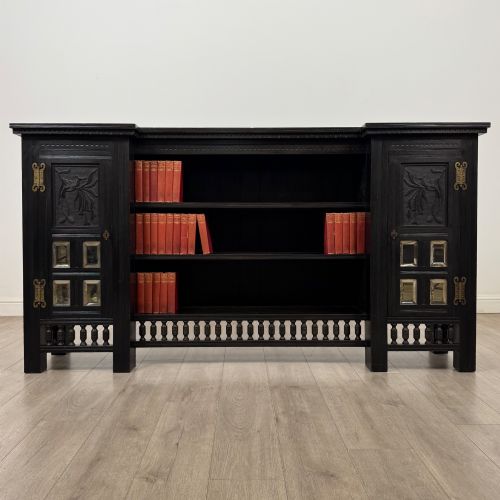
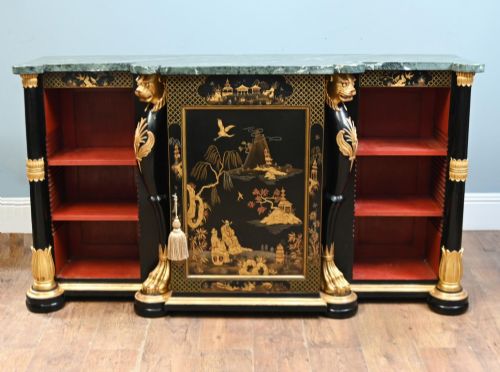
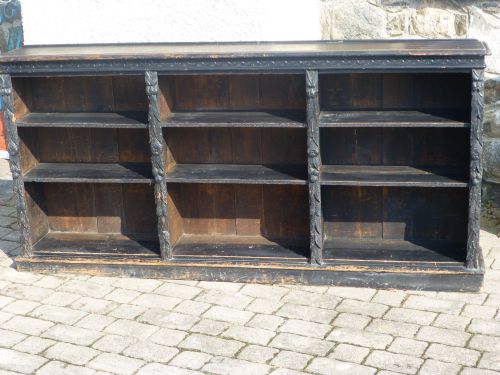
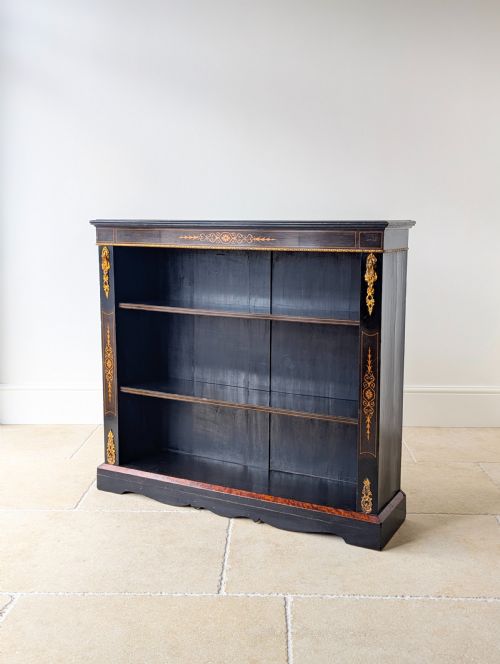
A low black bookcase offers accessible shelving at a height that allows objects to be placed on top. These pieces range from open dwarf shelving to glazed cabinets and breakfront side cabinets.
The materials and styles span several decades, featuring ebonised wood alongside painted finishes. Pieces emerge from Victorian workshops, Napoleon III designs, and later Arts and Crafts or Regency Revival hands.
Open dwarf bookcases provide straightforward utility for book storage, while glazed two-door cabinets and breakfront forms serve equally well for display. Many examples incorporate adjustable shelves to accommodate varying volumes.
How they were made
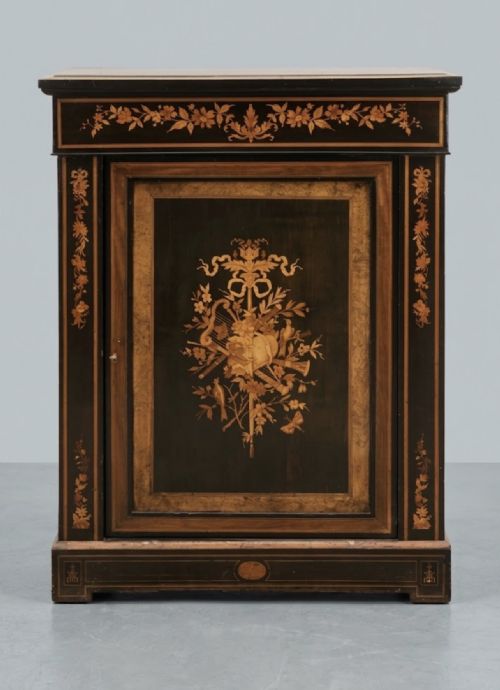
Makers utilised solid pine or various timbers treated with ebonised finishes to achieve a dark, uniform appearance. Wood inlay, marquetry, and delicate painting often decorate the surfaces alongside painted pine.
Metal mounts in brass and ormolu add structural accents and decorative borders to doors and cornices. Glass panels fitted into wooden frames protect the contents while keeping the interior visible.
Low Black Bookcase Retail Price Guide 2026
Typical asking prices for low black bookcase among the pieces listed under this phrase on Sellingantiques today, from the lower quarter to the upper quarter. They describe what is for sale here now, not the wider market.
Listings feature 19th Century, Victorian, and 1930s periods, utilising ebonised wood, brass, glass, marble, ormolu, and painted pine.
What varies in quality
The refinement of the ebonisation and the crispness of carved details set finer examples apart from simpler utility furniture. Pierced brass mounts, intricate wood inlay, and well-executed caddy tops indicate greater workshop investment.
Proportion and structural timber selection dictate the longevity and visual balance of each piece. Superior items maintain smooth shelf adjustment mechanisms and tight door alignment across the cabinet frame.
The Low Black Bookcase Glossary
- Ebonised wood
- Timber treated to resemble ebony through staining or painting. This dark finish became popular during the Victorian period for achieving a formal aesthetic.
- Breakfront
- A piece of furniture where the central section projects forward from the side sections. This layout creates depth and visual interest in larger cabinets.
- Marquetry
- Decorative patterns formed by small pieces of veneer fitted into wood panels. Artisans use contrasting timbers to create geometric or floral designs.
- Caddy top
- A raised or stepped cabinet lid reminiscent of tea caddy designs. It adds a distinct profile to the upper edge of a piece.
- Ormolu
- Gilded bronze mounts applied to furniture for decoration. These metal details provide bright contrast against dark ebonised surfaces.
Low Black Bookcase: Frequently Asked Questions
What rooms suit a low black bookcase?
These pieces fit comfortably in living rooms, studies, and hallways where height is restricted. Their low profile leaves wall space open above for pictures or mirrors.
Dark ebonised finishes anchor a room visually without dominating the floor plan. They blend easily with both traditional and contemporary interiors.
Are the shelves adjustable on these bookcases?
Many examples feature movable shelves supported by traditional wooden racks or metal pins. This allows the internal height to be altered for different book sizes.
Open dwarf versions frequently include this flexibility for everyday utility. Fixed shelving appears more often in older or simpler cabinet constructions.
How do I care for ebonised wood surfaces?
Dust regularly with a soft, dry cloth to prevent particle buildup. Avoid harsh chemical polishes that can degrade the dark finish over time.
Keep pieces away from direct sunlight and radiators to protect the timber and veneer. Occasional waxing maintains the subtle sheen of the ebonised wood.
How can I tell a Victorian ebonised bookcase from later revival pieces?
Victorian pieces often display hand-cut joinery and traditional timber construction beneath the black finish. Later revival styles, such as Regency Revival or 1930s pieces, may show different internal framing methods.
Stylistic clues like green man carvings point directly to specific Victorian tastes. Examining the backboards and interior fixings helps clarify the period of manufacture.