

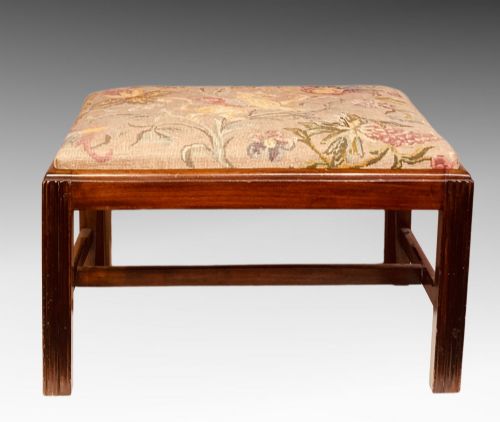
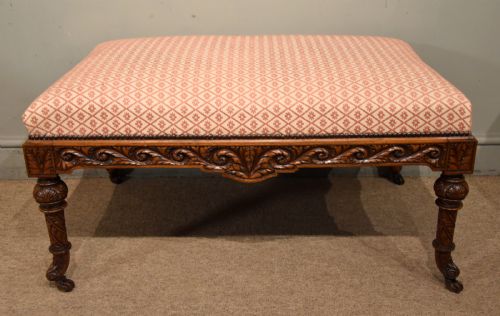


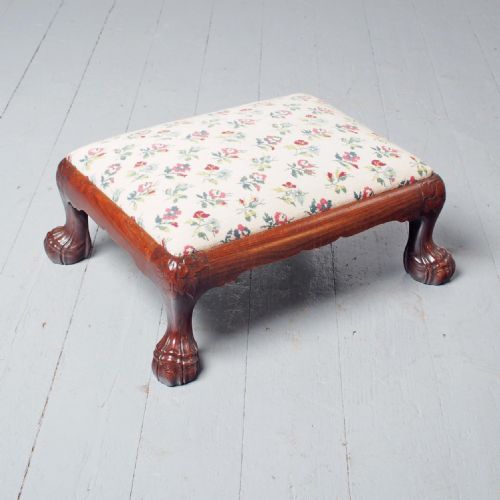


Low Bedroom Stool
A low bedroom stool sits quietly beside dressing tables and windows, offering low seating crafted in rich woods and upholstered fabrics.
Low Bedroom Stool
A low bedroom stool serves as a practical seat for a dressing table or a low perch beneath a window. These pieces appear in forms such as dressing stools, window seats, footstools, and small benches.
The pieces on this page span the Victorian era, the nineteenth century, and early twentieth-century revivals including Arts and Crafts, Art Deco, and Queen Anne styles. Woods like rosewood, walnut, and mahogany dominate the timber frames.
Makers and origins range from English workshops to French styles and Chinese Qing Dynasty huali hardwood pieces. Most examples combine a low wooden frame with textile, tapestry, chenille, or needle point upholstery.
How they were made
Cabinetmakers constructed the frames using solid timbers such as mahogany, walnut, and rosewood, often shaping the wood with hand carving, cabriole legs, or cross stretchers. Hardwoods like huali also appear in specific regional traditions.
Upholstery forms an essential part of the construction, utilising fabrics, textiles, chenille, needle point, and tapestry. Craftsmen secured these coverings over padded seats built to withstand daily use at the dressing table.
Low Bedroom Stool Retail Price Guide 2026
Typical asking prices for low bedroom stool among the pieces listed under this phrase on Sellingantiques today, from the lower quarter to the upper quarter. They describe what is for sale here now, not the wider market.
One tiny huali stool has quietly crossed dynasties to sit beneath a modern dressing table.
What varies in quality
The refinement of the timber carving sets individual examples apart, where crisp detailing on cabriole legs and frames distinguishes finer work. Heavier, solid woods like rosewood and walnut suggest a sturdier build than simpler painted or secondary timbers.
The integrity and material of the upholstery also shift the character of the piece, from standard modern fabric replacements to period-appropriate needle point, tapestries, and chenille that complement the age of the wooden frame.
Harry and Lou Epstein·Whytock and Reid
The Low Bedroom Stool Glossary
- Cabriole leg
- A furniture leg that curves outward at the knee and tapers inward toward the ankle, often ending in a pad or claw foot. This form draws inspiration from animal limbs and appears frequently on period seating.
- Cross stretcher
- An intersecting wooden brace connecting the legs of a stool or table underneath for added stability. These stretchers often feature central bosses or simple turned junctions.
- Chenille
- A fuzzy, tufted fabric often utilised for tactile upholstery on antique seats. The yarn creates a soft texture that catches the light differently depending on the pile.
- Huali
- A prized Chinese hardwood utilised in traditional furniture making. The timber displays rich grain patterns and natural oils.
- Needle point
- A type of counted thread embroidery stitched onto a stiff canvas mesh. It provides durable, decorative seat covers with intricate pictorial or geometric patterns.
Low Bedroom Stool: Frequently Asked Questions
What is a low bedroom stool used for?
These low seats function primarily as dressing table stools, window seats, or compact footstools. Their modest height allows them to tuck neatly beneath furniture when not in use.
They also serve as occasional seating in bedrooms, hallways, or dressing rooms where space is limited.
How do I date a Victorian dressing stool?
Dating relies on examining the timber frame, carving styles, and construction methods characteristic of the nineteenth century. Rosewood and walnut frames with hand-carved details often point toward mid to late Victorian production.
Upholstery materials can also offer clues, though replacement covers are common on older pieces.
What is the difference between a footstool and a dressing stool?
A dressing stool is built taller and designed specifically for sitting comfortably at a dressing table or desk. Footstools are typically lower and intended for resting feet while seated elsewhere.
Many antique pieces share similar proportions and can serve multiple functions depending on the room.
Are these stools sturdy enough for everyday seating?
Most solid wood frames constructed from mahogany, walnut, or rosewood remain robust for regular daily use. Traditional joinery and cross stretchers provide structural support.
Checking the tightness of the frame and the condition of the internal webbing ensures long-term stability.