
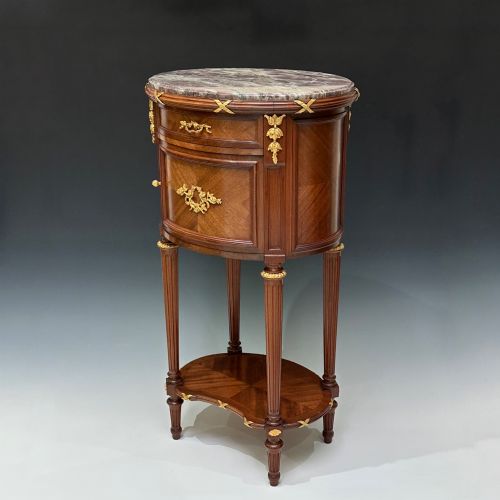
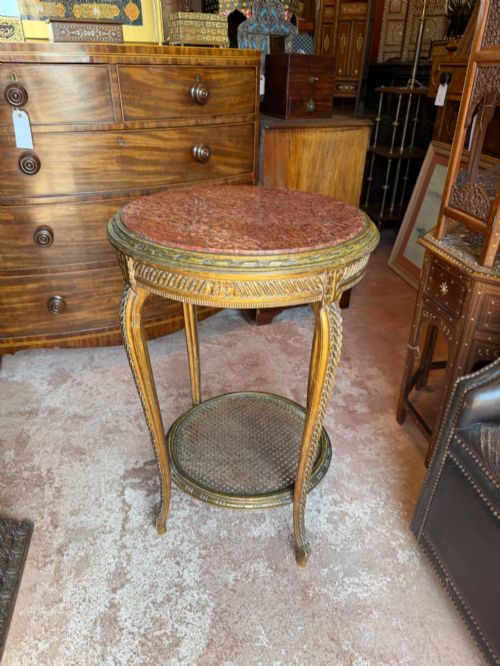
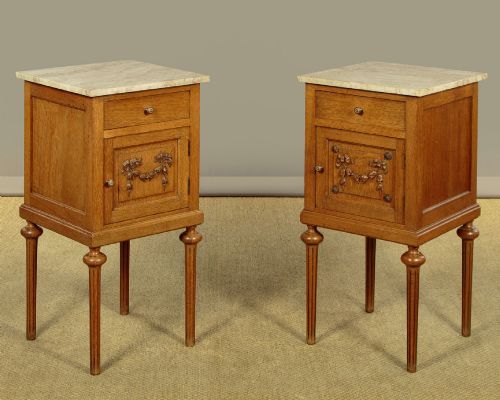
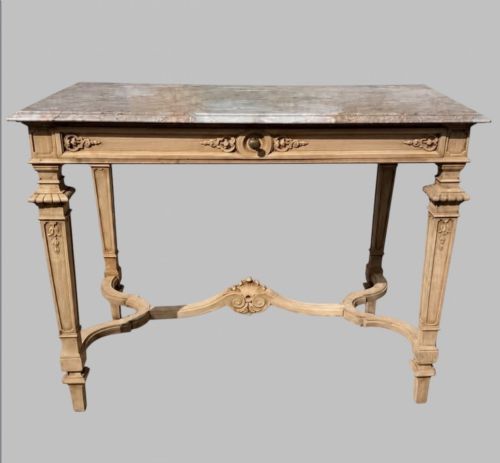
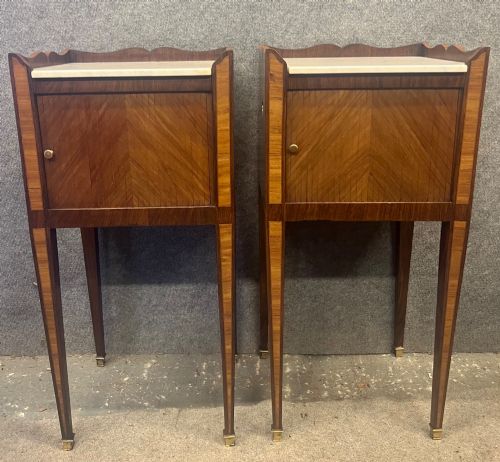
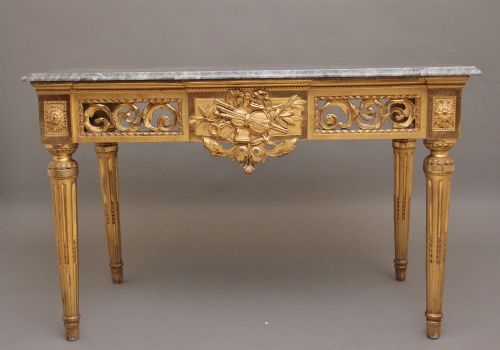
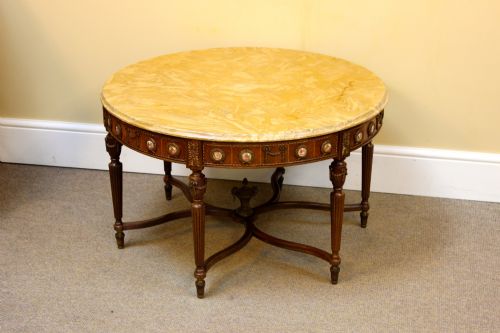
Louis XVI Marble Table
A louis xvi marble table brings neoclassical symmetry and cool stone to a room, uniting timber and metal mounts in a single piece.
Louis XVI Marble Table
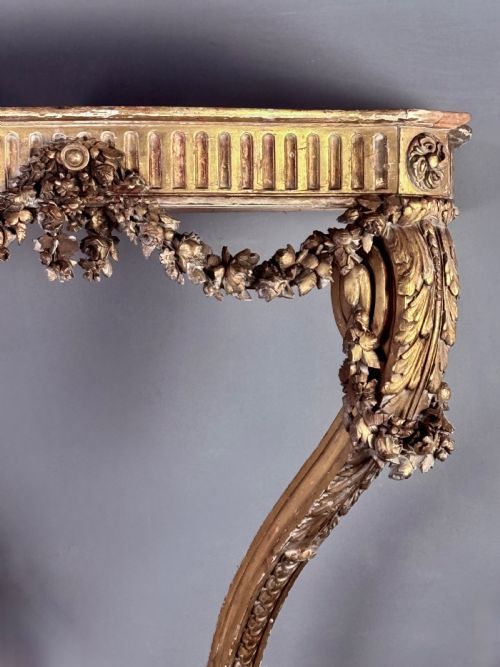
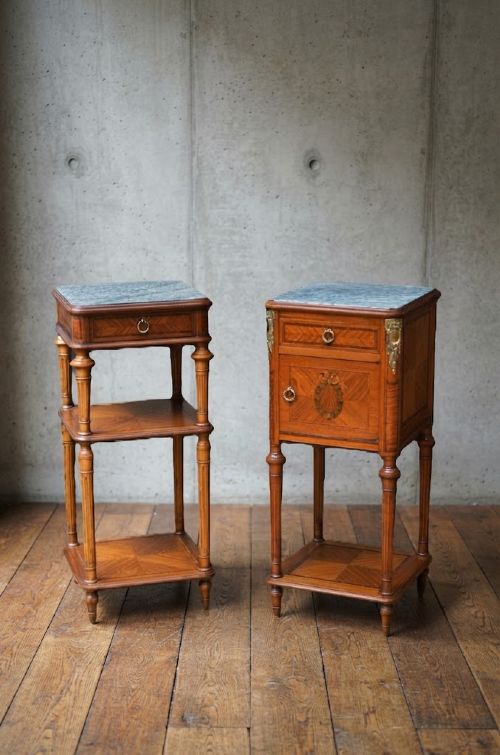
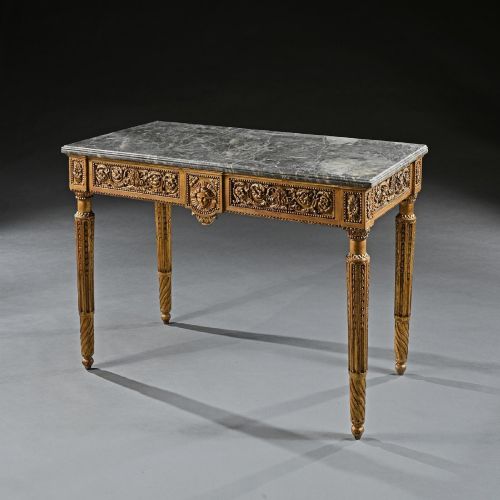
When you search for a louis xvi marble table, you encounter console tables, side pieces, and occasional stands originating from the eighteenth, nineteenth, and early twentieth centuries. These forms reflect French and Italian neoclassical design principles, prioritising straight tapered legs, rectilinear frames, and balanced proportions.
The versions met most frequently on this page belong to the nineteenth-century revival periods, alongside genuine eighteenth-century examples and early twentieth-century interpretations. Console tables and side tables dominate the selection, frequently paired with contrasting marble slabs and cast metal mounts.
How they were made
Construction relies on timber carcases fashioned from mahogany, walnut, satinwood, or giltwood, serving as the structural support for inset stone slabs. Cabinetmakers shaped these woods using traditional joinery, often applying veneers and intricate marquetry or paint finishes to the exterior surfaces.
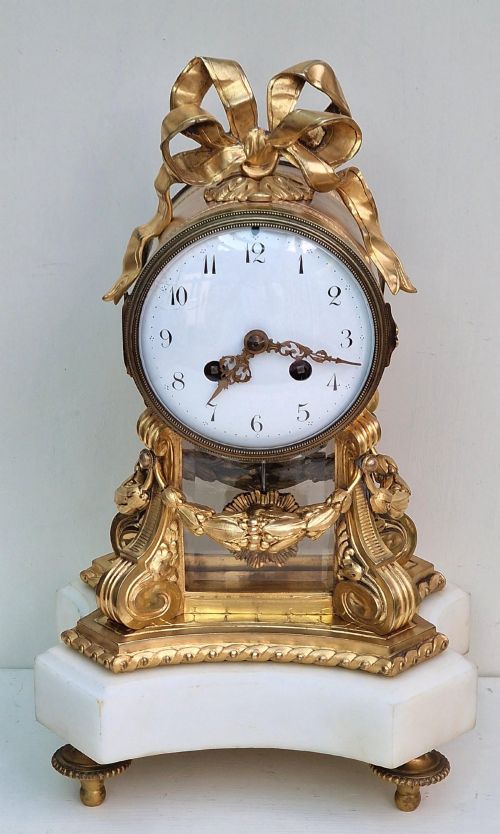
Metalwork played a critical role in the ornamentation, with ormolu and gilt bronze cast, chased, and fire-gilded before being secured to the timber frames. Marble tops, ranging from white varieties to deep green and rouge stones, were quarried, cut, and polished to fit precisely into the wooden mouldings.
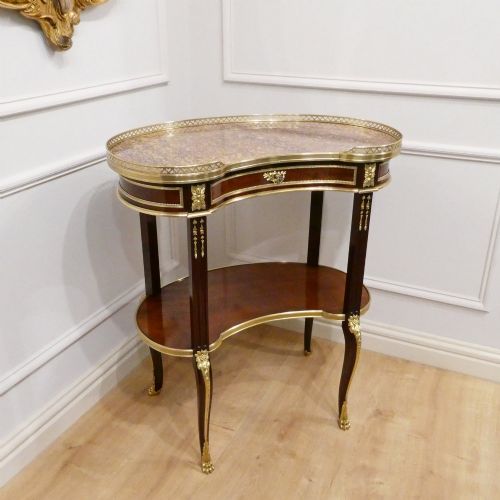
Card players in the eighteenth century kept their winnings secure on bouillotte tables surrounded by raised brass galleries.
What varies in quality
The calibre of a louis xvi marble table rests upon the crispness of its bronze mounts and the depth of the hand-chasing applied to the metal. Superior examples display sharply defined acanthus leaves and ribbon twists, whereas lesser items rely on softer, shallower cast details.
Material selection and structural execution further divide the range, distinguishing pieces with thick, richly figured marble slabs and dense hardwood carcases from those utilising thinner veneers and simpler secondary timbers.
Maison Millet·François Linke·Vincenti·Japy Freres·E Kahn
The Louis XVI Marble Table Glossary
- Ormolu
- Gilded bronze, applied as decorative mounts to furniture frames and clock cases. The technique involves coating metal in a mercury and gold amalgam before heating.
- Console table
- A wall-mounted or freestanding table designed to stand against a vertical surface, frequently topped with marble and supported by two front legs.
- Bouillotte table
- A small circular occasional table featuring a raised gallery edge around the marble top, originally designed for card games.
- Gueridon
- A small round French table supported by a central column or three legs, often fitted with a stone or timber top.
- Neoclassical
- A style drawing inspiration from the classical art and architecture of ancient Greece and Rome, emphasising symmetry, restraint, and straight lines.
Louis XVI Marble Table: Frequently Asked Questions
How are these tables cleaned?
Dust timber surfaces gently with a dry cloth and avoid harsh chemical polishes that can damage historic finishes. Marble tops require mild, pH-neutral soap and warm water to remove surface marks without etching the polished stone.
Prevent moisture from lingering on porous stone surfaces by using coasters beneath glasses. Re-waxing wooden frames periodically preserves the moisture in older veneers.
Can these tables hold heavy items?
Console tables secured to a wall provide a stable surface for lamps, clocks, and decorative objects. Freestanding occasional tables handle moderate everyday use but require care with heavy loads.
Distribute weight evenly across the marble slab to prevent undue stress on the wooden frame beneath. Heavy marble tops derive their stability from gravity and precise placement within the wooden rebate.
How do I spot a revival piece?
Nineteenth and early twentieth-century revival pieces often display machine-sawn timber marks and standardised hardware fixings hidden beneath the carcase. Examining the construction joints and the wear patterns on the underside reveals the manufacturing era.
Stylistic proportions also offer clues, as nineteenth-century interpretations sometimes exaggerate neoclassical symmetry compared to eighteenth-century originals.
Where should I place a console table?
Console tables fit naturally against hallway walls, beneath mirrors, or in living rooms to anchor decorative arrangements. Their shallow depth allows them to occupy narrow circulation spaces without obstructing movement.
Pairing a console with a matching mirror or pair of lamp garnitures recreates period display arrangements. Ensuring the wall fixing is secure provides stability for the heavy stone top.