


French Bouillotte Table
A french bouillotte table brings a distinct continental character to a room, functioning as either a compact surface or an adjustable lamp.
French Bouillotte Table
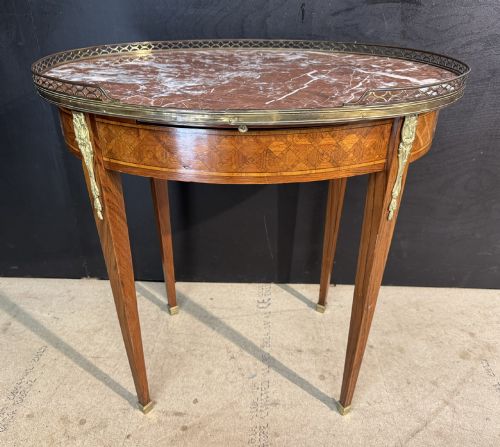
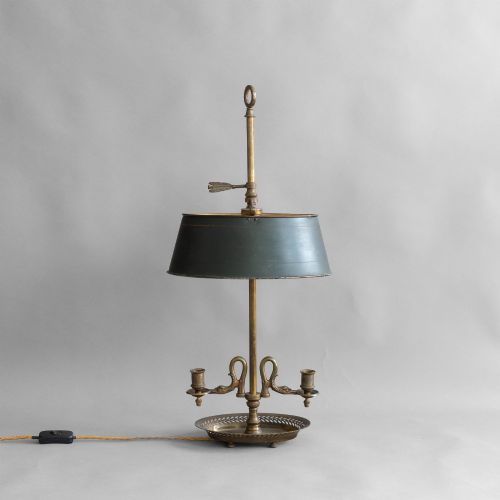
A french bouillotte table serves primarily as a round occasional piece or a specialised desk lamp designed for card playing and reading. The listings show a clear division between small circular tables featuring inset marble tops and brass galleries, and standing lighting fixtures equipped with painted toleware shades.
Most examples encountered on this page date from the nineteenth century into the early twentieth century, spanning periods like the Victorian era and 1900. These pieces often draw upon French Empire and Louis XVI styles, reflecting classic neoclassical restraint in their proportions.
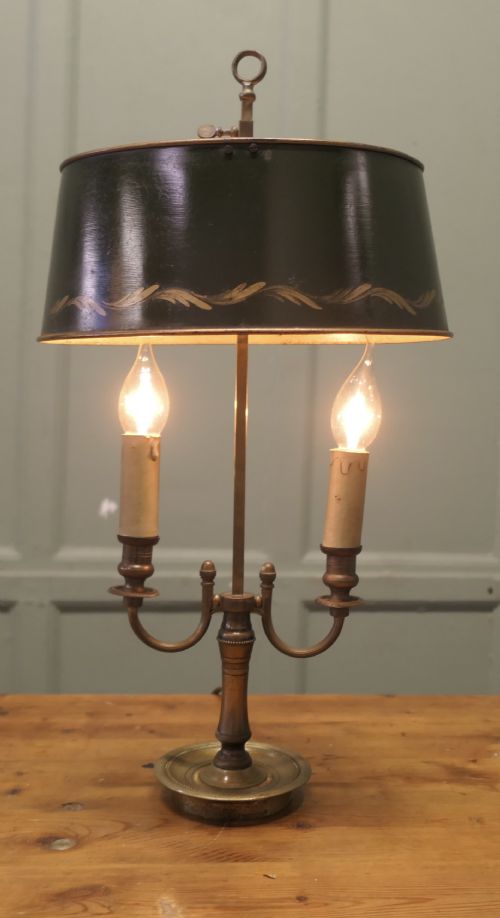
Buyers will find that many of these objects double as lamps with multiple candle branches, combining functional illumination with decorative brass and bronze casting. The form remains adaptable for domestic settings, serving easily as a side table beside seating or a desk lamp upon a bureau.
Materials and construction
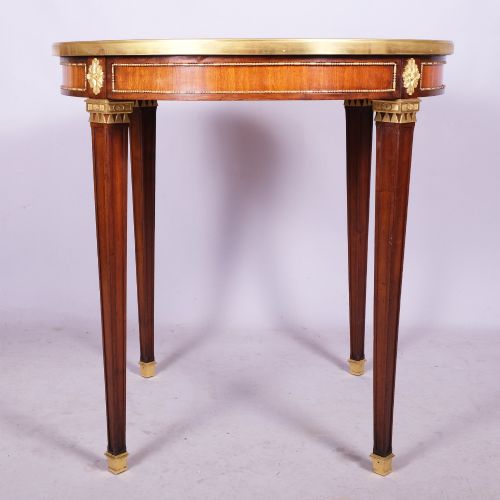
Cabinetmakers and metalworkers utilised a specific vocabulary of materials, pairing solid woods such as mahogany, walnut, and kingwood with polished marble slabs. Brass galleries often encircle the stone tops, secured by slender tapering legs with metal collars.
Lighting variants rely heavily on toleware for adjustable shades, typically painted in traditional shades of green and paired with gilt metal, bronze, or silver-plated brass bases. Marquetry and parquetry techniques also appear on wooden tabletops, showing precise geometric or floral inlays.
French Bouillotte Table Retail Price Guide 2026
Typical asking prices for french bouillotte table among the pieces listed under this phrase on Sellingantiques today, from the lower quarter to the upper quarter. They describe what is for sale here now, not the wider market.
The listings combine wooden occasional tables with brass and toleware desk lamps, spanning the nineteenth century and the early twentieth century.
Indicators of quality
The distinction between standard domestic pieces and finer examples rests upon the crispness of the metal casting and the depth of the wood veneers. Ormolu mounts and chased brass elements show sharper detail on superior items, whereas simpler versions rely on plain cast components.
The integration of materials also dictates standard; heavy marble slabs fitted flush into timber frames with finely pierced brass galleries represent a higher grade of manufacture than plain wood tops.
The French Bouillotte Table Glossary
- Bouillotte table
- A small round table traditionally used for playing the French card game of bouillotte, usually featuring a raised brass gallery to keep chips from falling.
- Toleware
- Enamelled or painted metalware, frequently used for the adjustable shades on traditional desk lamps to direct light downward.
- Ormolu
- Gilded bronze or brass applied as decorative mounts on furniture and lamp bases during the eighteenth and nineteenth centuries.
- Gallery
- A low pierced metal railing fitted around the perimeter of a tabletop or shelf to secure small items.
- Marquetry
- Decorative veneer work arranged in pictorial or patterned designs across wooden surfaces using various contrasting timbers.
French Bouillotte Table: Frequently Asked Questions
What is a french bouillotte table used for today?
These pieces function well as small side tables in a drawing room or as decorative lighting fixtures on a desk. Their compact circular footprint allows them to fit easily into tight corners beside chairs.
Lamp versions provide adjustable downward illumination suited for reading, while table variants offer a convenient surface for small decorative objects.
How do I identify the period of a table?
Dating relies on observing stylistic markers such as neoclassical tapered legs, ormolu mounts, and the specific type of wood veneer used in the construction. Pieces from the nineteenth century often show heavier brass casting and dense mahogany or walnut timbers.
Later examples from around 1900 or the Edwardian period may incorporate simpler turned supports and lighter marquetry patterns.
Are the lamp shades adjustable?
Most lighting variants feature a central metal rod that allows the painted toleware shade to slide up and down. This mechanism originally permitted players to control the intensity and spread of light over a card table.
Adjusting the shade remains a practical way to direct light for reading tasks in a modern interior.
What wood types are most common?
Mahogany appears frequently across the selection, often accompanied by exotic decorative timbers like kingwood and walnut. These hardwoods provide a stable base for fine surface veneers and parquetry.
Inlaid geometric patterns frequently utilise contrasting tones of wood to frame the circular top.