
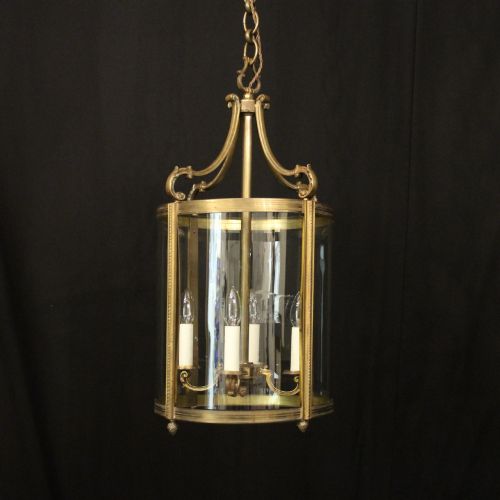
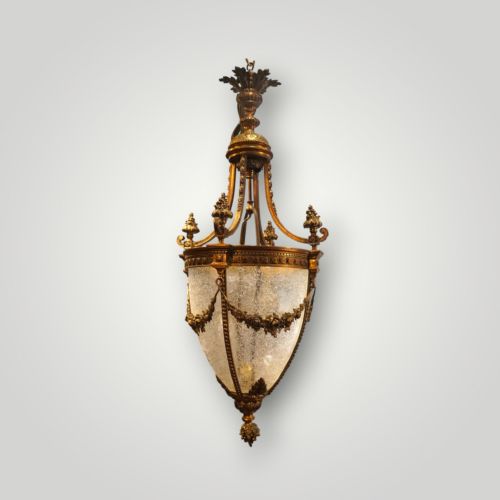
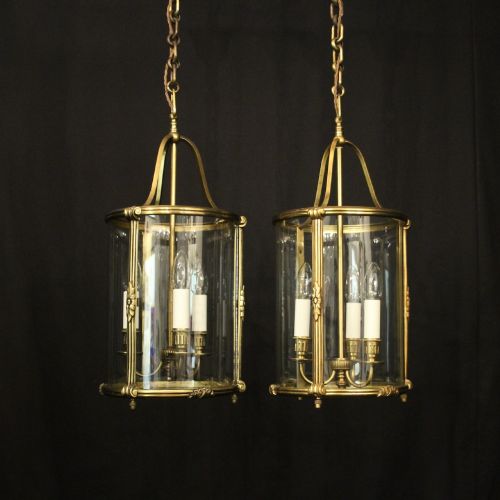
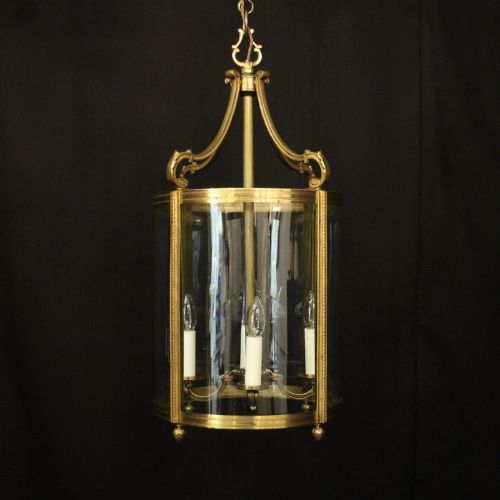


Louis XVI Hall Light
A louis xvi hall light brings refined French Neoclassical proportion and warm illumination directly to an entrance hall.
Louis XVI Hall Light
A louis xvi hall light comprises hanging pendant lanterns and ceiling lighting rooted in French Neoclassical design, bringing formal symmetry to entrance spaces. The selection ranges from nineteenth-century examples to pieces from the Edwardian era and the nineteen-twenties.
Most entries follow the Louis XVI style or French Chateau aesthetic, featuring glazed panels held within metal frameworks. Buyers will frequently encounter hanging lanterns and ceiling lights designed to suspend centrally from entrance halls.
Origins heavily lean toward French workshops, utilising forms inspired by palatial decorative schemes. These fixtures combine architectural restraint with decorative metalwork to create an impressive first impression in a hallway.
How they were made
Construction relies primarily on cast bronze, ormolu, brass, and gilded brass forming the structural frames that support the glazing. Metal elements are shaped into classical motifs before receiving gilt surface treatments.
Panels incorporate glass, frosted glass, or etched glass, often shaped into convex profiles to diffuse internal illumination evenly. Mechanics accommodate multiple internal light sources, ranging from single bulbs to four-light configurations.
Listings feature items spanning the nineteenth century, the Edwardian period, and nineteen-twenty, utilising gilt bronze, brass, and frosted glass.
What varies in quality
Quality rests in the crispness of the cast metal ornamentation and the depth of the gilding applied to the bronze or brass frames. Superior examples display sharply defined Neoclassical details that mirror palatial precedents rather than simplified commercial casting.
The choice of glazing significantly affects the character of the piece, with heavy convex or etched glass panels requiring greater technical skill to produce than flat panes. Heavier gauge metalwork and robust suspension loops separate substantial architectural lanterns from lighter domestic fixtures.
The Louis XVI Hall Light Glossary
- Ormolu
- Gilded bronze produced by applying a mercury-gilding amalgam to a cast bronze base, yielding a durable metallic finish. This technique defines the rich surfaces seen on many finer French lighting fixtures.
- Convex glass
- Curved glass panels that bulge outward from the lantern frame to disperse light across a wider angle. Such glazing adds optical depth and tactile presence to the silhouette.
- Neoclassical
- A style reviving classical Roman and Greek motifs such as swags, urns, and geometric symmetry during the eighteenth and nineteenth centuries. This aesthetic provides the foundational vocabulary for Louis XVI decorative arts.
- Hall lantern
- A ceiling-suspended lighting fixture specifically proportioned for narrow circulation spaces and entrance vestibules. These pieces provide ambient downward illumination while serving as a decorative focal point.
- Etched glass
- Glass surfaces decorated by applying acid to eat away the design, creating frosted patterns against clear areas. This treatment softens the glare from internal candle or electric light sources.
Louis XVI Hall Light: Frequently Asked Questions
How do I hang a hall light?
These fixtures suspend from ceilings using integrated loops or chains attached to the uppermost crown of the metal frame. Weight considerations require secure anchoring directly into ceiling joists or structural nogging.
Ceiling height dictates the overall drop, ensuring the fixture clears head height while remaining visually anchored to the entryway volume.
Are these wired for modern electricity?
Many vintage and antique lanterns are adapted for modern electrical supplies during their history of use. Internal lamp holders accommodate standard bulbs concealed within the glass panels.
Buyers should inspect the internal wiring and consult a qualified electrician to ensure compliance with current safety standards before installation.
How do I date a brass lantern?
Dating relies on examining the construction methods of the metal frame, the composition of the alloy, and the style of the casting. Nineteenth-century examples often exhibit heavier hand-finished bronze components compared to later twentieth-century iterations.
Period markers also appear in the specific interpretation of French Neoclassical ornamentation and the manufacturing tolerances of the glass elements.
What maintenance do gilt surfaces need?
Gilt bronze and brass require gentle dusting with a soft, dry cloth to prevent the accumulation of abrasive particles. Avoid chemical polishes that can strip away historic gilding or damage patinated metal surfaces.
Glass panels can be cleaned with standard window solutions applied carefully to cloths rather than sprayed directly onto the surrounding metalwork.