


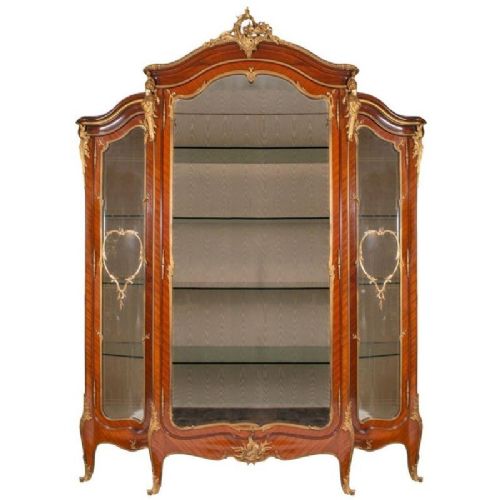
Louis XVI Glass Cabinet
A louis xvi glass cabinet brings classical French proportion and light into a room, designed to showcase precious collections through fine glazed panels.
Louis XVI Glass Cabinet
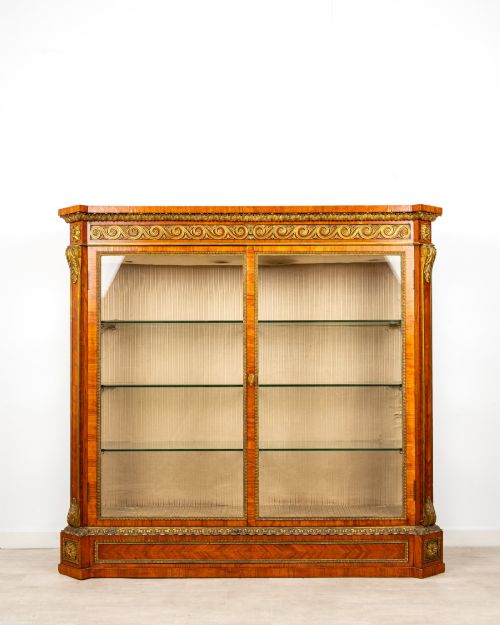
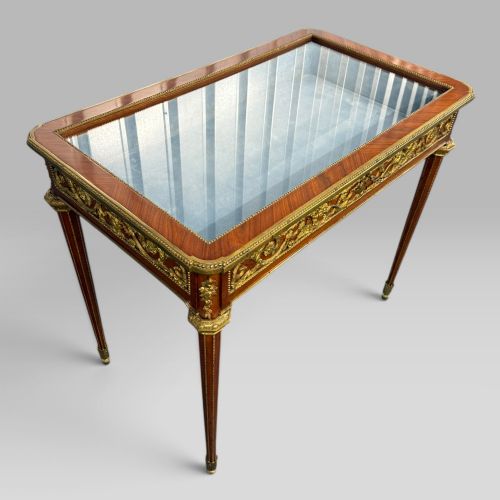
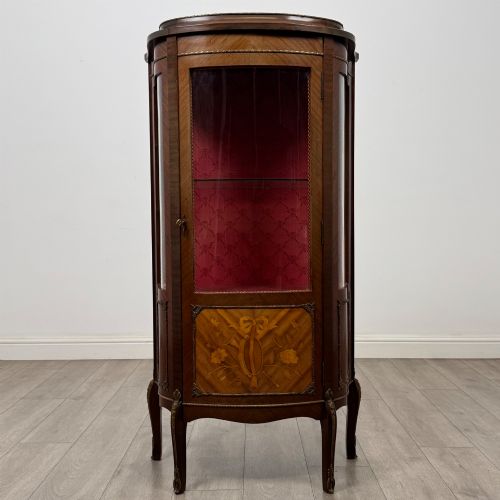
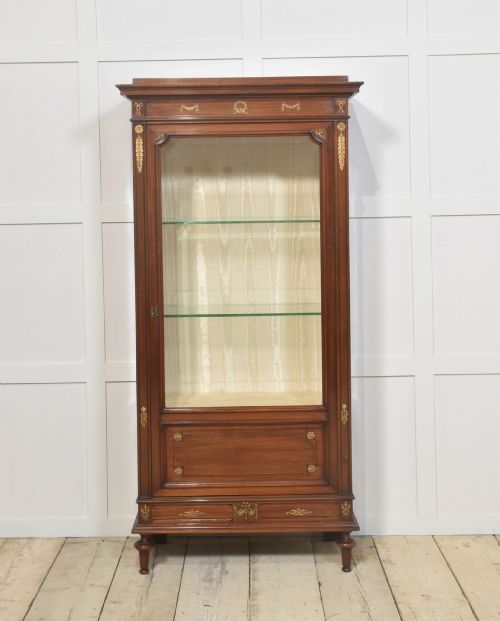
When searching for a louis xvi glass cabinet, buyers encounter pieces primarily originating from the nineteenth century, including Edwardian interpretations and later twentieth-century pieces. These items take several distinct forms, most commonly tall vitrines, side cabinets, and low bijouterie tables intended for the display of delicate objects.
The aesthetic draws heavily on French revival styles, chateau influences, and belle epoque tastes. Makers adapted eighteenth-century architectural lines, straight tapered legs, and subtle symmetry to suit Victorian and Edwardian drawing rooms.
Materials and Construction
The structural carcass relies upon dense timbers such as mahogany, kingwood, walnut, and satinwood, frequently enriched with parquetry or marquetry inlay. These wooden frames provide the stable architecture necessary to support heavy glass panels and marble tops.
Gilt-bronze and ormolu mounts punctuate the design, framing doors, corners, and aprons with classical cast ornamentation. Silk or velvet fabric frequently lines the interior display space, creating a soft backdrop for objects placed inside.
Some cabinets hide velvet-lined depths originally tailored for nineteenth-century calling cards and pocket watches.
Markers of Excellence
The distinction between standard commercial output and exhibition-grade pieces rests in the crispness of the ormolu chasing and the precision of the cabinetwork. Finer examples display hand-chiselled gilt-bronze mounts that integrate seamlessly with the timber carcass, rather than mass-produced generic castings.
Proportion and the quality of timber selection further separate the tiers. Superior pieces utilise beautifully figured kingwood or mahogany veneers matched symmetrically across the doors and panels, paired with heavy, genuine marble tops.
François Linke·H. J. Hatfield & Sons·Paul Sormani·Maison Krieger
The Louis XVI Glass Cabinet Glossary
- Ormolu
- Gilded bronze used for decorative mounts and hardware on fine furniture. The technique involves applying a gold amalgam to cast brass or bronze before firing.
- Vitrine
- A glass-fronted cabinet designed specifically for the display of porcelain, silver, or curiosities. The sides are frequently glazed to allow light to pass through.
- Bijouterie Table
- A low display table with a glazed top and shallow compartment intended for jewellery and small valuables. These pieces often stand on slender tapered legs.
- Kingwood
- A dense, heavily figured Brazilian timber prized for its rich brown colour and golden contrasting stripes. It was widely used for high-end French revival parquetry.
- Vernis Martin
- A type of simulated Japanese lacquer developed by the Martin brothers in eighteenth-century France. It appears on fine decorative panels depicting pastoral scenes.
Louis XVI Glass Cabinet: Frequently Asked Questions
What is a louis xvi glass cabinet used for?
These cabinets were originally built to display porcelain, glassware, and small collector items safely behind glass panels while keeping dust away.
Today, they serve the same purpose in domestic interiors, offering vertical display space that draws the eye upward without dominating a room.
How do I identify a revival piece?
Nineteenth-century revival items show machine-sawn timber elements combined with hand-finished ormolu mounts and traditional joinery methods appropriate to the period.
Examining the backboards, screw types, and interior linings helps distinguish nineteenth-century French manufacture from later twentieth-century copies.
Where should I place a vitrine?
Position these cabinets against interior walls where natural light from windows can catch the glass doors and highlight the interior contents.
Avoid placing them in direct sunlight to protect both the wooden veneers and any antique textiles used as interior linings.
What woods were used in these cabinets?
Cabinetmakers relied on stable structural timbers like mahogany and walnut, overlaid with decorative face veneers including kingwood and satinwood.
Parquetry patterns and geometric stringing frequently decorate the exterior surfaces to create visual depth and movement.