






Louis XVI Display Case
A louis xvi display case brings refined French elegance into a room, designed to showcase precious collections behind clear glass.
Louis XVI Display Case
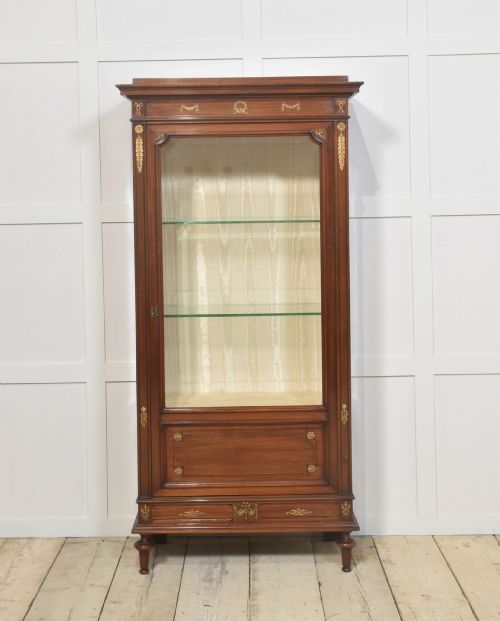
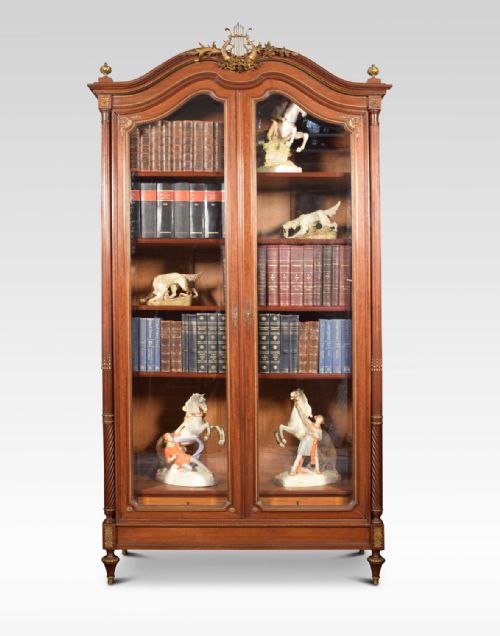
The pieces on this page span the 18th century design idiom reinterpreted around 1880, 1890, 1900, and into the Edwardian era. Buyers encounter freestanding oval vitrines, breakfront side cabinets, and tall mahogany or kingwood display cabinets designed for formal reception rooms.
Makers and workshops of the period drew heavily upon eighteenth-century Parisian aesthetics, incorporating glazed doors and sides to present porcelain, silver, or curiosities to view from multiple angles.
Materials and construction
Construction relies upon choice timber carcases veneered in mahogany, kingwood, rosewood, and walnut, frequently accented with intricate marquetry. Cabinetmakers shaped these dense hardwoods to form upright display units, vitrines, and bookcases designed for longevity and visual impact.
Ormolu and gilt brass mounts define the metalwork, cast and chased in classical foliate and ribbon motifs to edge the glass panels and frame the doors. Fabric linings, notably silk and velvet, often furnish the interior shelving and back panels to cushion displayed objects.
Glazing takes the form of large fitted glass panes, sometimes curved for oval freestanding cabinets, held securely within timber framing or metal bezels.
Some cabinets feature curved glass panes that require traditional glass-bending techniques to fit smoothly into oval frames.
Judging quality in a louis xvi display case
Quality rests significantly upon the crispness of the ormolu mounts and the depth of their chasing, alongside the selection of timber veneers such as kingwood or figured mahogany. Finer pieces demonstrate superior hand-finishing in both the cast metal decorations and the precise alignment of marquetry panels.
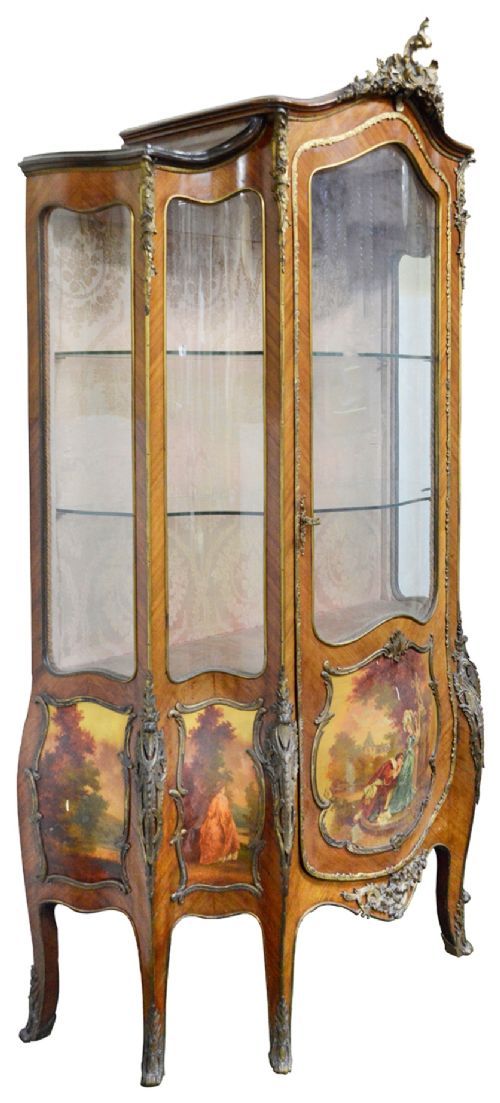
The ambition of the form dictates distinction, separating standard production from exhibition pieces decorated with hand-painted Vernis Martin panels or complex breakfront configurations. Maker attribution, whether through signatures or the distinct influence of leading Parisian ateliers, elevates the standing of a cabinet within this tradition.
François Linke·Paul Somani·Maison Krieger
The Louis XVI Display Case Glossary
- Vitrine
- A glass-sided display cabinet designed specifically for showing porcelain, glassware, and small objets d'art. These pieces rely on extensive glazing to maximise interior light.
- Ormolu
- Gilt bronze mounts applied to furniture edges, corners, and friezes for decorative enrichment. The technique involves applying a gold amalgam to cast bronze before heating.
- Vernis Martin
- A simulated Japanese lacquer developed in France, featuring painted pastoral or romantic scenes under a clear varnish. It frequently decorates the lower panels of fine cabinets.
- Marquetry
- Inlays of various coloured woods arranged in geometric or floral patterns across the furniture surface. This technique requires considerable skill to fit thin veneers tightly together.
Louis XVI Display Case: Frequently Asked Questions
What is a louis xvi display case?
A louis xvi display case is a refined cabinet featuring glazed doors and sides, created to exhibit decorative objects. These pieces reflect classical French design principles from the late eighteenth century.
Cabinetmakers of the nineteenth and early twentieth centuries revived this style, incorporating rich timbers, gilt bronze mounts, and fabric-lined interiors suitable for formal drawing rooms.
How do I date a louis xvi display case?
Dating involves examining the construction methods, timber preparation, and the style of the cast ormolu mounts. Pieces carrying this design language typically date from nineteenth-century revivals through the Edwardian era rather than the original eighteenth-century reign.
Makers' signatures, stamps, or the specific patination of the timber and gilt brass provide further clues to the exact decade of manufacture.
Where should I place a vitrine?
A vitrine suits reception rooms, drawing rooms, or studies where natural light can pass through the glass panels to illuminate the interior contents. Placing the cabinet away from direct sunlight protects both the timber veneers and any fabric linings.
Freestanding oval and rectangular models require sufficient space to be viewed in the round, allowing the ormolu mounts and marquetry to be appreciated from multiple angles.
How do I care for the timber and ormolu?
Maintenance requires gentle dusting with a soft, dry cloth to prevent the accumulation of grit on delicate veneers and carved surfaces. Avoid commercial liquid polishes that can build up a residue and dull the finish of the wood.
Ormolu mounts should be cleaned strictly without abrasive agents to preserve the original gilding, taking care not to let cleaning solutions touch surrounding fabric linings or wood surfaces.