



Louis XVI Clock Set
A louis xvi clock set brings symmetry and neoclassical restraint to a mantelpiece through paired garnitures and cast bronze.
What these pieces are
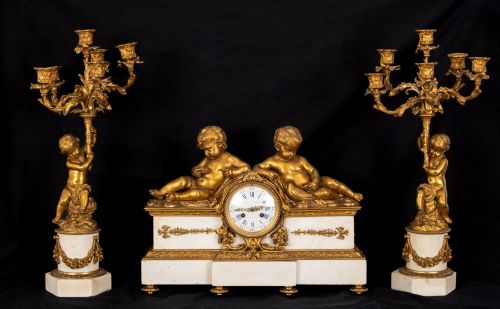
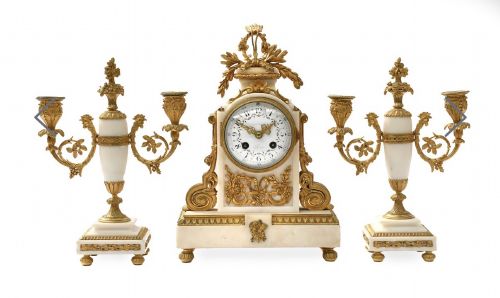
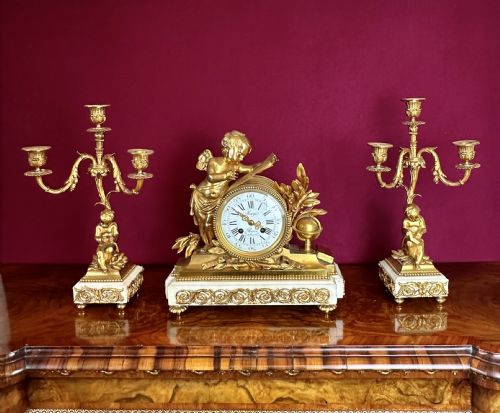
A louis xvi clock set comprises a central mantel clock accompanied by matching side pieces such as candelabra or urns, forming a balanced garniture. The evidence shows these pieces appearing in nineteenth-century interpretations of French neoclassical design.
Most examples found on this page date from the nineteenth century, including specific years around 1880 and 1900, reflecting later revivals of the Louis XVI style. Forms range from large architectural portico layouts to smaller boudoir arrangements.
Makers recorded in the archive and current listings include Henry Dasson, AD Mougin, Japy Freres, Louis Japy, Vincenti, and Samuel Marti. These workshops produced tripartite sets that combine timekeeping with decorative symmetry.
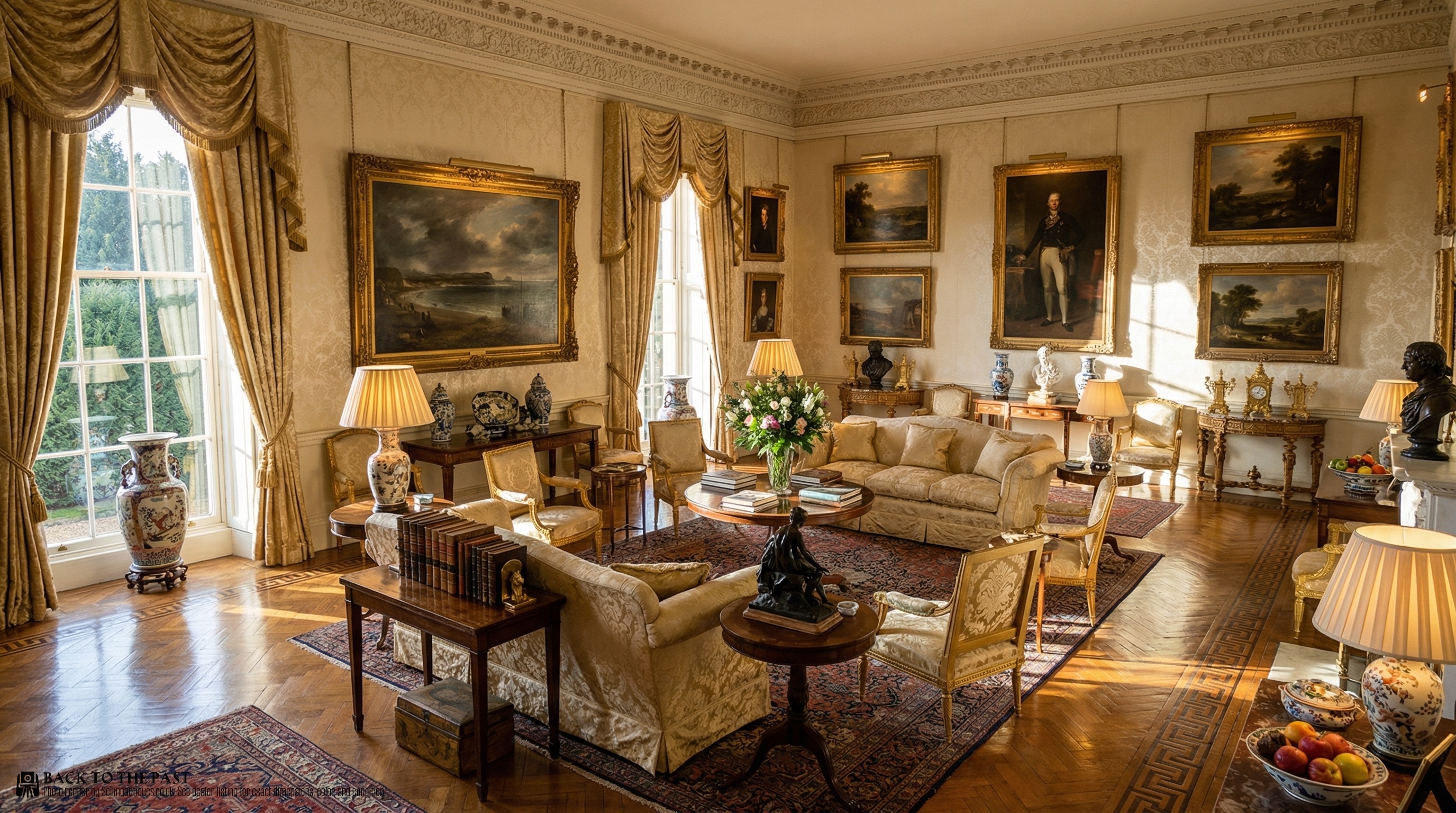
How they were made
Foundry work relied on cast bronze, gilt brass, and ormolu to form the decorative mounts, bezels, and figures that define the style. These metal elements were paired with contrasting bodies of white marble, sienna marble, onyx, and standard marble.
Dials frequently incorporate enamel, often painted with numerals and signatures, set behind glazed bezels. Movement assembly and casting required specialised labour across French workshops in Paris and provincial centres.
Retail Price Guide 2026
Typical UK retail prices for louis xvi clock set, calculated from the Sellingantiques database of over a million retail prices indexed since 2003. This retail price guide relies exclusively on Sellingantiques data; no external sources or auction records are used, so the figures do not describe the wider market.
The archive records pieces from the nineteenth century, specifically noting production dates in 1880, 1888, and 1900.
What varies in quality
The refinement of the cast bronze and ormolu mounts distinguishes the standard production from the exceptional work of makers like Henry Dasson. Crisp chiselling in the metalwork and the weight of the marble or onyx bodies dictate the physical presence of the set.
The integration of the three pieces determines the harmony of the garniture, where matching patination and consistent detail across the clock and its flanking candelabra or urns elevate the ensemble.
Henry Dasson·AD Mougin·Japy Freres·Louis Japy·Vincenti·Samuel Marti
The Louis XVI Clock Set Glossary
- Ormolu
- Gilded bronze produced through a mercury amalgamation process or electroplating, providing a rich golden surface to metal mounts. This technique was widely utilised in French clockmaking.
- Garniture
- A set of decorative objects designed to be displayed together, typically consisting of a central clock flanked by two matching vases, urns, or candelabra. Such sets created balanced symmetry on nineteenth-century mantelpieces.
- Portico clock
- A clock case constructed with architectural columns supporting a lintel, housing the pendulum swing within an open central space. They often utilised marble and bronze elements.
- Enamel
- A glassy substance fused to a metal dial surface through firing, providing a smooth white ground for painted clock numerals. It offers durability and a clear reading surface.
Frequently Asked Questions
What is included in a clock set?
A clock set typically consists of a central mantel clock accompanied by two matching side pieces, such as candelabra, urns, or vases. These items are designed in a unified style to be displayed together as a symmetrical garniture.
The materials and decorative motifs match across all three components, creating a balanced focal point for a fireplace mantel or large piece of furniture.
When were these clock sets made?
The pieces listed and archived date from the nineteenth century, with specific examples recorded around 1880 and 1900. These items represent later revivals of the French Louis XVI style rather than the eighteenth-century original period.
Nineteenth-century French workshops utilised traditional casting and marble-working methods to recreate the neoclassical aesthetic of the earlier reign.
How do I maintain a nineteenth-century clock?
Maintaining these clocks involves gentle dusting of the marble and metal surfaces with a dry cloth, avoiding harsh chemical cleaners that can damage gilt bronze or ormolu patination. Mechanical movements require periodic professional servicing to ensure accurate timekeeping.
Keeping the clock in a stable environment away from direct sunlight and damp conditions protects both the enamel dial and the internal brass gears.
How do I identify the maker?
Maker identification relies on foundry stamps or marks stamped onto the brass movement backplate, porcelain dials, or cast bronze mounts. Names such as AD Mougin, Japy Freres, and Samuel Marti frequently appear on nineteenth-century French clock movements.
Examining the back of the clock mechanism often reveals serial numbers, award medals, and maker ciphers stamped directly into the metal.