
Louis XVI Chest of Drawers
A louis xvi chest of drawers brings neoclassical restraint and fine timber into a room, offering both practical surface space and architectural elegance.
Louis XVI Chest of Drawers
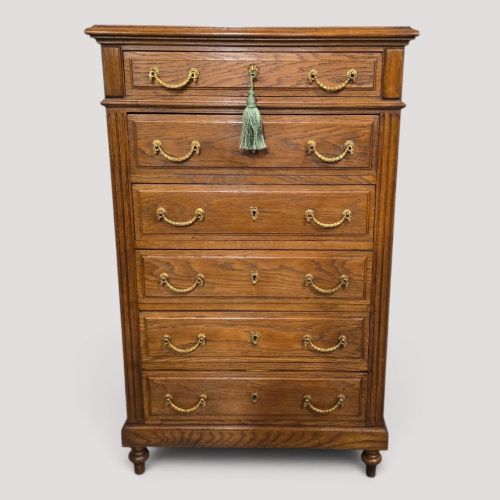
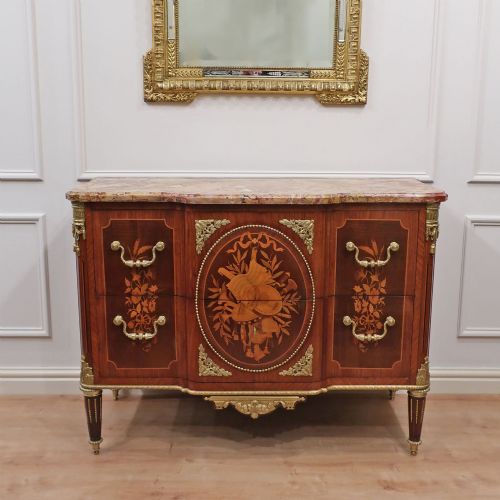
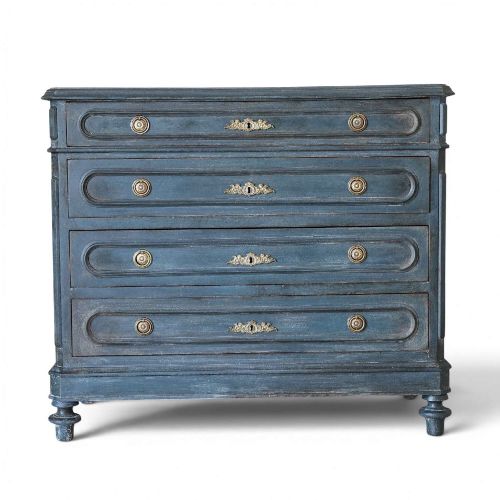
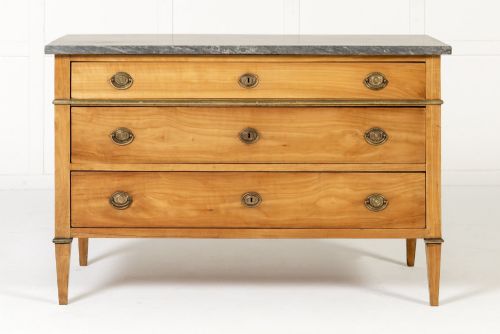
A louis xvi chest of drawers represents a distinct shift away from curved rococo excesses toward straight lines, symmetry, and classical restraint. The pieces gathered here span authentic eighteenth-century examples alongside later revival commodes, bedside chests, and diminutive cabinets produced across the nineteenth and twentieth centuries.
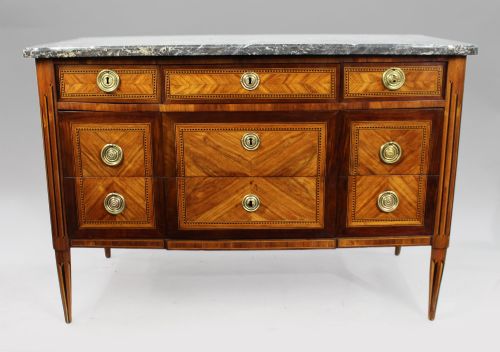
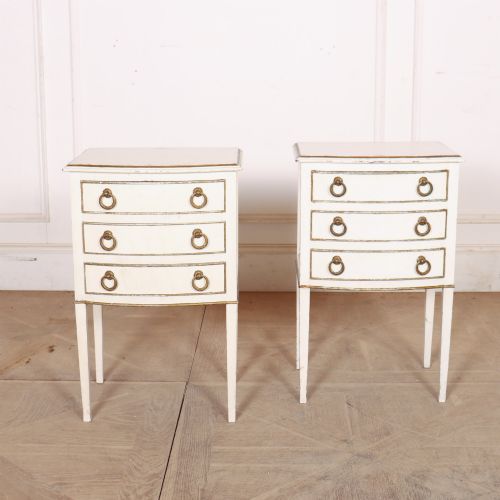
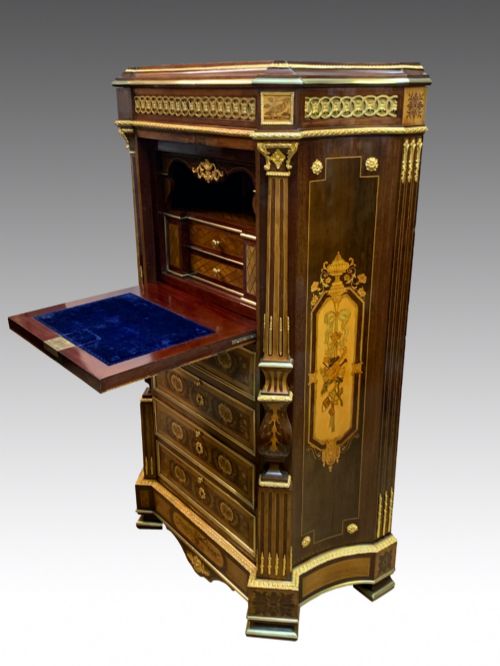
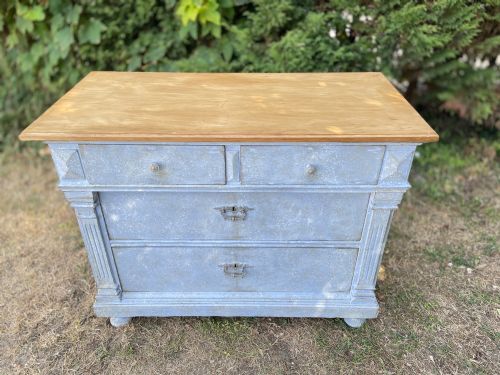
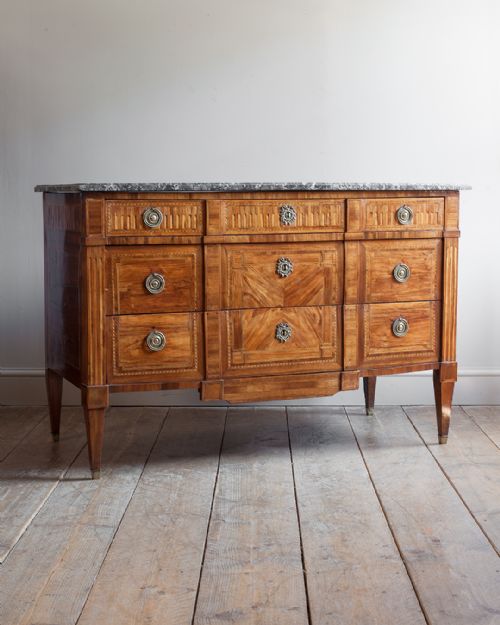
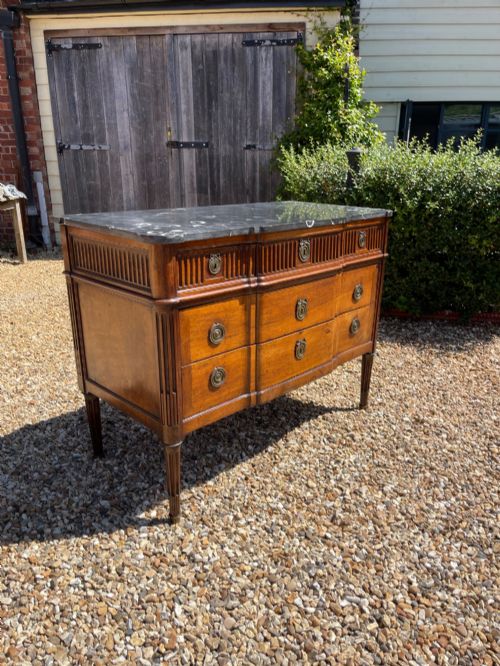
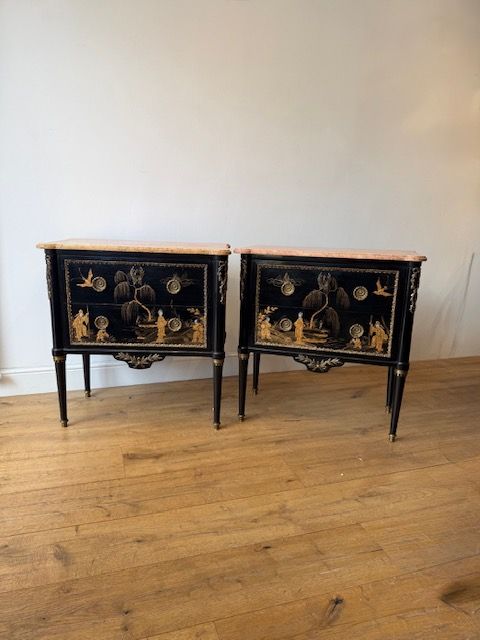
Commodes dominate the selection, often featuring rectangular carcases, fluted pilasters, and inset marble tops sourced from French and Italian workshops. Buyers also encounter bedside cabinets, secretaire chests, and painted finishes reflecting provincial interpretations of metropolitan tastes.
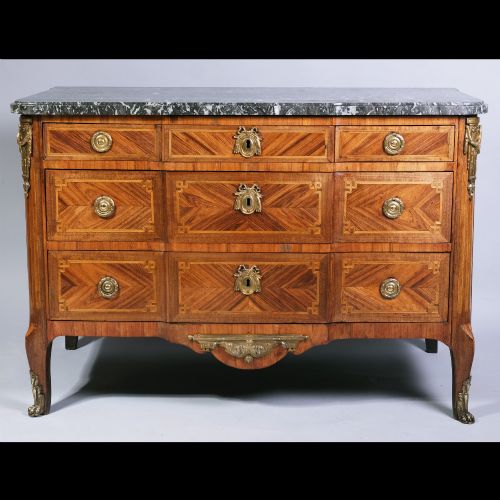
The aesthetic relies heavily on architectural geometry, where drawer tiers align neatly beneath stone surfaces and brass mounts accentuate structural corners. Whether selecting a period walnut original or a later revival piece, the fundamental form remains grounded in neoclassical balance.
Judging execution and finish
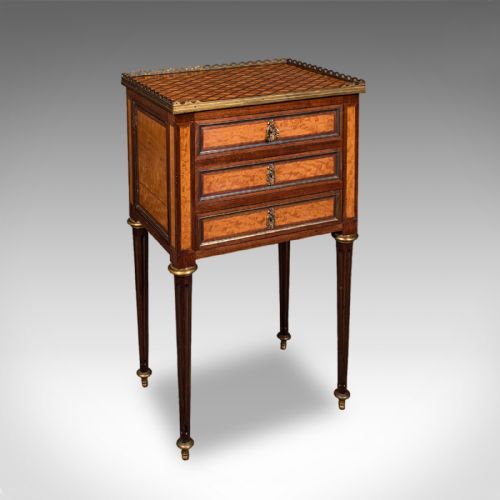
Quality rests upon the precision of the veneer work and the crispness of the bronze or brass mounts. Finer examples display tightly registered parquetry and hand-chased mounts that integrate smoothly with the timber carcase.
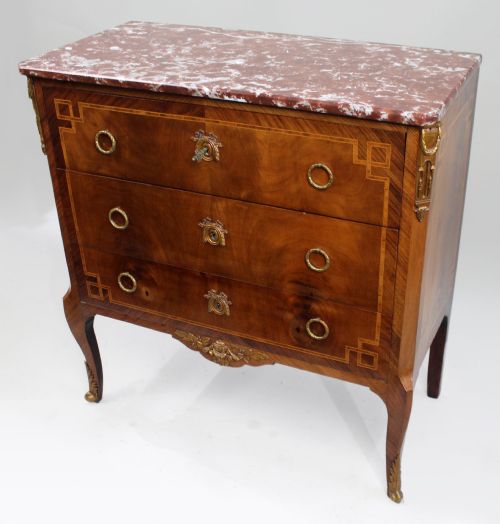
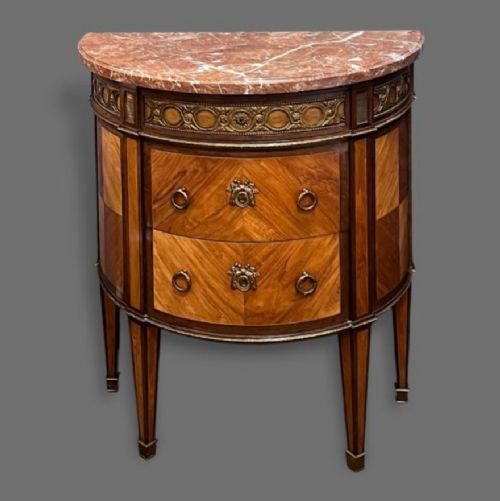
The choice and thickness of the marble top dictate a higher tier of production, particularly when fitted with moulded edges or specific stone colours like rouge. Secondary timbers inside the drawer linings and the integrity of the original dovetailed joints further separate standard production from superior craftsmanship.
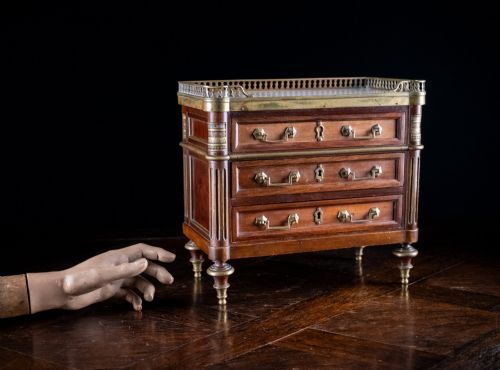
Several miniature chests appear here, built small enough to test a woodworker's skill or serve as aristocratic dollhouse furniture.
Maison Krieger·Jean-Henri Riesener
The Louis XVI Chest of Drawers Glossary
- Commode
- A low chest of drawers or cabinet standing on legs, popular in France from the eighteenth century onwards. It serves as both a decorative focal point and functional storage.
- Ormolu
- Gilded bronze used extensively for decorative mounts, handles, and feet on high-end furniture. The technique involves applying a gold-mercury amalgam to cast bronze.
- Marquetry
- The art of applying small pieces of veneer to a structure to form decorative patterns and pictures. Craftsmen utilise contrasting woods to achieve tonal depth.
- Parquetry
- Geometric wood inlay patterns such as cubes, lozenges, and chequers. This technique highlights the natural grain variations of timbers like walnut and kingwood.
- Secretaire
- A desk or chest featuring a pull-down writing flap concealing small drawers and pigeonholes. It combines the storage capacity of a chest with a dedicated writing surface.
Louis XVI Chest of Drawers: Frequently Asked Questions
How do I spot an eighteenth-century original?
Authentic eighteenth-century examples display hand-cut dovetailing, period-specific secondary woods inside the carcase, and patination accumulated over generations. The construction methods reflect the hand tools and joinery practices of the pre-industrial period.
Examination of the marble top's underside and the mounting pins for the brass hardware often reveals period hand-working marks. Comparing the timber shrinkage patterns against known regional workshops helps confirm the age.
What is the difference between revival and period pieces?
Period pieces date from the original neoclassical reign and carry the wear, material handling, and construction quirks of that era. Revival pieces are later interpretations, often built during the nineteenth or early twentieth centuries, mirroring the earlier aesthetic.
While both offer exceptional craftsmanship, revival furniture frequently incorporates machine-sawn elements or later hardware styling. Understanding this distinction aids in dating the piece accurately within a collection.
How should I care for a marble top?
Marble requires gentle cleaning with warm water and a soft cloth to avoid scratching the polished surface. Acidic substances like citrus or wine should be wiped away immediately to prevent etching the stone.
Applying a neutral stone wax periodically helps maintain the sheen and protects against minor stains. Avoid placing heavy impact objects directly onto the corners of the stone slab.
Are bedside tables common in this style?
Bedside chests and petit commodes were produced in smaller formats to match larger bedroom suites. These miniature versions share the same parquetry, marble tops, and brass mounts as their full-sized counterparts.
They offer practical bedside storage while maintaining strict adherence to neoclassical proportions and design motifs. Pairs frequently appear across revival production periods.