



Brass Mounted Parquetry Chest
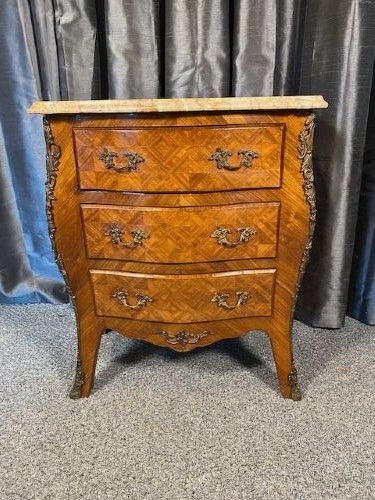
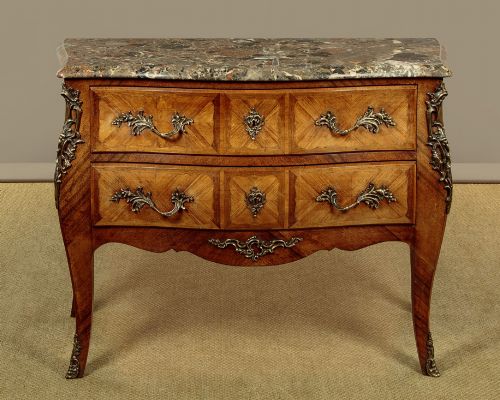
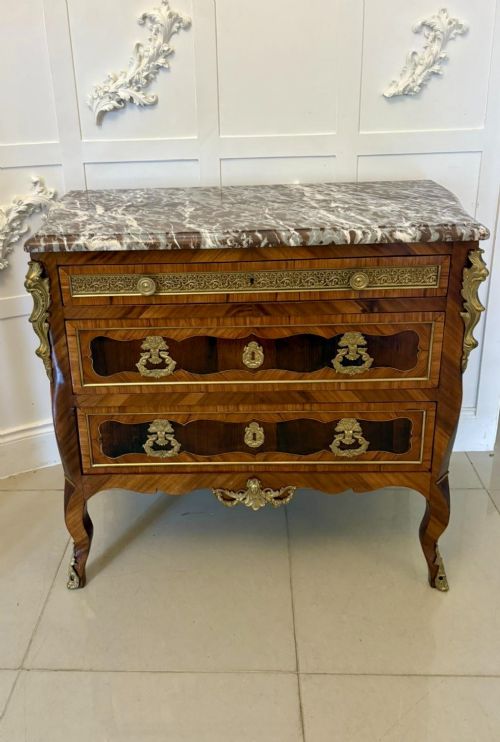
A brass mounted parquetry chest brings geometric timberwork and polished metal together into a substantial storage piece.
Brass Mounted Parquetry Chest
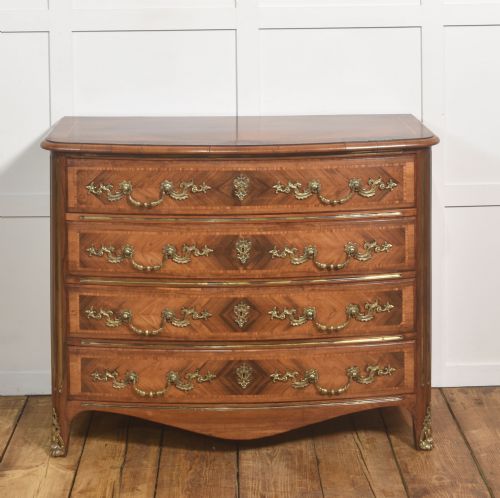
When you search for a brass mounted parquetry chest, you encounter storage furniture defined by patterned wood veneers and metal mounts. These items span from the eighteenth century through the twentieth century, with French revival designs and Continental commodes appearing frequently.
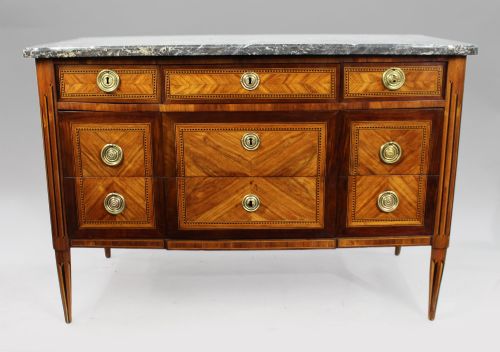
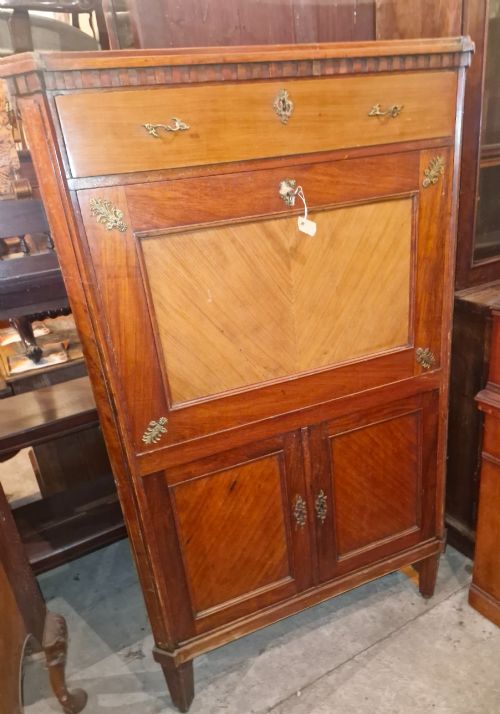
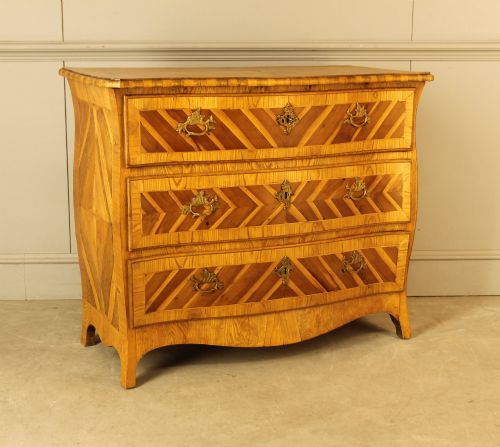
The forms on this page include serpentine chests of drawers, marble-topped commodes, bedside tables, and side cabinets. Many pieces follow Louis XV and Louis XVI styles, showcasing bombe silhouettes or straight transitional lines.
Origins heavily lean towards French workshops, alongside Swedish and Italian examples. Buyers typically find commodes and cabinets that combine decorative timber veneers with cast brass or ormolu mounts.
How they were made
Craftsmen built these pieces using hardwood carcasses veneered in finely cut timbers such as kingwood, walnut, rosewood, tulipwood, and fruitwood. Geometric parquetry patterns were laboriously arranged and glued to the surface before being polished.
Cast brass and ormolu mounts were applied to corners, feet, and drawer pulls to protect vulnerable edges and frame the woodwork. Many commodes were finished with heavy marble slabs fitted directly to the top surface.
Listings feature walnut, kingwood, rosewood, and fruitwood veneers paired with marble and brass.
What varies in quality
The precision of the veneer work dictates the initial visual appeal of the piece. Crisp geometric alignment in the parquetry separates finer examples from simpler production.
The weight and detail of the brass mounts also reveal the workshop standard. Well-chased ormolu and heavy cast brass hardware indicate skilled metalwork that complements the timber beneath.
The Brass Mounted Parquetry Chest Glossary
- Parquetry
- Geometric mosaic woodwork formed by small veneer pieces fitted together. This technique creates patterned surfaces across drawer fronts and sides.
- Ormolu
- Gilded bronze used for decorative mounts and hardware. It provides a bright golden contrast against dark timbers.
- Bombe
- An outward-swelling curved profile typical of rococo case furniture. This undulating shape requires advanced woodworking skill.
- Serpentine
- A wave-like curved outline featuring a convex centre flanked by concave curves. It defines the front profile of many commodes.
- Commode
- A low chest of drawers or cabinet originating in France. These pieces frequently feature marble tops and decorative mounts.
Brass Mounted Parquetry Chest: Frequently Asked Questions
How do I clean marble tops?
Wipe the marble surface with a damp cloth and mild neutral soap to remove dust and daily grime. Avoid acidic cleaners that etch the polished stone.
Dry the surface thoroughly with a soft cloth to maintain the natural sheen without damaging the surrounding timber veneer.
Where should I place a commode?
Position these chests in hallways, living rooms, or bedrooms where the decorative parquetry and brass mounts can be appreciated. Keep them away from direct heat sources and strong sunlight to protect the wood and veneer.
Ensure the floor is level so the drawers open smoothly and the heavy marble top rests evenly on the carcass.
How do I identify Louis styles?
Louis XV pieces typically feature asymmetrical curves, bombe profiles, and elaborate rococo brass mounts. The lines are flowing and organic.
Louis XVI furniture shifts towards stricter symmetry, straight tapered legs, and neoclassical parquetry patterns inspired by ancient architectural motifs.
Are these chests suitable for daily use?
These cabinets provide practical storage for clothing, linens, or tableware depending on the specific drawer configuration. The internal timber construction remains robust for everyday household storage.
Exercise care with the polished exterior and marble top to prevent scratching the historic surfaces during daily routines.