


Louis XV Walnut Bureau
A louis xv walnut bureau brings fluid curves and rich timber grain to a room, offering a practical writing surface shaped by continental revival design.
Louis XV Walnut Bureau
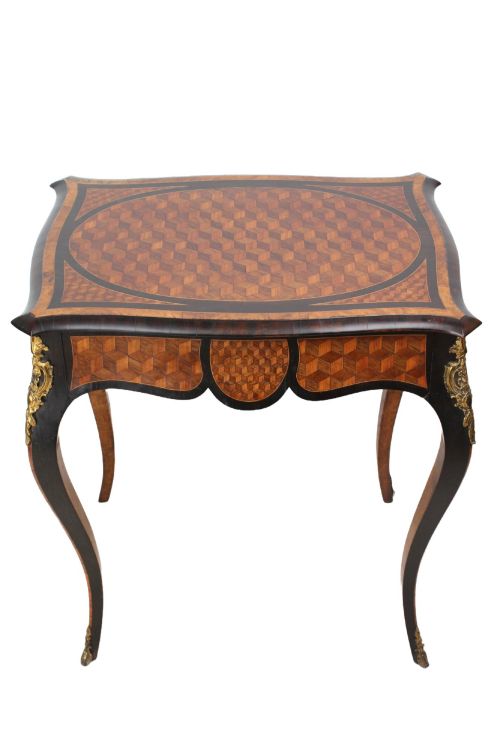
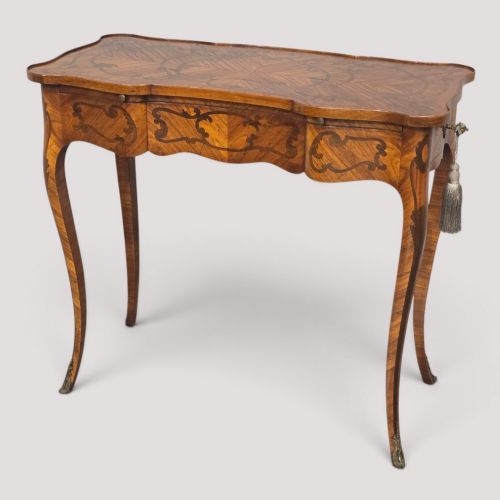
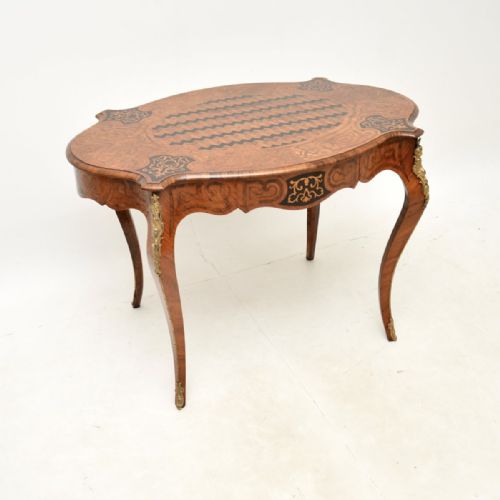
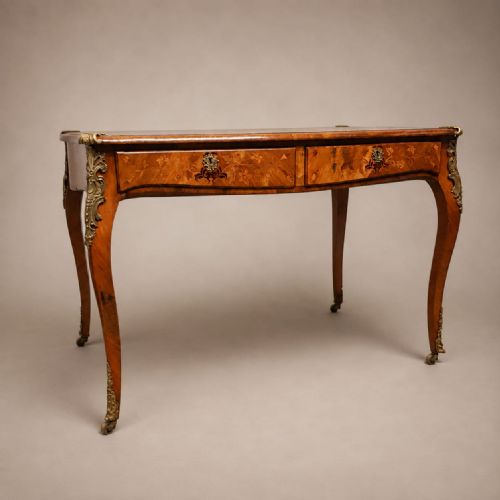
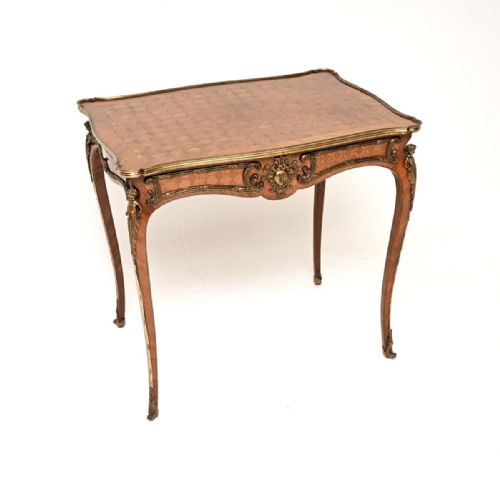
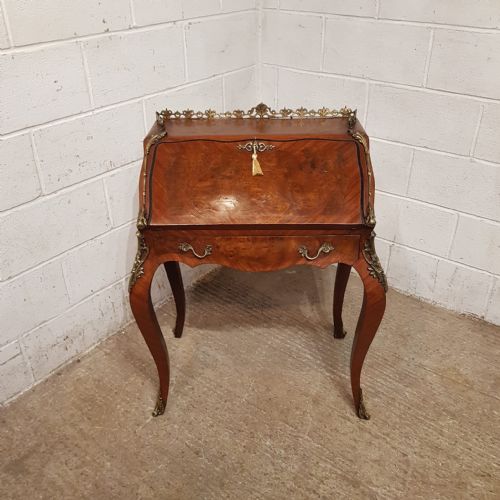
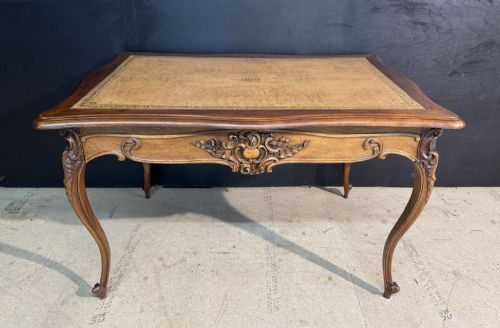
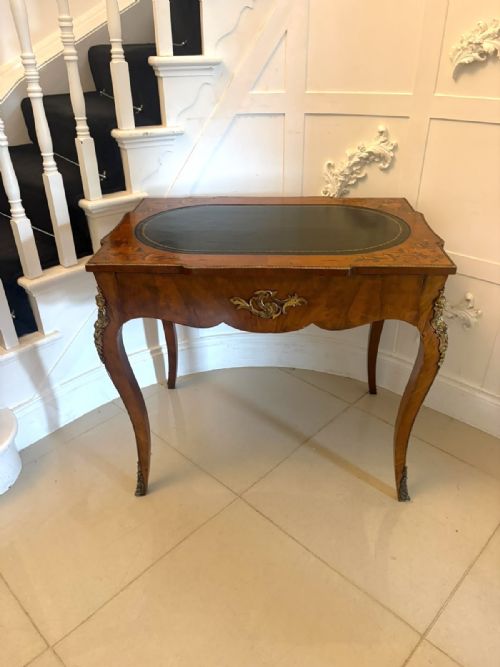
A louis xv walnut bureau encompasses writing desks, bureau plats, and writing tables created across the nineteenth century in various revival styles. These pieces combine practical work surfaces with decorative marquetry, parquetry, and fitted compartments.
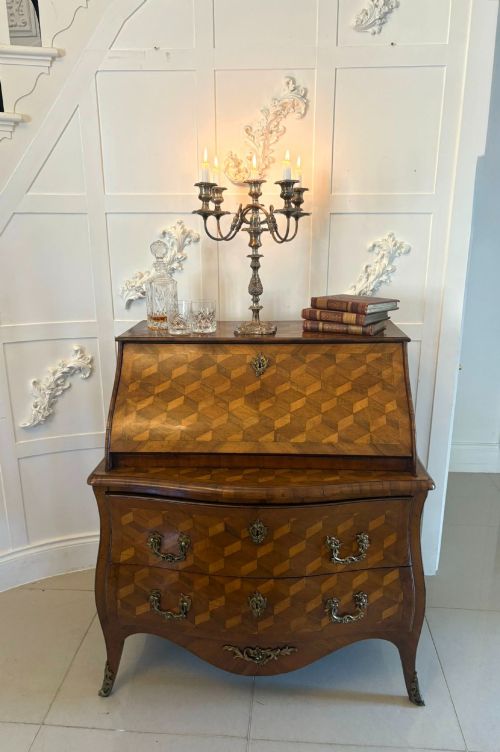
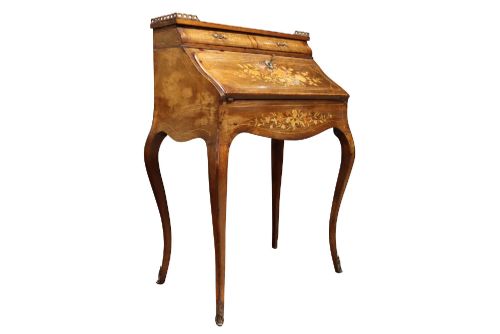
Most examples originate from nineteenth-century workshops producing French Rococo revival furniture, alongside specific forms like the bureau de dame and bonheur-du-jour. Makers utilised walnut, burr walnut, and kingwood to construct these sophisticated writing furniture pieces.
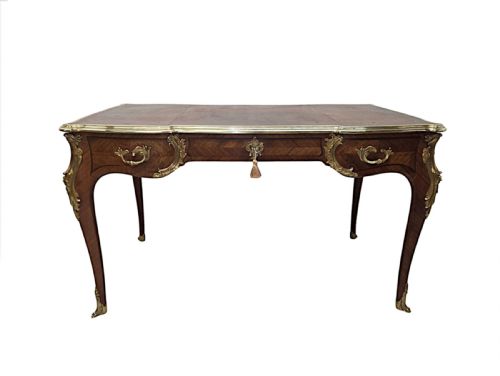
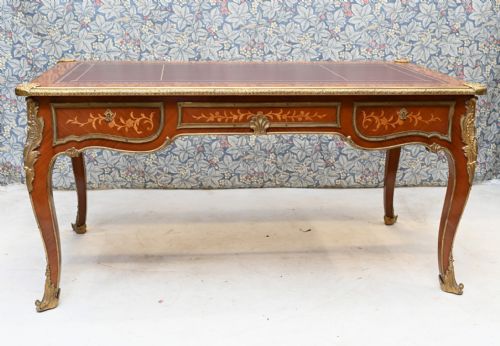
Buyers encounter freestanding writing tables and bureau plats designed to sit centrally in a room, featuring leather writing inserts and multiple drawers. The forms range from neat, compact ladies' desks to larger bombe-shaped writing cabinets.
How they were made
Craftsmen built these pieces using solid walnut and applied veneers of burr walnut, kingwood, and various contrasting timbers to create elaborate geometric parquetry and floral marquetry patterns. Brass and ormolu mounts, cast in gilt bronze, accent the curves of the framework.
Structural elements frequently incorporate leather writing surfaces, sometimes tooled, inset into the top. Cabriole legs support the writing surfaces, often terminated with cast metal sabots at the feet to protect the timber.
Listings feature walnut, burr walnut, kingwood, and ormolu across nineteenth-century writing desks and tables.
What varies in quality
The sophistication of the marquetry and the choice of timber figure determine the visual impact of the piece. Selected burr walnut and intricate parquetry denote higher ambition in the workshop.
The weight and detail of the cast ormolu mounts separate standard production from superior exhibition pieces. Crisp chasing on the gilt bronze and well-fitted drawer construction indicate greater skill.
JAS Shoolbred·Edwards and Roberts
The Louis XV Walnut Bureau Glossary
- Bureau plat
- A flat-topped freestanding writing desk, typically featuring drawers in the frieze and standing on cabriole legs. These desks were designed to be viewed from all sides in the centre of a room.
- Marquetry
- Decorative veneer work forming pictorial or geometric patterns using various coloured woods. Craftsmen cut thin slices of timber to assemble complex motifs across the writing surface.
- Ormolu
- Gilt bronze mounts applied to furniture for decorative effect on corners, legs, and aprons. The technique involves applying a gold amalgam to cast bronze.
- Parquetry
- Geometric wood inlay forming repeating patterns such as cubes or lozenges. This technique showcases the natural grain variation of walnut and kingwood.
- Bonheur-du-jour
- A light ladies' writing desk featuring a small cabinet or set of drawers on the upper surface. These pieces became popular during revival periods for correspondence.
Louis XV Walnut Bureau: Frequently Asked Questions
What is a bureau plat?
A bureau plat is a flat-topped writing table finished on all sides so it can stand away from the wall. These desks usually feature leather writing panels and multiple drawers.
They served as working desks for correspondence and administrative tasks in grand French interiors during the revival periods of the nineteenth century.
Where do these desks come from?
These pieces originate primarily from nineteenth-century English and French cabinet makers embracing continental revival styles. Workshops utilised imported continental timbers and decorative casting techniques.
Many bear the influence of French Rococo design translated through Victorian manufacturing methods and London retail houses.
How do I care for walnut veneer?
Walnut veneer requires stable humidity and protection from direct sunlight to prevent fading and lifting. Regular dusting with a dry cloth maintains the polished surface without moisture damage.
Avoid placing these tables near direct heat sources which can dry out the historic timber and cause hairline cracks in the polish.
Are these desks practical for daily use?
Many examples provide adequate surface area and drawer storage for modern laptops and writing materials. The fitted compartments in bureau de dame forms suit stationery storage.
Care should be taken with historic leather writing surfaces to protect them from spills and heavy pressure during daily tasks.