


French Provincial Bureau
These pieces of French provincial bureau design bring continental writing forms into domestic spaces through practical slope-front storage and fitted drawers.
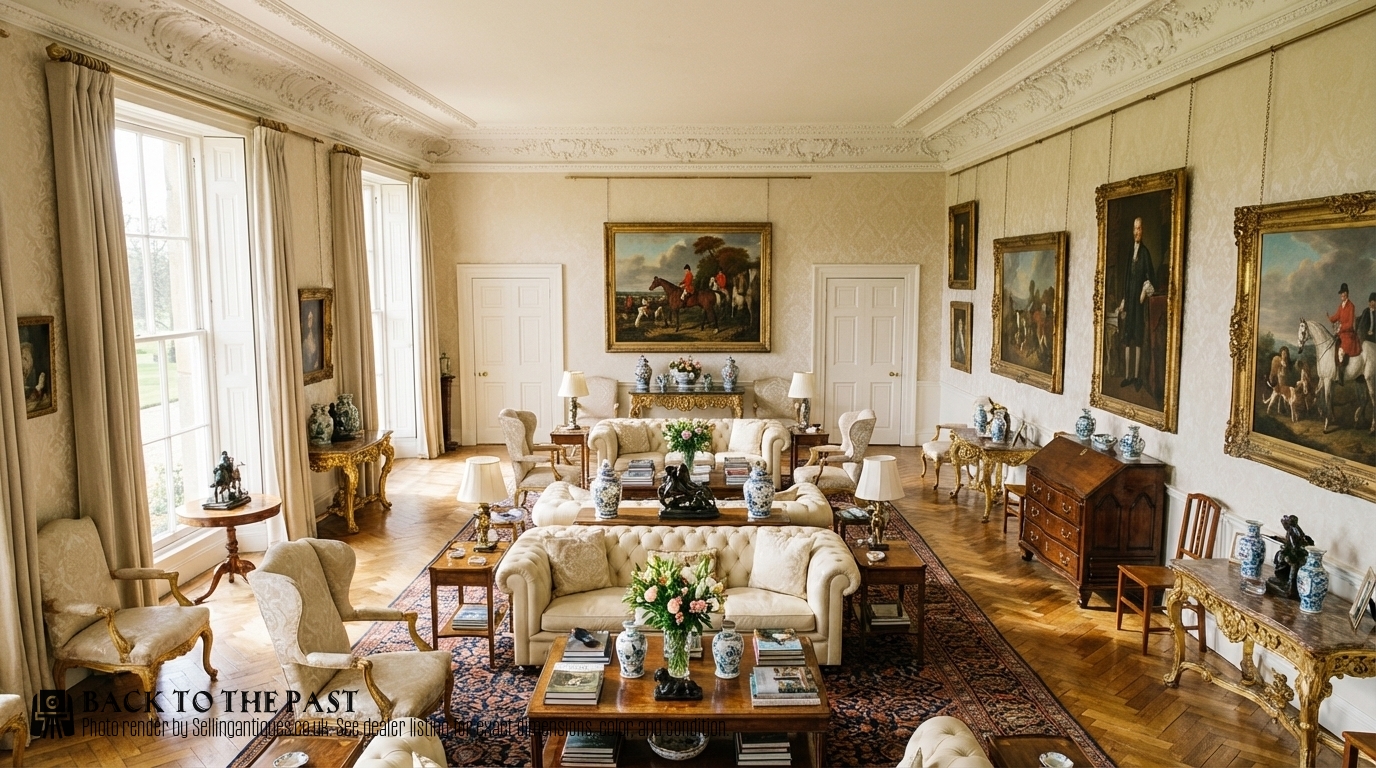
French Provincial Bureau
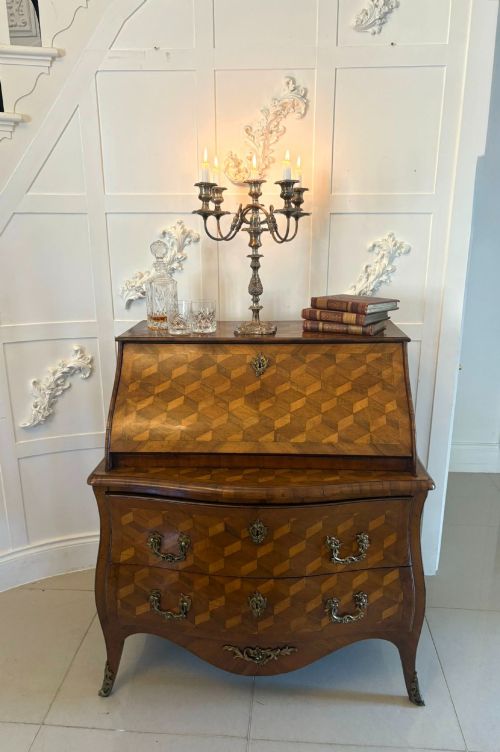
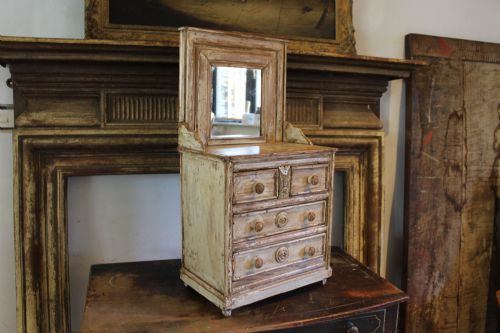
A french provincial bureau combines a sloping writing flap with internal stationary compartments and lower drawers, creating a compact workstation for correspondence. The selection here ranges from substantial walnut and fruitwood examples to smaller scale writing desks and miniature apprentice pieces.
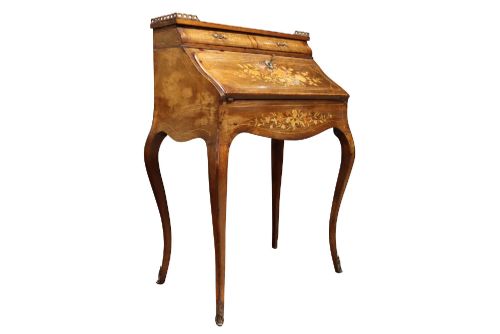
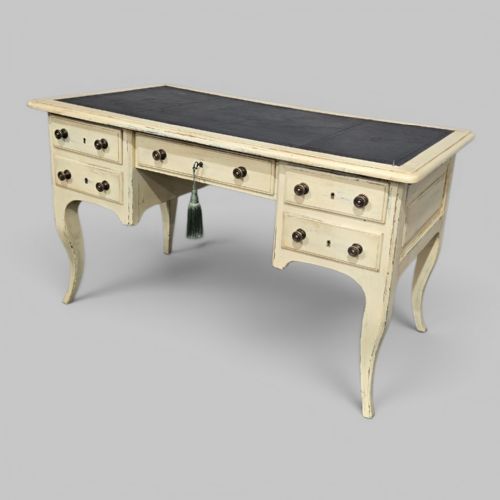
Most items on this page date from the eighteenth and nineteenth centuries, spanning periods like the Victorian era and the Georgian crossover. Forms include bombe shaped bureau bodies, bonheur-du-jour writing cabinets, and simpler kneehole desks originating from French provincial workshops.
The aesthetic leans heavily towards regional adaptations of courtly tastes, particularly Louis XV and Louis XVI revivals alongside rustic chateau styles. Buyers encounter pieces finished in plain timber as well as more decorative surfaces utilising marquetry inlay.
How they were made
Cabinetmakers constructed these writing surfaces using solid timbers such as walnut, fruitwood, oak, and kingwood, often applying delicate veneers across the main body. Parquetry and marquetry inlay techniques create geometric or floral patterns across the fall-fronts and writing surfaces.
Decorative metalwork plays a key structural and ornamental role, with brass handles and gilt ormolu mounts securing corners and framing drawers. Leather inserts frequently line the writing slopes and tabletops of writing desks and tables.
Listings feature walnut, fruitwood, and kingwood alongside marquetry inlay and ormolu mounts across the eighteenth and nineteenth centuries.
What varies in quality
The calibre of a piece depends heavily on the crispness of the parquetry work and the selection of timber veneers across large expanses. Superior examples show careful grain matching and precise control over the bombe curves rather than generic mass assembly.
Hardware and mounts distinguish workshop tiers, with cast brass and chased ormolu details indicating higher investment during production. The interior stationery arrangement and secondary timber choices inside the drawers reveal the original maker's overall standard of execution.
The French Provincial Bureau Glossary
- Bureau
- A writing desk featuring a sloping lid that opens to reveal compartments for paper and small drawers. This form provides both enclosed storage and a functional writing surface.
- Bonheur-du-jour
- A light ladies' writing desk equipped with a small cabinet or set of shelves on the upper surface. These dainty pieces became popular during the nineteenth century.
- Bombe
- A swelling or outward curving contour characteristic of advanced cabinetmaking. It demands considerable skill from the woodworker to shape the drawers and frame synchronously.
- Parquetry
- Geometric patterns formed by fitting small pieces of veneer together on a surface. This technique contrasts different wood tones to create optical depth.
- Ormolu
- Gilded bronze used for decorative mounts on fine furniture. The technique involves applying a gold amalgam to bronze before heating.
French Provincial Bureau: Frequently Asked Questions
What is a french provincial bureau?
A french provincial bureau is a traditional writing cabinet featuring a hinged sloping flap that opens to form a desk surface over lower storage drawers.
These pieces were made in regional French workshops, adapting metropolitan furniture styles into more practical domestic furnishings.
How were these desks used?
They served as private writing stations for correspondence, household accounts, and the storage of important documents within country houses and town residences.
The interior compartments held inkwells, quails, and writing paper out of sight when the lid was closed.
How do I date a bureau?
Dating relies on examining the construction methods of the drawer linings, the choice of secondary timbers, and the style of hardware mounts.
Earlier eighteenth-century pieces often show hand-cut dovetails and regional timber selections, while nineteenth-century revivals borrow earlier decorative motifs.
Where should I place a bureau?
These desks suit living rooms, studies, or bedrooms where their compact footprints allow them to function both as display surfaces and working desks.
Keeping them away from direct heat sources helps preserve the stability of the wood veneers and leather inserts.
What is the difference between a bureau and a bonheur-du-jour?
A bureau relies on a sloping fall-front lid that conceals an interior writing space above standard drawers.
A bonheur-du-jour is typically a lighter table desk featuring an open or shelved superstructure built onto the rear of the writing top.