
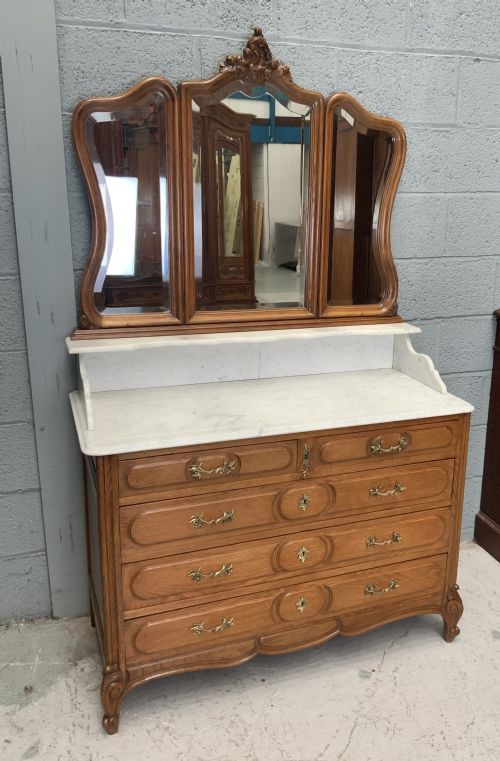


Louis XV Table Mirror
A louis xv table mirror brings unmistakable curve and flourish to a dressing surface, catching the light through elaborate frames.
Louis XV Table Mirror
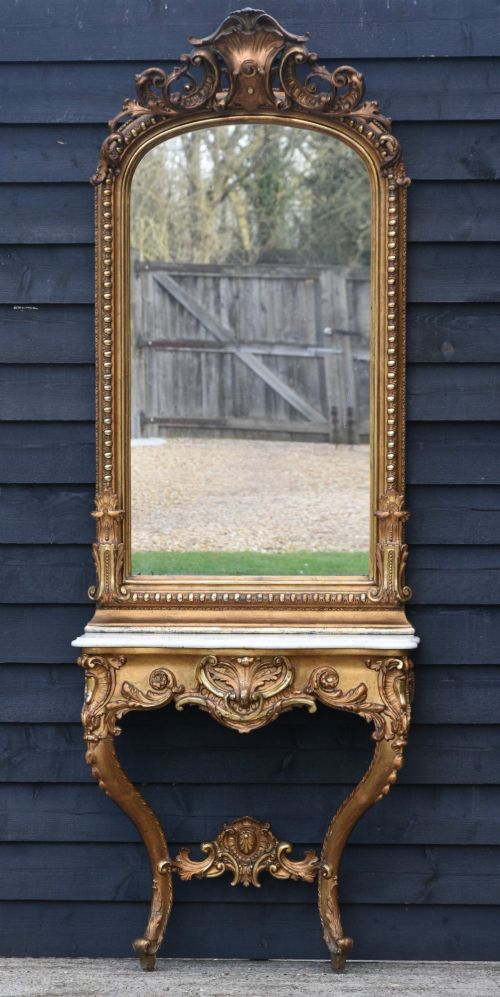
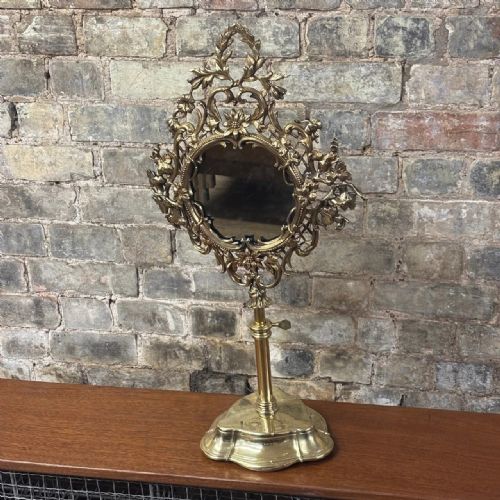
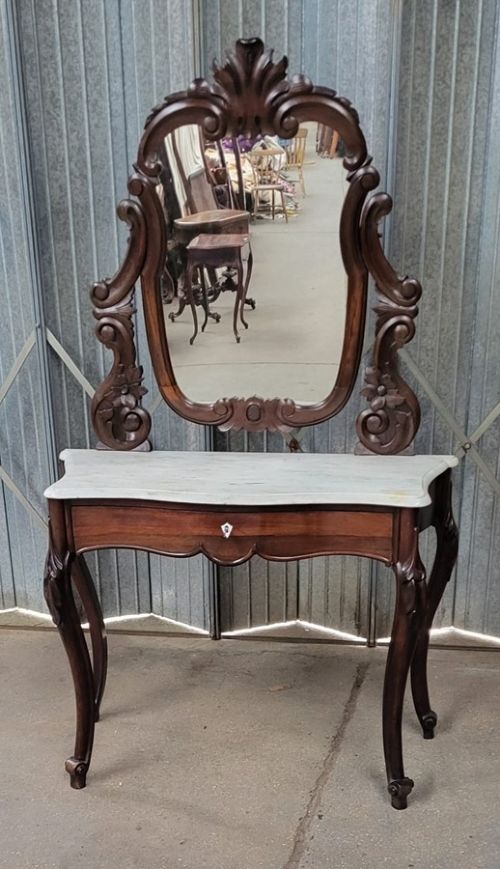
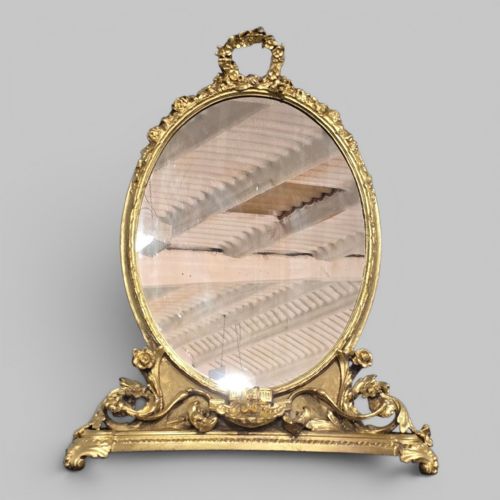
A louis xv table mirror embodies the fluid asymmetry and organic motifs of the Rococo movement, designed to sit upon a chest or dressing surface. You will frequently encounter these pieces framed in giltwood, brass, or carved walnut, often reflecting the revival tastes of the nineteenth and early twentieth centuries. These mirrors serve both a practical dressing function and a decorative role, bringing a touch of French revival elegance into an interior.
The materials and forms recorded range from solid brass easel designs to elaborate carved wooden frames, spanning the Victorian and Edwardian eras alongside nineteenth-century examples. Many surviving pieces bridge the gap between vanity mirrors and larger dressing table accessories, appearing in oval formats or with adjustable pivoting stands.
Materials and construction
Makers utilised cast brass, carved walnut, and gilded gesso over wood to achieve the sweeping, undulating contours characteristic of the style. Ormolu mounts and polished glass plates complete the construction, bringing metallic lustre and reflective depth to the pieces.
Joinery methods rely on traditional cabinet-making techniques, with carved wooden frames assembled using precise mitres and secure backings to support the heavy glass panels.
Listings feature materials such as brass, giltwood, walnut, and marble, spanning the nineteenth century and the Edwardian era.
Assessing quality and craftsmanship
The depth and crispness of the carving or casting distinguish finer examples from simpler production, particularly in the rendering of scrolls and floral motifs. High-quality pieces show meticulous attention to the finishing of the gilding and the weight of the metal components.
The clarity and original state of the glass plate also influence the character of the object, alongside the structural integrity of the pivoting mechanism or stand.
H & L Epstein
The Louis XV Table Mirror Glossary
- Ormolu
- Gilded bronze, frequently employed for decorative mounts and frames during the eighteenth and nineteenth centuries.
- Gesso
- A plaster-like mixture applied to wood surfaces as a base for carving and gilding.
- Giltwood
- Timber coated with gold leaf or a gold-coloured finish to create a brilliant decorative surface.
- Rococo Revival
- An artistic movement drawing on the asymmetrical scrolls and shell motifs of the original French Rococo period.
- Easel mirror
- A tabletop looking glass supported by a hinged leg or prop at the back.
Louis XV Table Mirror: Frequently Asked Questions
How do I date a louis xv table mirror?
Dating relies on examining the materials, the composition of the metal or wood, and the construction of the mirror back and frame. Nineteenth-century and Edwardian revival pieces often display specific casting marks or wood ageing patterns that distinguish them from earlier originals.
Furthermore, the style of the glass bevel and the type of screws or fixings used provide clear indications of the period of manufacture.
Where should I place a louis xv table mirror?
These mirrors suit dressing tables, chest of drawers, or console surfaces where their decorative frames can be appreciated. Positioning them to reflect natural light helps brighten a room while highlighting the intricate details of the brass or giltwood.
Ensure the supporting surface is stable and deep enough to accommodate the footprint of the easel or base securely.
What is the difference between revival styles?
French Rococo revival focuses on asymmetrical curves, C-scrolls, and naturalistic shell motifs, whereas Empire revival leans towards classical symmetry and military or imperial symbols. Recognising these decorative vocabularies helps identify the specific aesthetic driving the design of the mirror.
Makers frequently reinterpreted these historical languages during the Victorian and Edwardian periods with varying degrees of ornamentation.
How do I care for the gilt frame?
Dust the frame gently with a soft, dry brush to prevent the accumulation of dirt within the intricate carved or moulded recesses. Avoid using liquid cleaners or chemical polishes, as these can damage the delicate gold leaf or gesso surface.
Keep the mirror away from direct sunlight and damp environments to protect both the wooden substrate and the reflective silvering on the glass.