

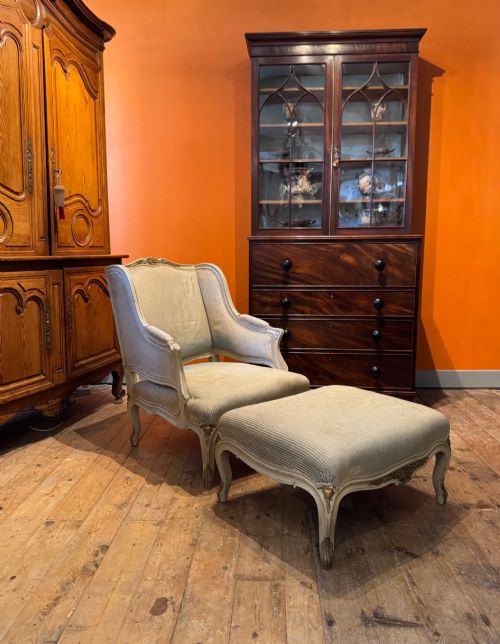


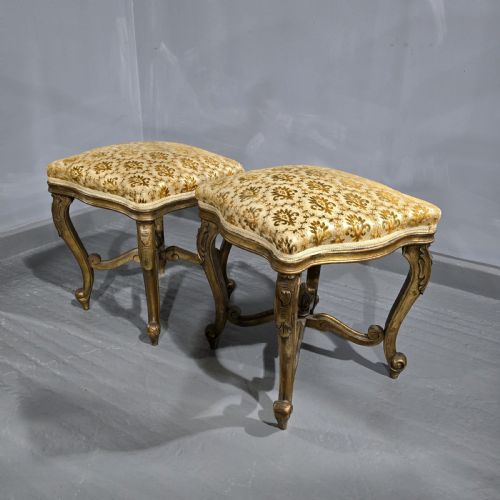


Louis XV Style Footstool
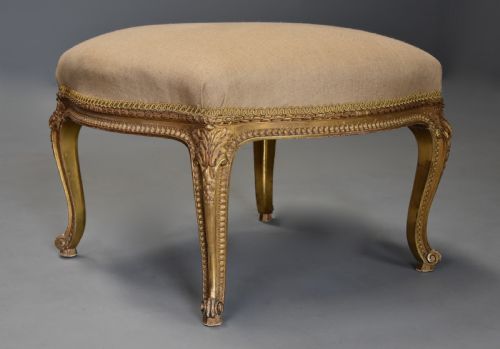
These louis xv style footstool pieces combine continental rococo flair with period upholstery, bringing practical seating and French chateau character into a room.
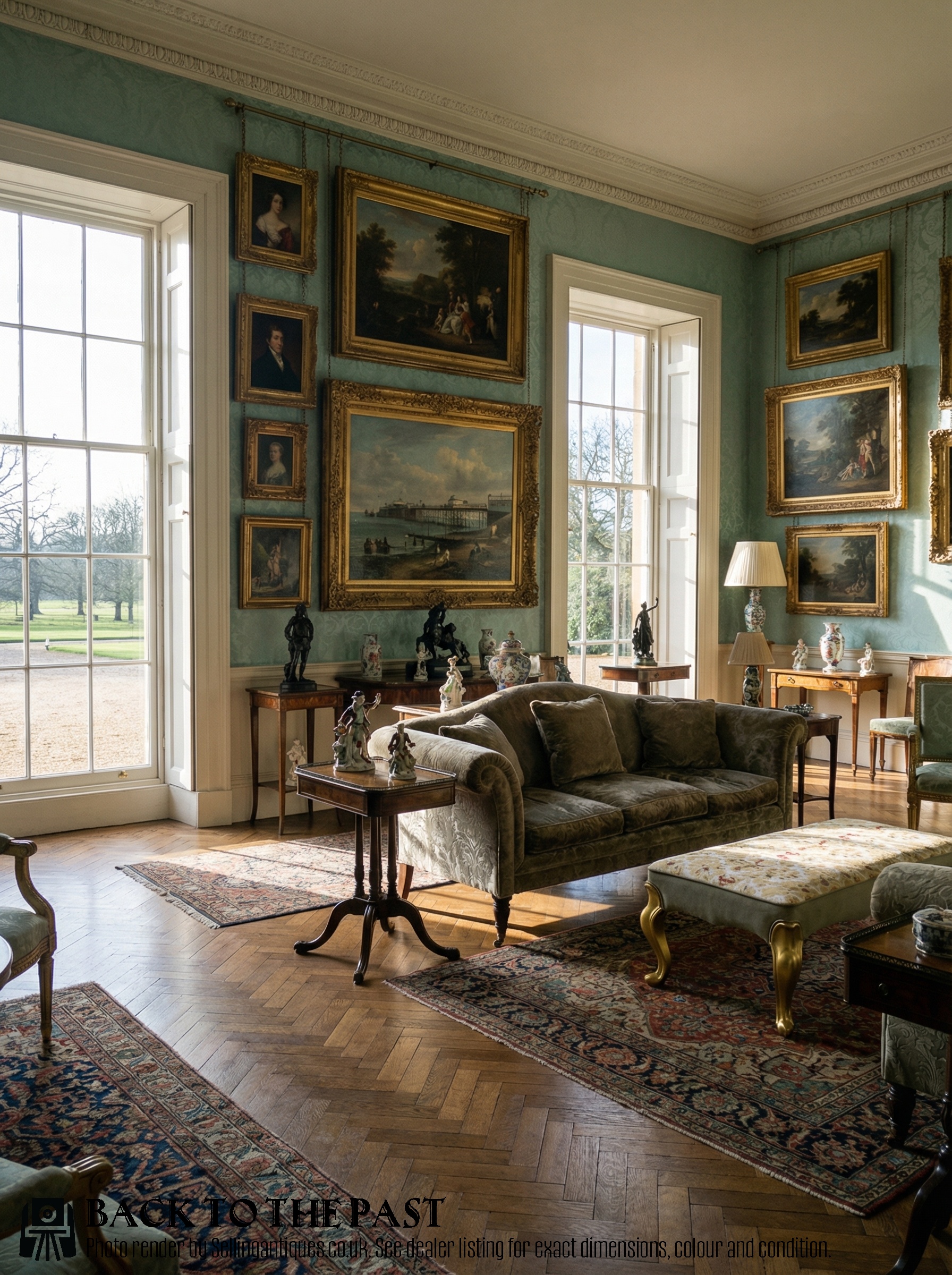
Louis XV Style Footstool
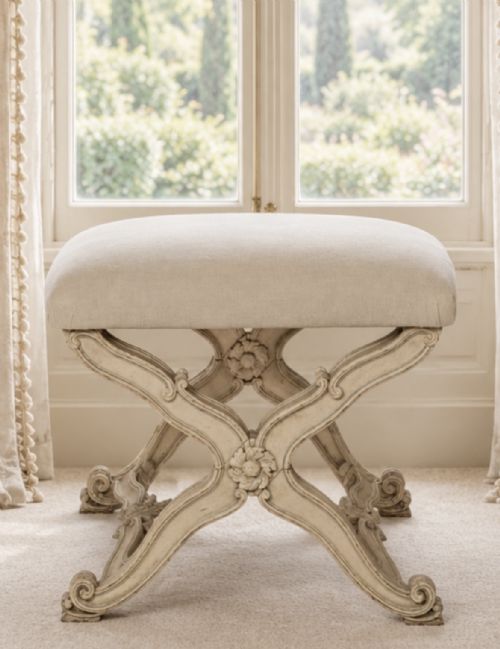
A louis xv style footstool takes several distinct seating forms, ranging from compact circular boudoir pieces to long benches and paired items designed to accompany armchairs. These low seats appear frequently in nineteenth-century interpretations alongside later revivals from the early decades of the twentieth century.
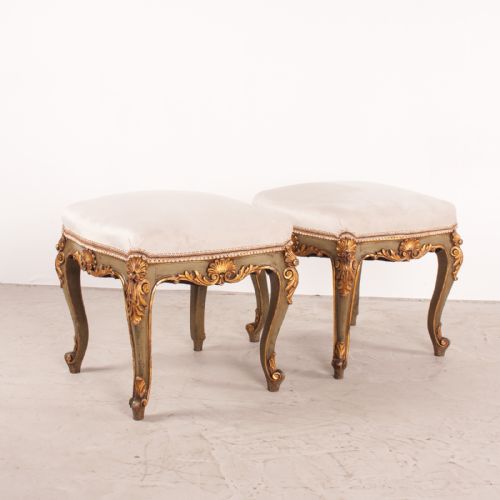
Makers drew heavily upon French provincial and continental rococo traditions, producing carved wooden frames that often match larger chaise longues or duchesse brisée suites. The selection on this page demonstrates both single decorative items and matched pairs intended for formal rooms.
Materials and construction
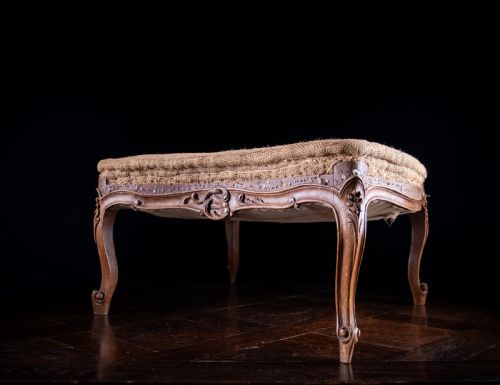
Craftsmen shaped these frames from solid hardwoods like beech, walnut, and painted or gilded wood, applying hand-carved detailing inspired by classical French motifs. Structural integrity relies upon traditional joinery to support the carved legs and scrolling rails.
Upholstery forms a vital component of each piece, utilising fabrics such as linen and needlework to cover the padded tops. Surface finishes range from original paint and parcel gilt to heavily burnished giltwood.
Louis XV Style Footstool Retail Price Guide 2026
Typical asking prices for louis xv style footstool among the pieces listed under this phrase on Sellingantiques today, from the lower quarter to the upper quarter. They describe what is for sale here now, not the wider market.
Listings feature pieces spanning the nineteenth century through the 1930s, constructed primarily from beech, walnut, and giltwood.
Assessing craftsmanship
Quality rests upon the crispness of the hand-carved woodwork and the depth of the gilding or paint layers applied to the frame. Superior examples display fluid, organic lines without stiffness in the scrolling foliage and cabriole legs.
The choice of upholstery materials and the fidelity of the period revival style further distinguish finer pieces. Maker stamps, where present, add an extra layer of historical interest to the construction.
LOIDRAULT FRERES PARIS
The Louis XV Style Footstool Glossary
- Giltwood
- Wood carved and then covered with a thin layer of gold leaf. This finish defines many formal nineteenth-century French seating pieces.
- Cabriole leg
- A furniture leg that curves out and then in, mimicking an animal's leg. It forms a central feature of Louis XV design.
- Parcel gilt
- A decorative technique where only specific raised portions of a painted surface receive gilding. This highlights particular carved details.
- Duchesse brisée
- A multi-part chaise longue comprising an armchair and an elongated footstool or secondary chair. They combine to form a single resting place.
- Needlework
- Hand-stitched textile used traditionally for upholstery. These textured coverings frequently appear on antique footstools.
Louis XV Style Footstool: Frequently Asked Questions
How do I date a louis xv style footstool?
Dating relies on examining the timber species, tool marks left by carvers, and the composition of any paint or gilding layers. Nineteenth-century interpretations often utilise denser hardwoods and distinct fastening methods compared to later twentieth-century revivals.
Upholstery webbing and stuffing materials also provide clues to age, though many pieces have been re-covered over time to suit modern interiors.
Where should I place a French style footstool?
These decorative low seats suit placement beside armchairs, at the foot of a bed, or beneath a dressing table. Their compact footprint allows them to move easily between living spaces and bedrooms.
Paired stools work effectively flanking a fireplace or positioned beneath a console table when not in active use.
Are these footstools comfortable for daily use?
Most pieces provide firm, supportive seating designed originally for resting feet or short periods of repose. The padding depends on the historical upholstery specification inside.
Modern buyers often enjoy them as functional accents, though vintage padding may feel firmer than contemporary foam furniture.