
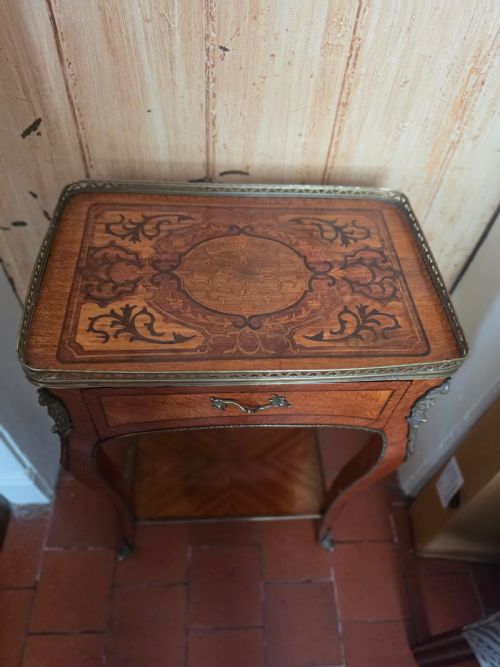
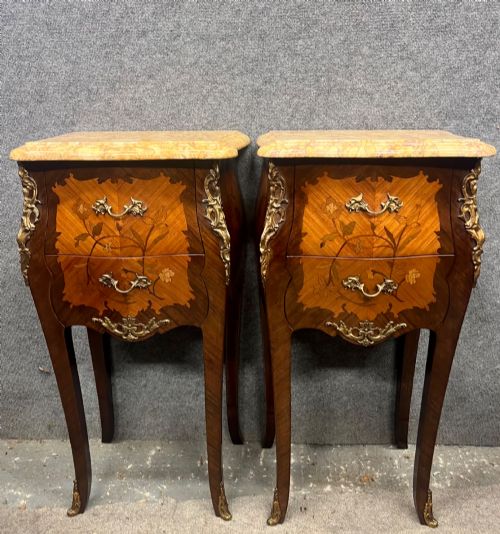
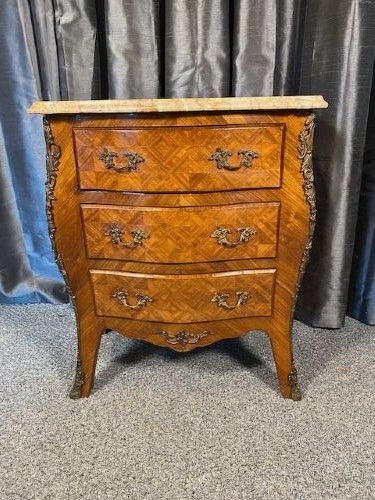
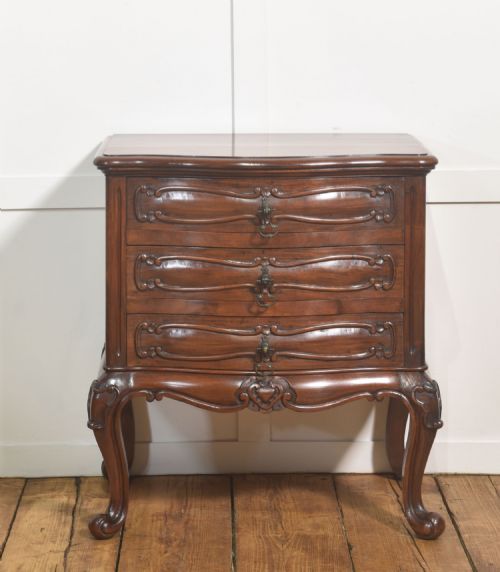
Louis XV Style Drawers
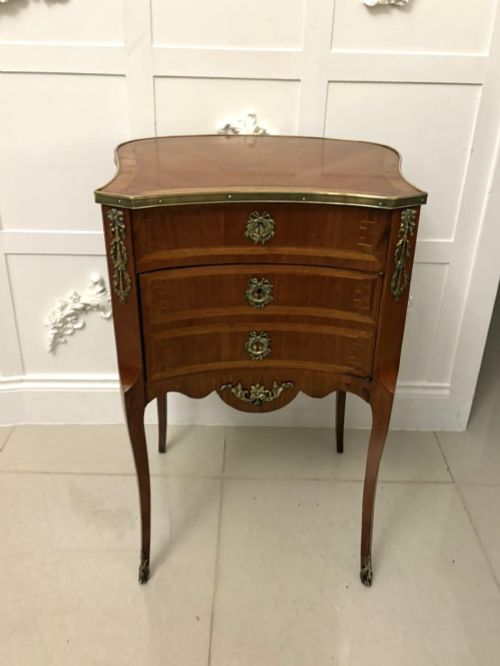
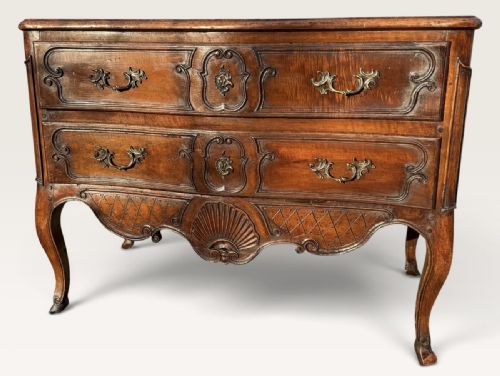
Louis xv style drawers encompass serpentine commodes, bedside cabinets, and chests crafted in walnut, kingwood, and oak from the eighteenth century to the twentieth.
Louis XV Style Drawers
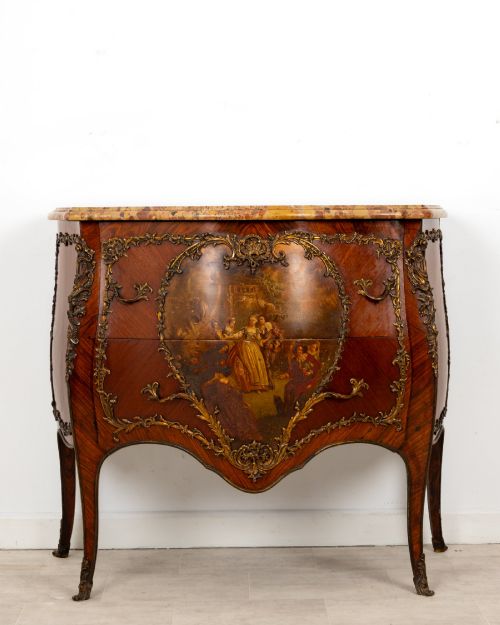
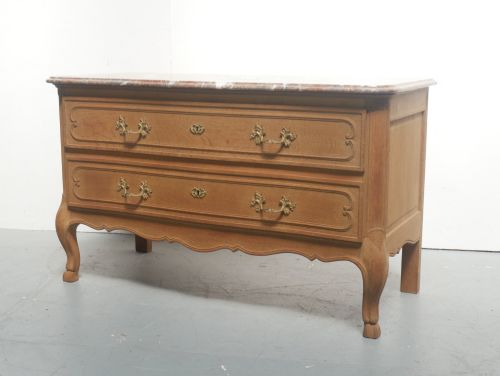
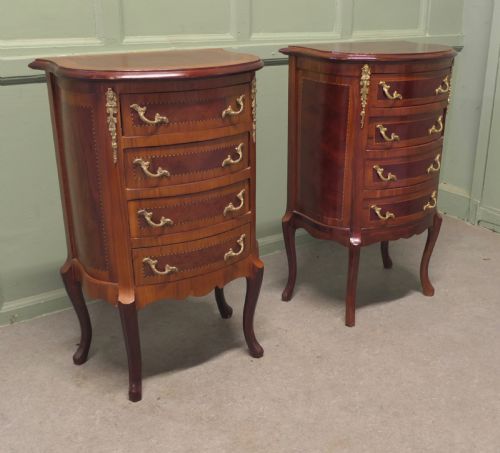
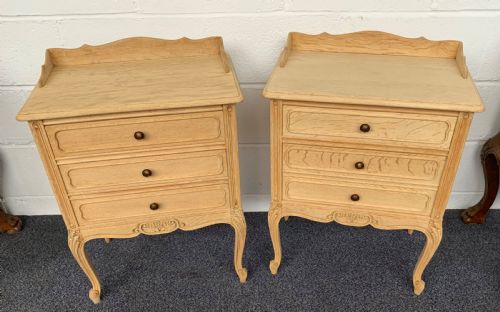
Most pieces met on this page originate from the nineteenth and early twentieth centuries, constructed in the Louis XV and Louis XV Revival styles. These later iterations emulate the flowing lines and asymmetrical curves of earlier masterworks while serving modern domestic spaces.
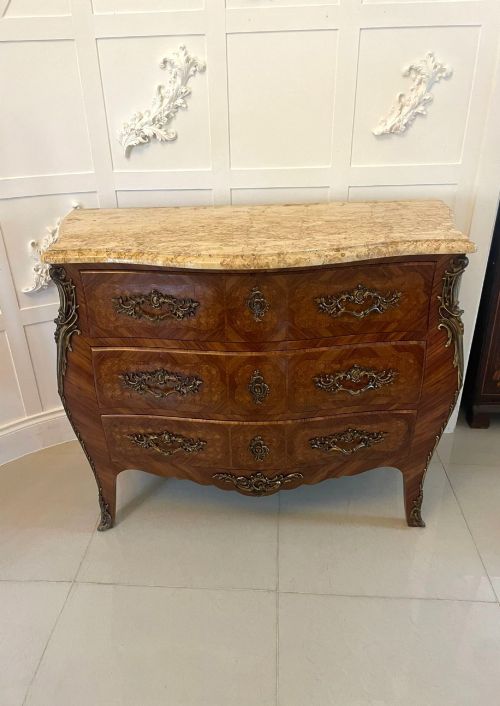
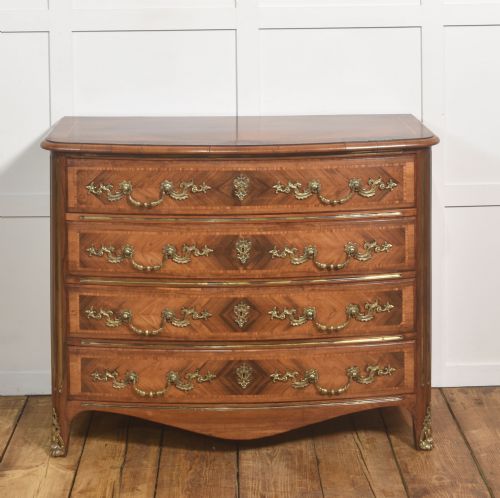
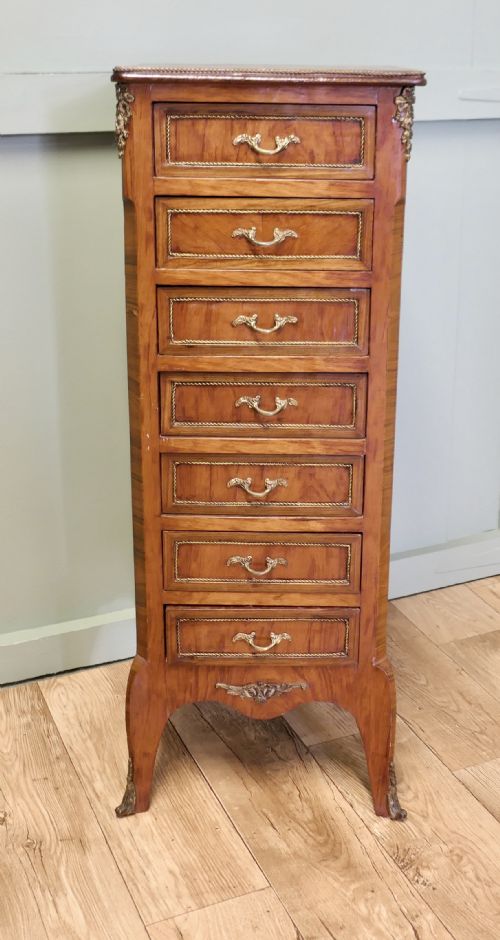
Forms range from compact bedside chests to large marble-topped commodes and tall chests of drawers. Woods such as walnut, kingwood, and oak provide the structural foundation for these varied storage pieces.
How They Were Made
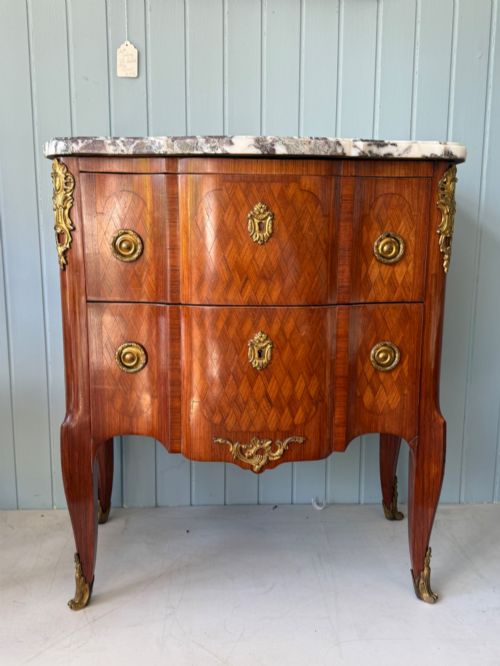
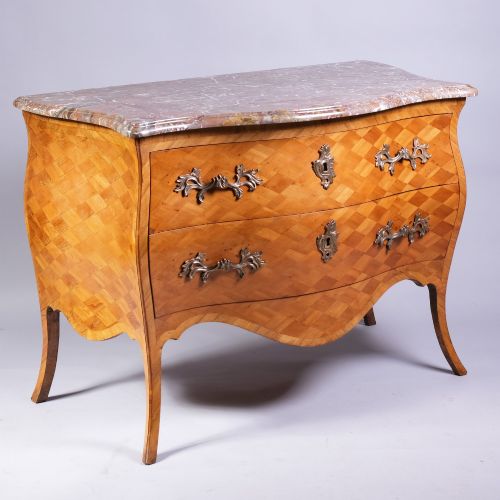
Cabinetmakers utilised dense timbers like walnut, kingwood, rosewood, and oak as carcase foundations, often applying intricate parquetry and marquetry veneer patterns across the surfaces. Skilled hands cut contrasting wood grains to form floral or geometric compositions.
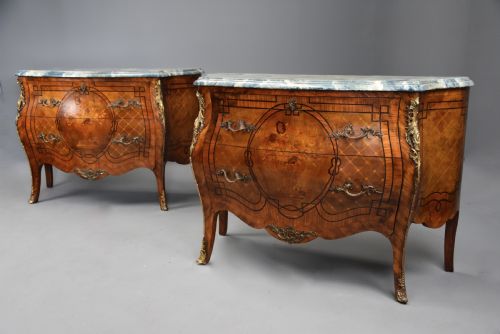
Many examples incorporate heavy slabs of marble fitted neatly to the serpentine or bombe tops of the carcase. Gilt-bronze, brass, and ormolu mounts punctuate the corners, drawer edges, and legs.
Structural joinery relies on traditional methods to support the sweeping curves typical of the style. Drawer frames and carcases fit together tightly to endure centuries of daily use.
Listings feature pieces spanning the 18th Century through the 1950s, utilising marble, ormolu, and kingwood.
What Varies in Quality
Mount quality dictates much of the visual weight and refinement of a commode. Cast bronze or ormolu mounts that exhibit crisp chasing and heavy gilding elevate the piece significantly above those with simpler brass fittings.
The integration of the marble top relative to the serpentine wood carcase reveals the maker's hand. Tops shaped specifically to follow the exact contours of a bombe or serpentine chest demand advanced stonemasonry.
TORREZ
The Louis XV Style Drawers Glossary
- Bombe
- A swollen or bulging outward shape characteristic of advanced case furniture. This undulating profile requires expert veneer work to follow the complex curves.
- Ormolu
- Gilded bronze mounts applied to the angles and feet of fine furniture. The metal provides rich contrast against dark woods like kingwood and walnut.
- Marquetry
- The art of forming decorative patterns using thin veneers of different coloured woods. Craftsmen assemble these wooden pieces like puzzles to create detailed pictures on drawer fronts.
- Serpentine
- A line or surface that curves inward centrally and outward at the ends. This undulating shape softens the silhouette of chests and commodes.
- Commode
- A low chest of drawers designed originally for French bedrooms and salons. These pieces frequently feature marble tops and decorative mounts.
Louis XV Style Drawers: Frequently Asked Questions
What is a serpentine commode?
A serpentine commode is a low chest of drawers featuring a front edge that curves inward at the centre and outward at the sides. This flowing shape defines the aesthetic of many French storage pieces.
Craftsmen adopted this profile to create movement and elegance within domestic interiors. These pieces typically feature matching marble tops and elaborate wood veneers.
How do I date a kingwood chest?
Dating requires examining the secondary timbers, construction methods, and the style of the bronze mounts. Eighteenth-century examples display hand-cut joinery and period specific locking mechanisms.
Revival pieces from the nineteenth and twentieth centuries often utilise machine-sawn elements alongside traditional hand assembly. The presence of specific veneer types also helps narrow the period of manufacture.
Where were bedside cabinets used?
Bedside cabinets served functional storage roles in grand French bedrooms and private chambers. They held personal items, chamber pots, or lighting.
Over time, these smaller tables transitioned into versatile lamp tables and accent furniture for living spaces. Their compact proportions make them adaptable to modern rooms.
What is parquetry?
Parquetry is a geometric mosaic of wood veneers used to decorate flat surfaces on furniture. Artisans arrange small blocks of timber like walnut and kingwood to form repeating patterns.
This technique highlights the natural grain variations of the chosen woods. It differs from marquetry, which typically depicts pictorial or floral scenes.