
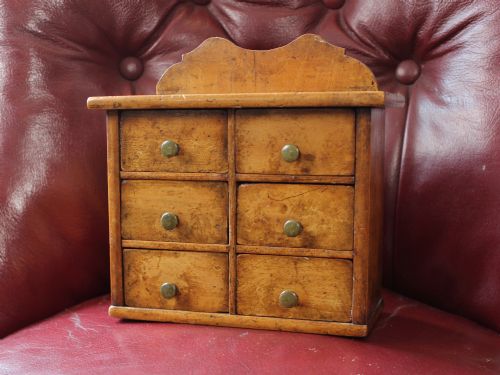
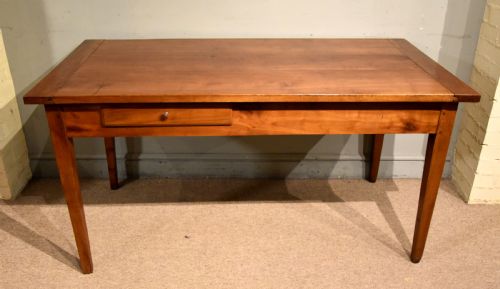


Warm Brown Fruitwood Drawers
Warm brown fruitwood drawers bring rustic character and deep patination to domestic spaces.
Warm Brown Fruitwood Drawers
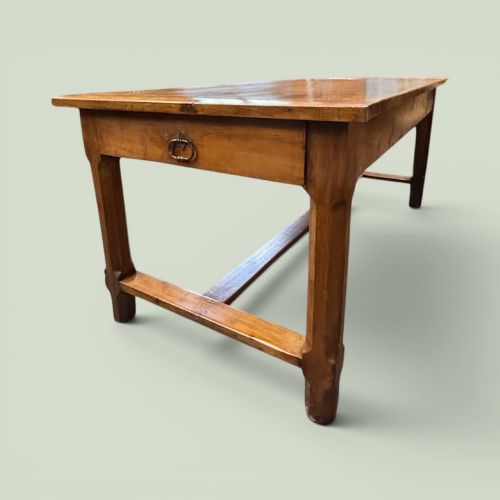
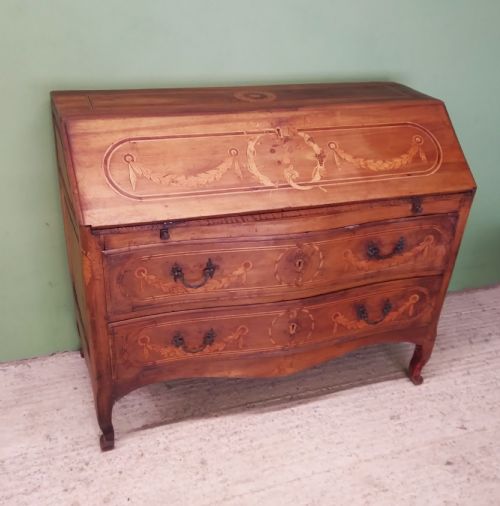
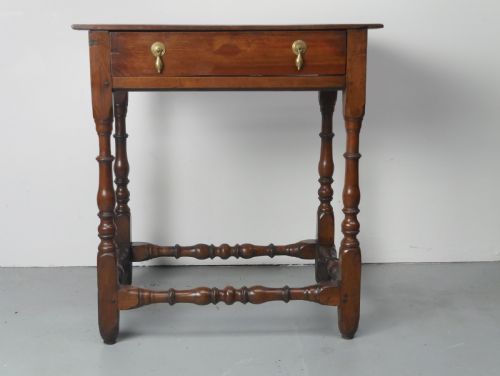
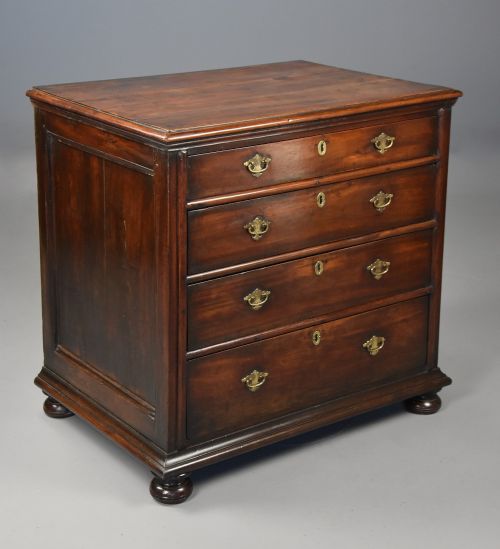
Warm brown fruitwood drawers comprise chests, commodes, lowboys, and utility furniture originating from country workshops and provincial houses. These pieces span the seventeenth, eighteenth, and nineteenth centuries, reflecting domestic storage needs across English, French, Maltese, and Italian regions.
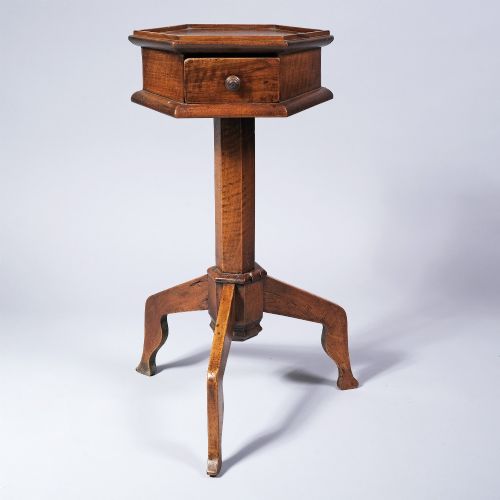
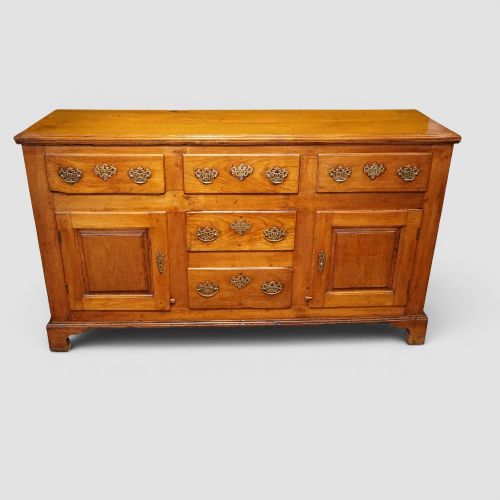
Fruitwood timber develops a distinctive warmth and varied grain pattern over centuries of handling and light exposure. Pieces range from small spice cabinets and lamp tables to substantial dresser bases and writing bureaux.
How they were made
Cabinet makers utilised dense native timbers such as fruitwood, cherrywood, and oak, frequently pairing secondary softwoods like pine for interior drawer linings. Brass handles, escutcheons, and iron hardware provide structural contrast and functional operation.
Construction techniques combine hand-turned legs, pegged joints, and dovetailed drawer boxes typical of vernacular and period workshop production. Certain pieces incorporate marquetry inlay or carved cabriole legs to elevate the surface design.
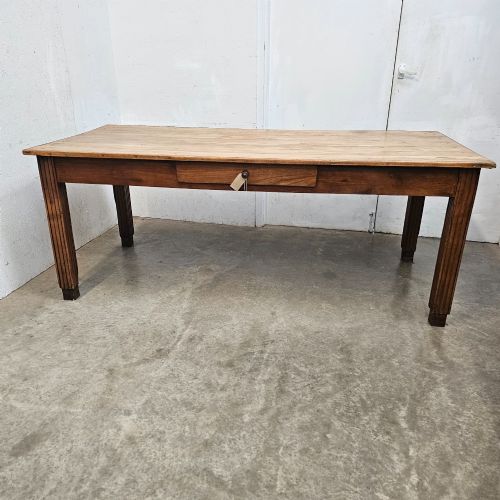
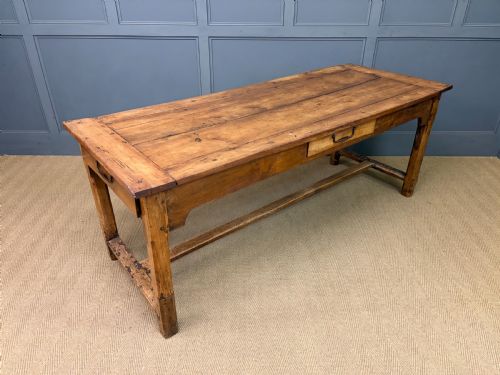
Selected tables include built-in bread slides, reminding us of rural baking habits.
What varies in quality
Quality rests in the depth of surface patination, the integrity of the timber selection, and the restraint of regional decoration. Superior examples display undisturbed timber maturity and crisp hand-carved detailing on cabriole legs or aprons.
Structural honesty separates utilitarian items from finer provincial show pieces, where original brass hardware and well-fitted dovetailed drawers remain intact. The sophistication of inlay work and the balance of proportions dictate the standing of individual items.
The Warm Brown Fruitwood Drawers Glossary
- Fruitwood
- Timber sourced from fruit-bearing trees such as pear, apple, or cherry, known for tight grain and warm tonal variation. Cabinet makers utilised these dense woods for provincial furniture.
- Lowboy
- A small table with one or more rows of drawers, typically standing on four tall legs. These pieces served diverse domestic functions including dressing or writing.
- Commode
- A decorative chest of drawers originating in France, often featuring curved fronts or marble tops. Examples range from rustic provincial forms to sophisticated Louis styles.
- Marquetry
- The art of applying pieces of veneer to a structure to form decorative patterns. Artisans used contrasting woods to create pictorial or geometric surface designs.
- Dresser base
- A lower sideboard unit incorporating storage drawers and cupboards. These heavy pieces anchored provincial kitchens and dining rooms.
- Dovetail
- A joint formed by interlocking wedge-shaped fingers, securing drawer corners together. Hand-cut dovetails indicate traditional period craftsmanship.
Warm Brown Fruitwood Drawers: Frequently Asked Questions
How do I date a fruitwood chest?
Dating relies on examining construction methods, such as hand-cut dovetails on drawer boxes and the presence of pegged timber joints. Regional styles and historical design traits provide further chronological markers.
Earlier pieces from the seventeenth and eighteenth centuries display distinct vernacular characteristics compared to nineteenth-century interpretations.
Where were these pieces made?
These pieces originate from various European regions, with strong representation from French provincial farmhouses, English Georgian workshops, and Italian or Maltese houses. Rural makers adapted metropolitan styles to suit local domestic requirements.
Materials and construction details often reflect the specific timber available in each geographical area.
How do I care for fruitwood?
Protect fruitwood surfaces by placing items away from direct heat sources and strong sunlight, which can alter the timber tone. Regular dusting with a soft cloth maintains the natural finish.
A light application of traditional beeswax preserves the historic patination without sealing the wood.