
Louis XV Serpentine Commode
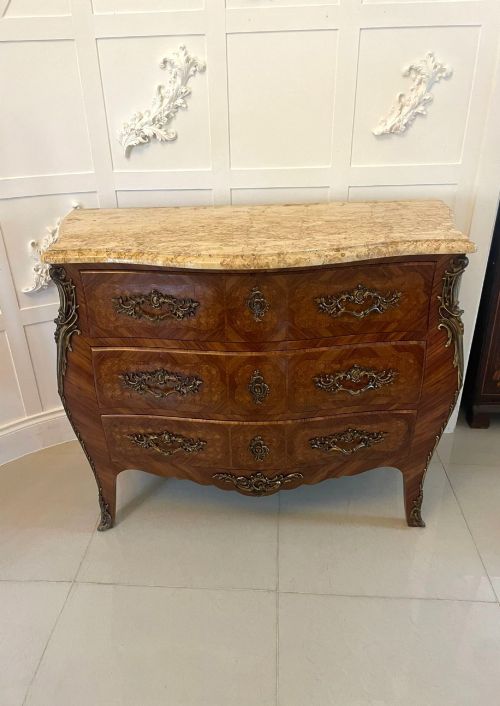
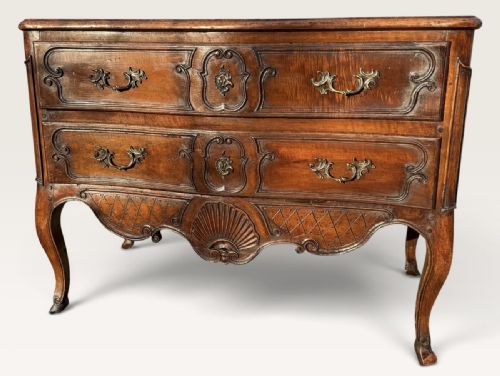
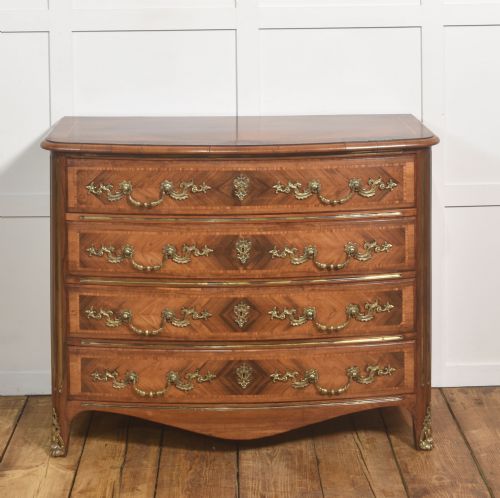
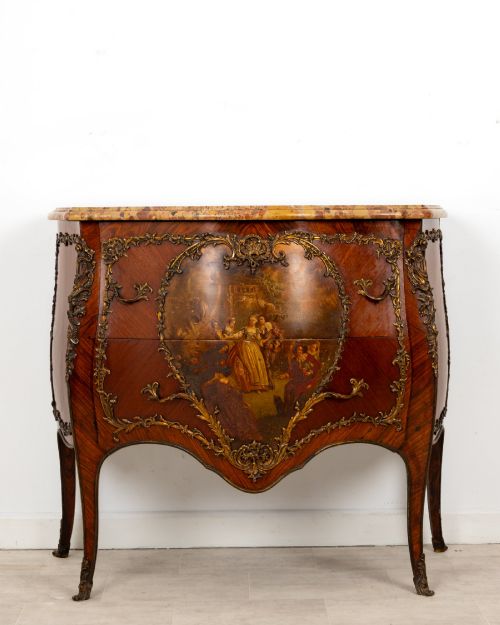
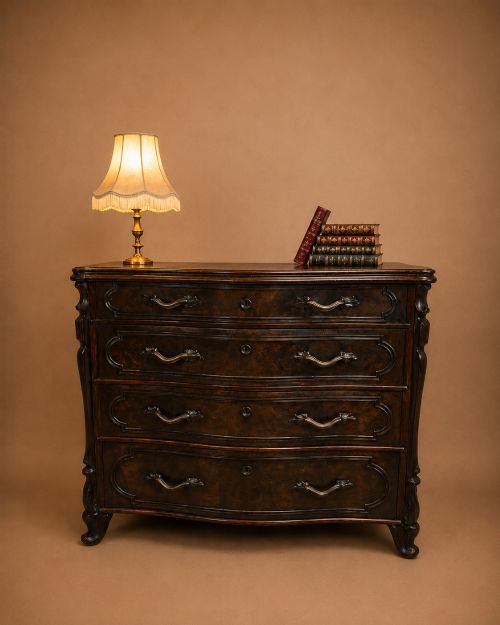
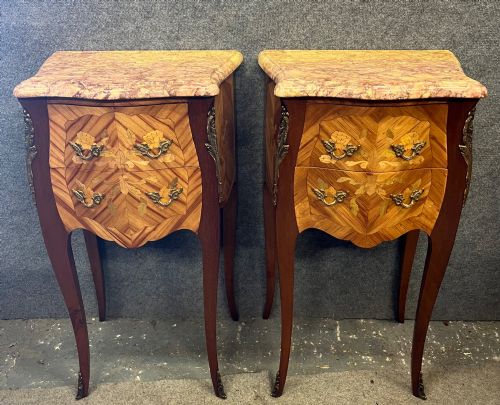
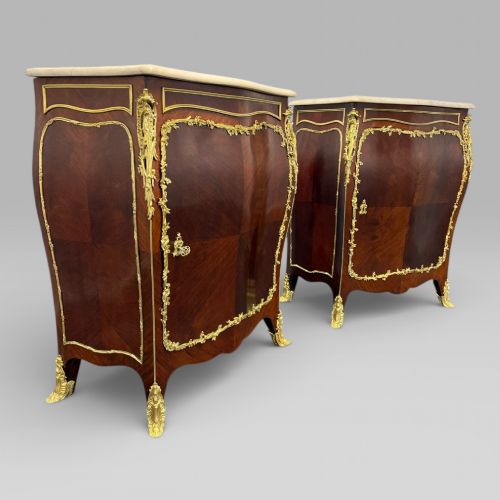
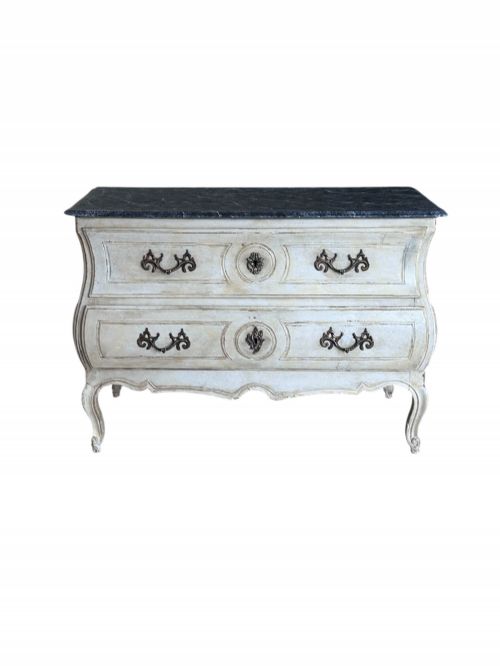
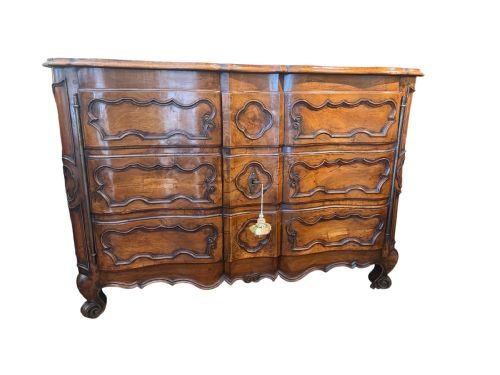
These pieces are louis xv serpentine commode forms, highly curved storage furniture offering grand decorative presence and practical drawer space.
Louis XV Serpentine Commode
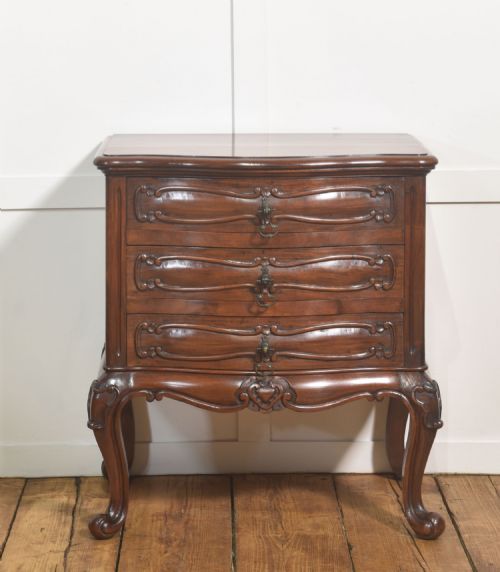
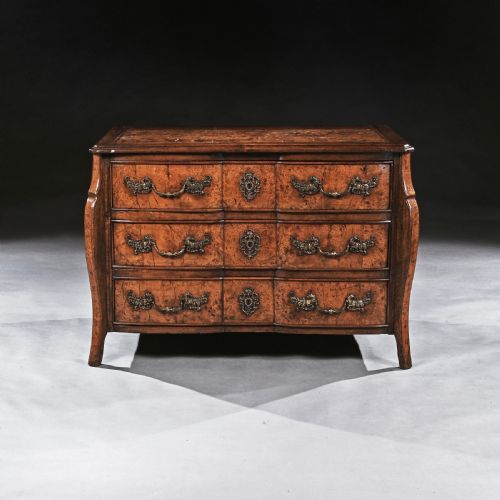
A louis xv serpentine commode is defined by its distinct undulating front and sides, moving away from rigid straight lines into flowing curves. The form appears across the eighteenth century and into various nineteenth and twentieth century revival periods, reflecting shifting tastes in continental design.
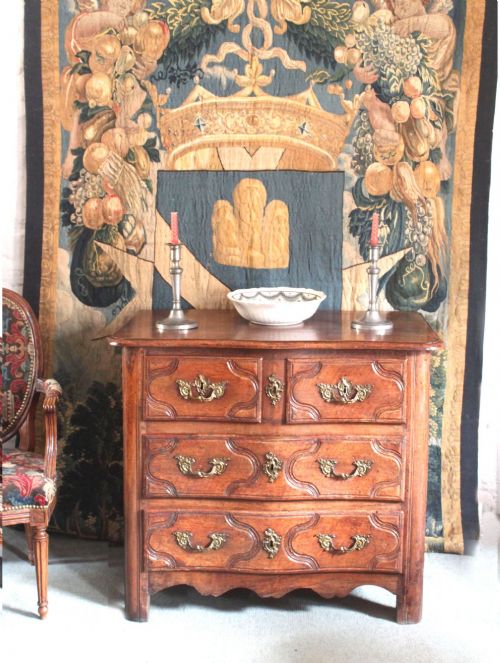
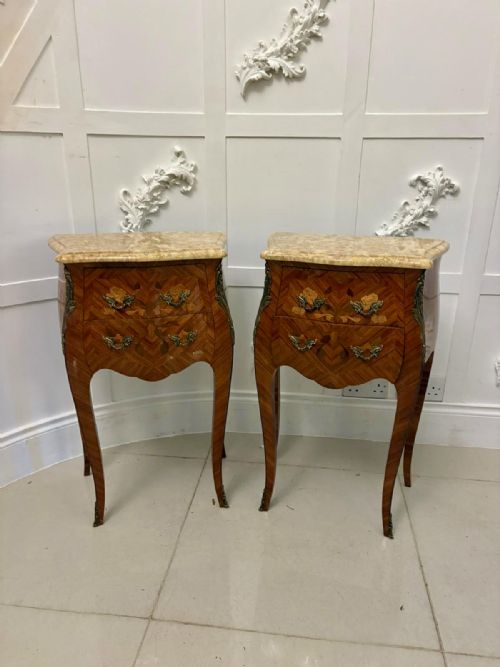
Buyers encounter numerous regional interpretations, ranging from refined Parisian pieces with intricate parquetry to simpler French provincial examples in solid woods. Alongside standard chests of drawers, the search returns related bedside cabinets, lamp tables, and small side cupboards sharing the characteristic serpentine outline.
Materials and Construction
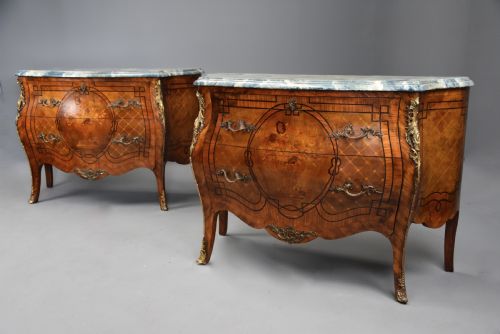
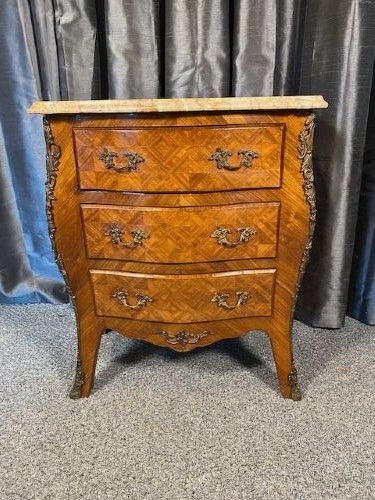
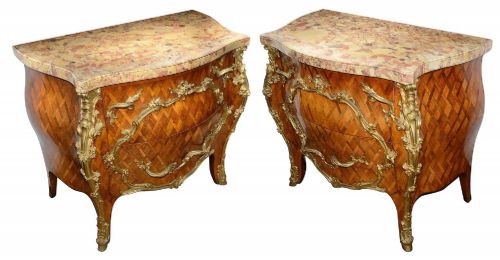
Cabinet makers utilised a rich palette of timbers, pairing structural oak, walnut, or mahogany carcases with decorative surface veneers such as kingwood, rosewood, and burr elm. Many examples incorporate intricate marquetry or parquetry patterns, arranging contrasting wood grains in geometric or floral motifs.
Marble tops, shaped to follow the complex curves of the serpentine or bombe body, provide a durable and weighty finish alongside cast or chased ormolu and gilt-bronze mounts. These metal mounts accentuate the corners, aprons, and handles, requiring precise fitting to the undulating wooden contours.
Some eighteenth-century walnut commodes doubled as discreet washing cupboards, hiding porcelain basins behind panelled doors.
Craftsmanship and Proportion
Quality rests in the harmony of the overall proportions and the precision with which the complex curves are resolved across the drawers and frame. Superior pieces display seamless veneer matching over difficult serpentine angles and crisp, detailed casting in the ormolu mounts rather than rough, mass-produced metalwork.
The integrity of the internal construction, including hand-cut dovetailing on the drawer carcases and the retention of original marble tops and mounts, distinguishes the finest examples from later interpretations or heavily altered pieces.
E. Kahn
The Louis XV Serpentine Commode Glossary
- Serpentine
- A shape featuring a double-curved front that bows outward in the centre and curves inward at the sides. This contour requires advanced woodworking skill to execute properly.
- Ormolu
- Gilded bronze used for decorative mounts and handles on fine furniture. The technique involves applying a gold amalgam to cast bronze before heating.
- Marquetry
- The art of applying decorative pieces of veneer to a structure to form intricate designs or pictures. Makers used various contrasting woods to achieve tonal depth.
- Bombe
- A swollen, convex shape where the sides and front of the furniture bulge outward. It is frequently paired with serpentine outlines in continental pieces.
- Parquetry
- Geometric mosaic woodwork arranged in patterns such as squares, lozenges, or triangles. It differs from marquetry by focusing on repeating geometric forms rather than pictorial scenes.
Louis XV Serpentine Commode: Frequently Asked Questions
What is a serpentine front?
A serpentine front is an undulating line that curves outward in the middle and inward towards the edges. This shape creates a fluid, organic silhouette that softens the heavy appearance of large storage furniture.
Craftsmen shaped the carcase and drawer fronts by hand to ensure the continuous curves met flush across the entire piece.
Are marble tops original?
Marble tops on these commodes were often cut specifically to follow the complex serpentine or bombe contours of the wooden base. Many survive intact, though replacements do occur due to accidental damage over the centuries.
Inspecting the underside reveals the fit and edge profiling that indicate whether the marble belongs to the original construction.
How do I place one in a modern room?
These commodes function well as focal points in hallways, living rooms, or bedrooms due to their strong decorative silhouette and rich wood tones. Their practical drawer space provides useful storage while the flat marble or wooden top holds lamps or displays objects.
Pairing the piece with neutral walls allows the intricate marquetry and gilt mounts to stand out without visual clutter.
How do I tell an eighteenth century piece from a revival?
Distinguishing period pieces involves examining the secondary woods used inside the drawer linings and carcase backs, which differ by region and era. Eighteenth-century examples display hand-cut joinery and signs of age in the timber shrinkage, whereas nineteenth-century revivals often utilise machine-sawn elements.
Revival pieces also tend to exhibit heavier or more uniform ormolu casting compared to older counterparts.