
Louis XV Provincial Commode
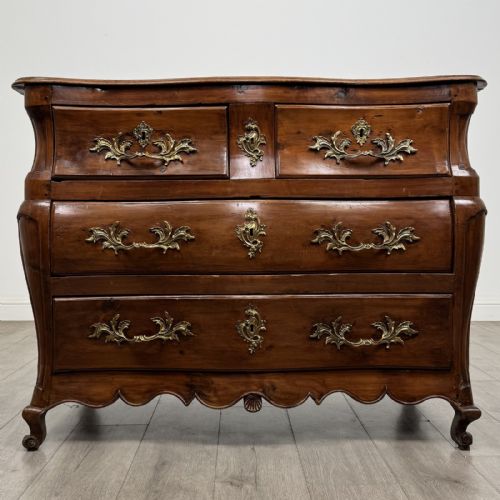
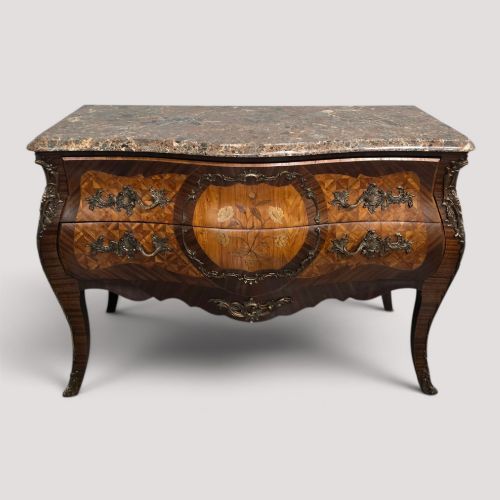
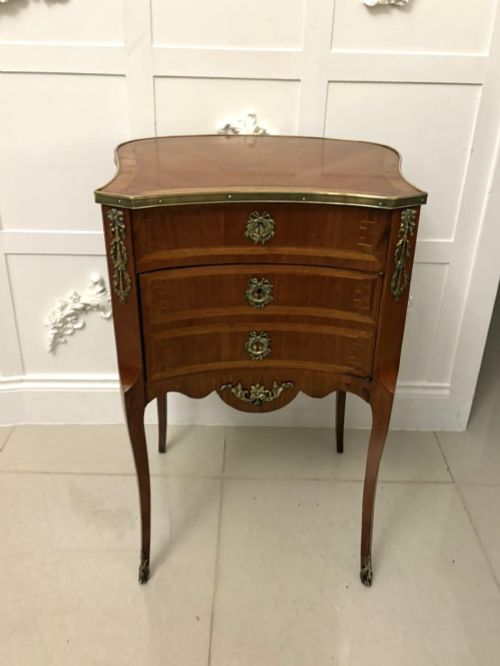
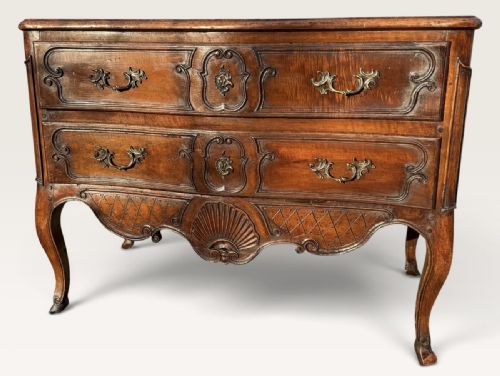
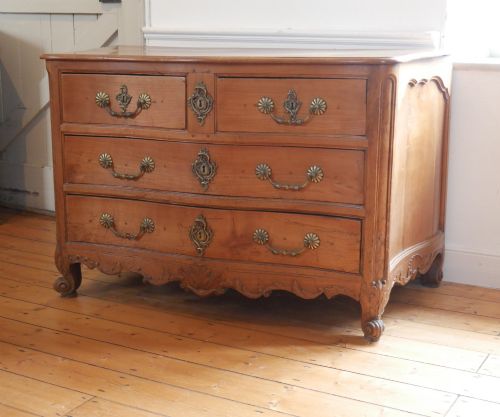
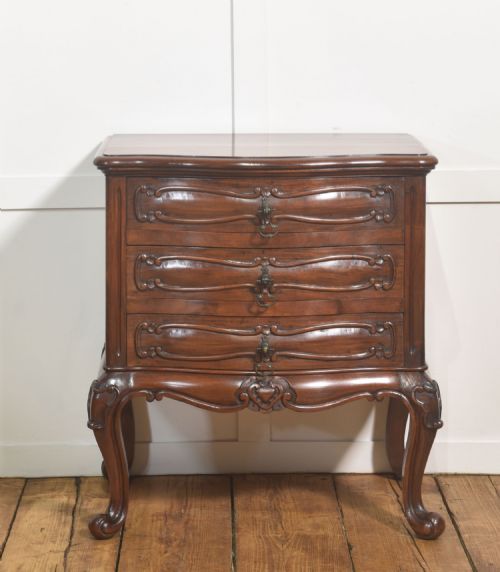
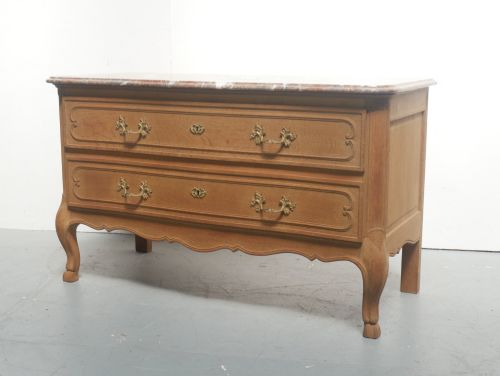
A louis xv provincial commode brings practical French storage and sculptural serpentine lines into a room, fashioned from walnut, oak, and cherry.
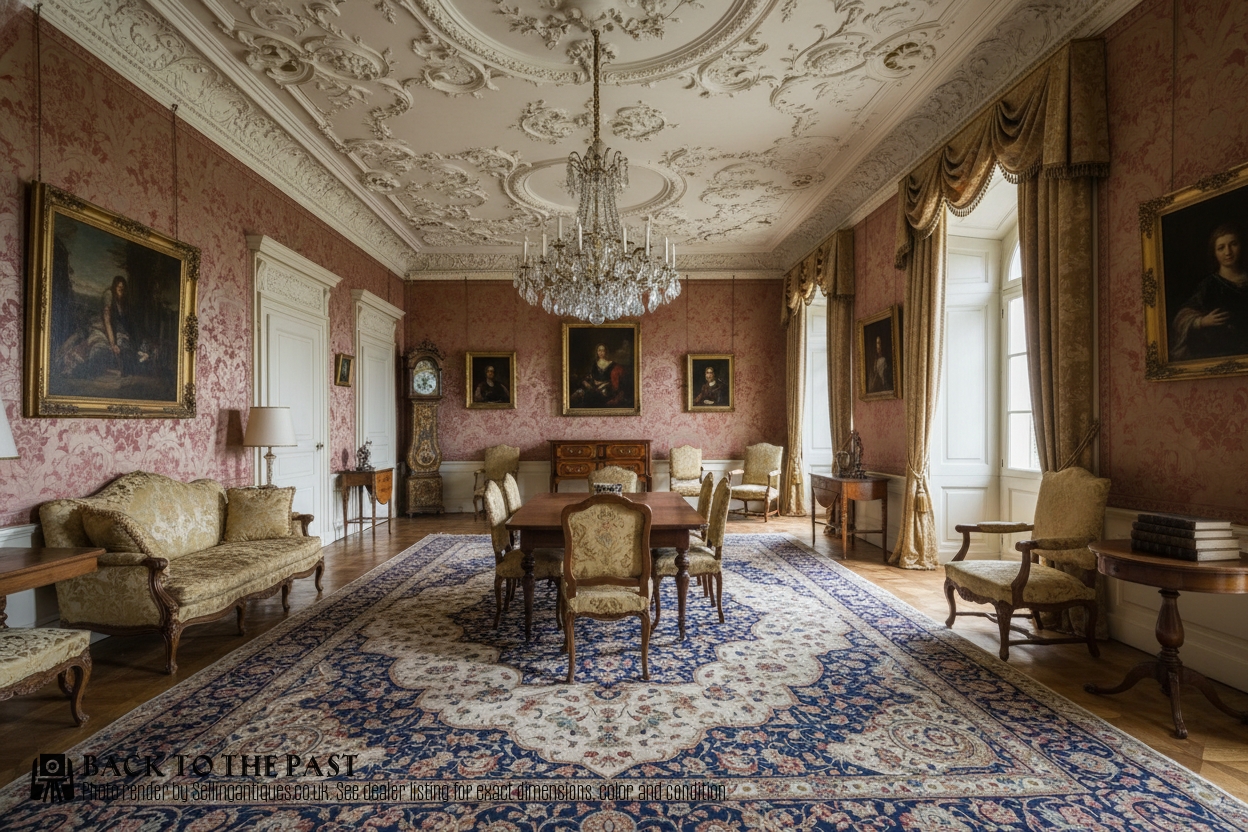
Louis XV Provincial Commode
A louis xv provincial commode is a low storage chest designed for regional French interiors, distinct from court furniture through heavier timbers and simpler ornamentation. The selection includes eighteenth-century originals alongside later revival pieces from the nineteenth and early twentieth centuries.
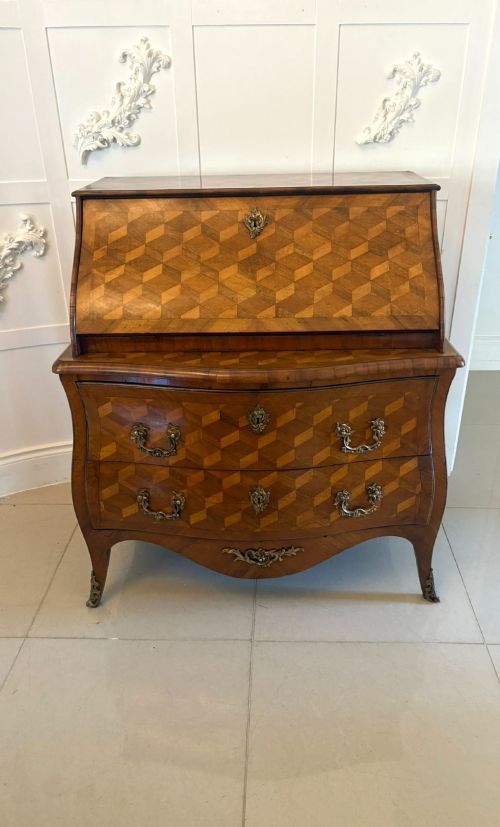
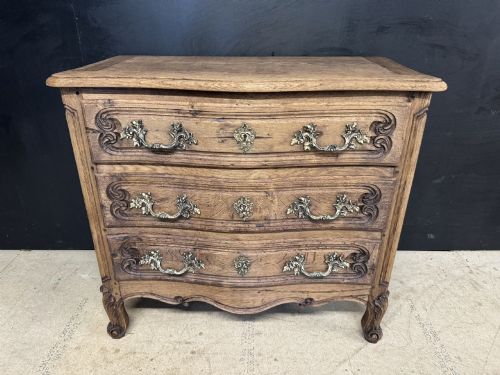
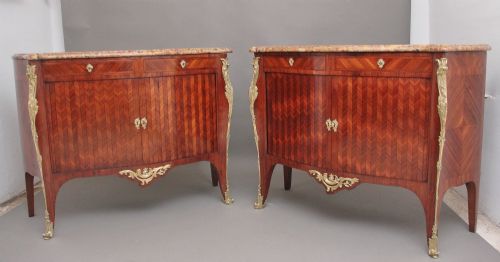
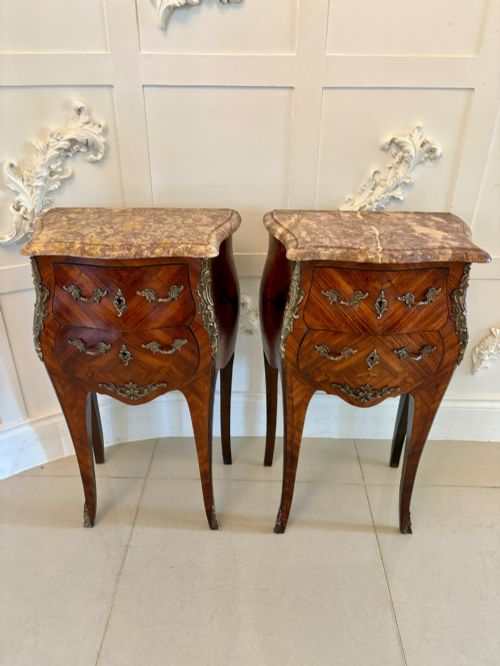
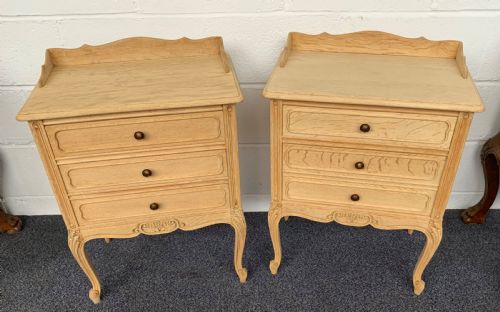
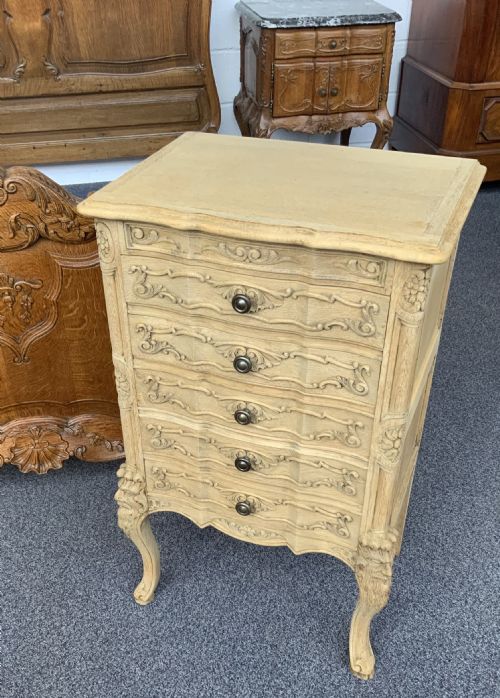
Forms span serpentine and bombe chests of drawers, alongside smaller side cabinets, bedside tables, and washstands. Walnut, oak, and chestnut dominate the earlier regional work, while later revival iterations introduce marquetry and painted finishes.
How they were made
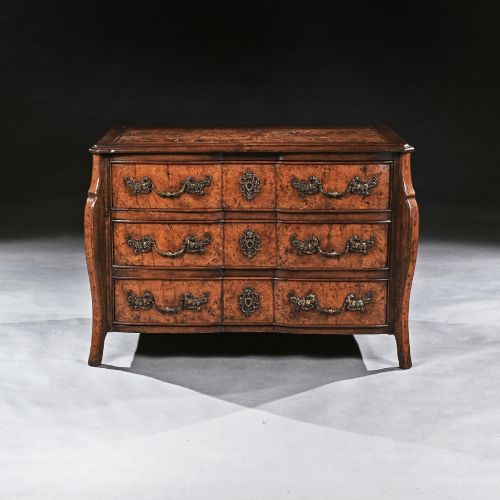
Cabinetmakers utilised regional hardwoods such as walnut, oak, fruitwood, and chestnut, shaped with hand tools to create characteristic serpentine curves and bombe profiles. Joinery relied on traditional techniques suited to heavy timbers, accommodating the natural movement of solid wood over centuries.
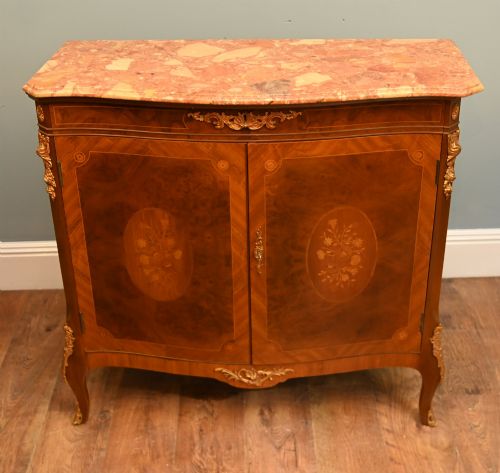
Surfaces were frequently finished with marble tops, brass mounts, and occasionally ormolu, while decorative varieties employed marquetry or painted details. Regional workshops adapted courtly Louis XV styles to local materials and simpler construction methods.
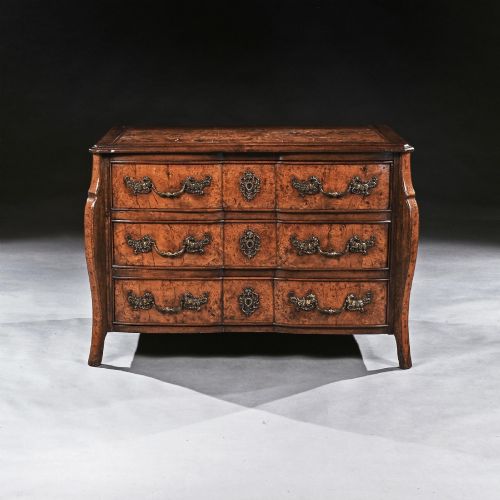
Burr elm mazarin commodes hide clever curves in stubborn timber.
What varies in quality
Quality rests upon the crispness of the carved contour, the selection of timber grain, and the integrity of the original structure. Eighteenth-century pieces demonstrate hand-shaped joinery and proportional harmony peculiar to regional vernacular workshops, whereas later revivals vary according to the precision of their marquetry and the weight of their marble tops.
The degree of original surface preservation also divides examples, distinguishing pieces retaining patinated timber or early paint from those subjected to later alteration or heavy restoration.
The Louis XV Provincial Commode Glossary
- Serpentine
- A furniture front curving inward in the centre and outward at the ends, creating a gentle wave shape. This contour defines many regional French chests.
- Bombe
- A swollen, bulging outward curve on the sides and front of a cabinet or chest. It requires advanced carpentry to achieve the rounded profile.
- Marquetry
- Inlays of different coloured woods arranged in geometric or floral patterns across a surface. It appears on finer revival cabinets and select regional pieces.
- Ormolu
- Gilt bronze mounted onto furniture for decorative effect. It lifts the appearance of drawer pulls and corner mounts.
- Provincial
- Describing items made outside the capital by regional craftsmen. These pieces use local timbers and simpler decoration than Parisian equivalents.
Louis XV Provincial Commode: Frequently Asked Questions
How do I date a louis xv provincial commode?
Dating relies on timber species, construction marks, and hardware, with eighteenth-century pieces showing hand-cut joinery and regional woods like walnut or chestnut.
Later revival examples from the nineteenth and twentieth centuries often utilise machine-sawn elements or standard brass fittings alongside stylistic cues from the original period.
Are marble tops original to these commodes?
Many eighteenth-century and later French commodes incorporate marble tops, particularly those styled in the French taste. Some tops date from the original construction, while others represent later replacements or additions.
Inspection of the timber seating beneath the marble helps clarify its relationship to the base.
Where were these commodes originally used?
Regional commodes served primarily as practical storage furniture in bedrooms and living spaces of French provincial homes. They provided enclosed space for linens and clothing while functioning as display surfaces.
Their compact proportions made them adaptable to various rooms within a house.