


Louis XV Planter
These louis xv planter pieces bring French revival style indoors to display plants and flowers with classical elegance.
Louis XV Planter
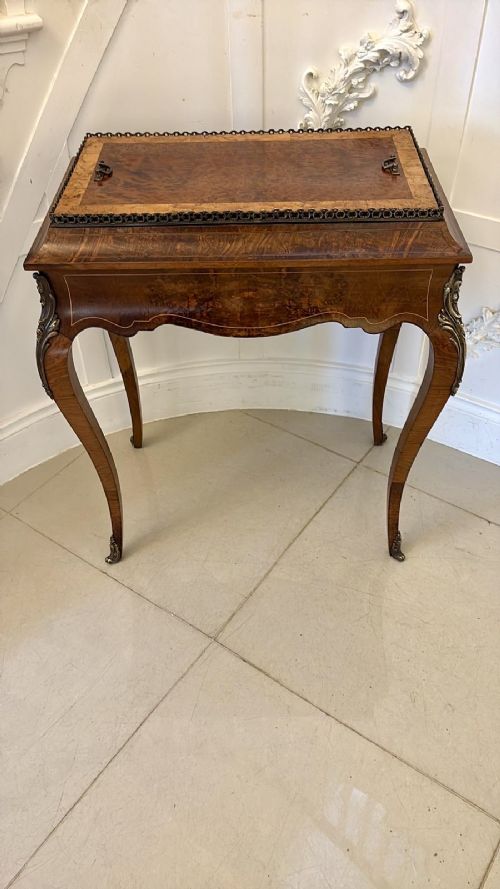
A louis xv planter, often listed as a jardiniere, jardiniere table, or plant stand, serves as a decorative vessel for displaying greenery. These pieces appear in forms such as free-standing stands, table-top jardiniere vessels, and combined wine coolers or cellarettes.
The pieces on this page span the nineteenth century, including Victorian periods, alongside Belle Epoque creations up to nineteen thirty. Revival styles dominate, connecting nineteenth-century craftsmanship directly to eighteenth-century French aesthetic origins.
The forms range from compact tabletop planters to substantial free-standing planter stands fitted with metal liners. Walnut, burr walnut, kingwood, mahogany, and satinwood form the primary wooden structures of these decorative objects.
How they were made
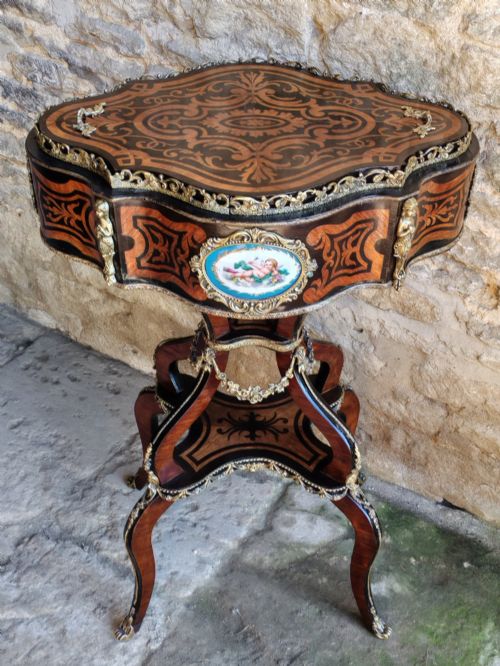
Cabinetmakers constructed the wooden bodies utilising rich timbers like burr walnut, kingwood, rosewood, and satinwood, frequently applying intricate marquetry inlay across the surfaces. Ebonised finishes and mahogany also appear within the selection, showing varied timber choices.
Mounts made from ormolu, brass, and gilt metal decorate the frames, fixed securely to the corners, apron, and legs. Porcelain plaques, including Sevres-type panels, are integrated into the timber structures for added visual ornamentation.
Listings feature pieces spanning the nineteenth century, including Victorian examples, alongside Belle Epoque designs up to nineteen thirty.
What varies in quality
The refinement of the ormolu and gilt metal mounts distinguishes individual pieces, with finely chased bronze fittings showing superior sculptural depth compared to simpler cast brass elements. The precision of the marquetry and the choice of highly figured burr walnut or kingwood veneers elevate the visual impact.
The inclusion of hand-painted porcelain plaques or specialised dual-purpose designs, such as combined wine coolers and cellarettes, marks out pieces executed with greater ambition by the maker.
The Louis XV Planter Glossary
- Jardiniere
- A decorative pot or stand designed specifically for holding plants and flowers indoors. These objects often feature waterproof metal liners to protect the surrounding timber.
- Ormolu
- Gilded bronze applied as decorative mounts to furniture and planters. This technique gained widespread use in French and revival decorative arts.
- Marquetry
- The art of applying pieces of veneer to a structure to form decorative patterns and pictures. Cabinetmakers utilised contrasting timbers like walnut and satinwood to achieve geometric and floral designs.
- Kingwood
- A dense, richly grained exotic timber utilised extensively in fine French furniture and decorative stands. It provides a dark, contrasting background for gilt metal mounts.
Louis XV Planter: Frequently Asked Questions
What is a louis xv planter used for?
These pieces were designed to hold potted plants and floral arrangements inside reception rooms and parlours. They brought living greenery into interior spaces while serving as decorative furniture.
Many examples feature metal inserts or liners to catch excess water and protect the timber framework. Some dual-purpose variants also functioned as wine coolers or cellarettes for entertaining.
How do I identify a revival piece?
Revival pieces combine eighteenth-century aesthetic motifs with nineteenth-century manufacturing techniques and timber preparation. The presence of Victorian or nineteenth-century construction methods alongside Louis XV styling points to this later period.
Examine the secondary woods, screw types, and mounting techniques to confirm the nineteenth-century date of manufacture. The styles draw directly on French court designs from the reign of Louis XV.
What woods were used for planters?
Cabinetmakers utilised a range of decorative hardwoods including burr walnut, kingwood, rosewood, mahogany, and satinwood. These timbers were selected for their rich grain patterns and natural colour variations.
Marquetry inlay and ebonised finishes frequently complement the primary wood choices. Ormolu and gilt metal mounts provide contrast against these dark timber surfaces.