




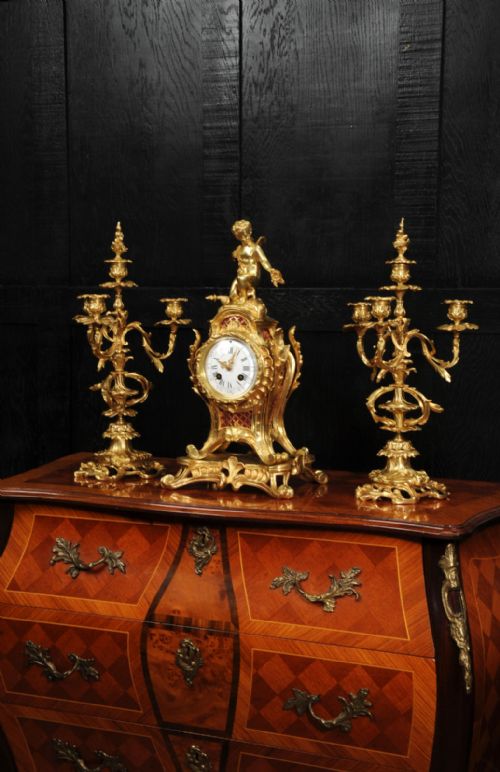


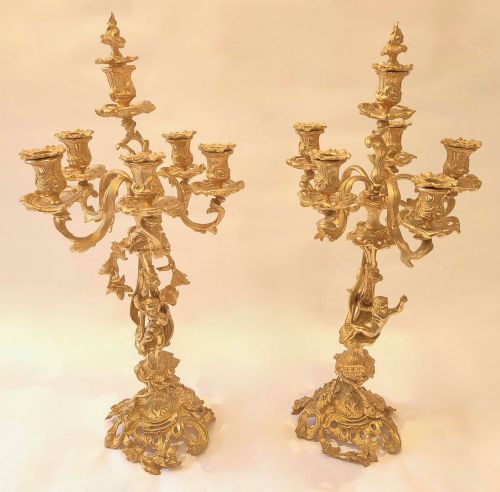

Louis XV Ormolu Candelabra
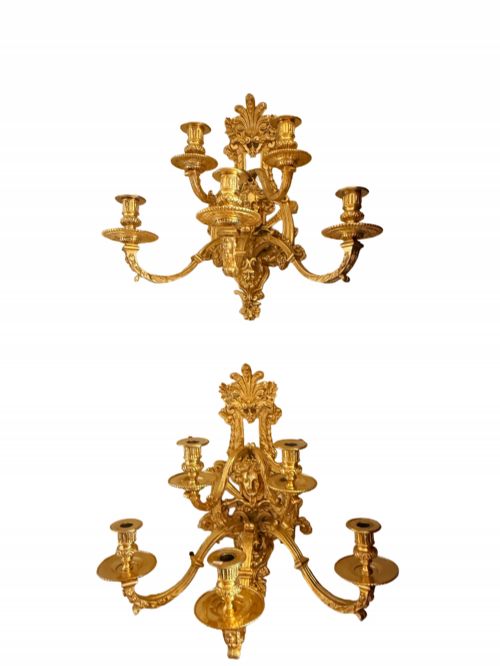
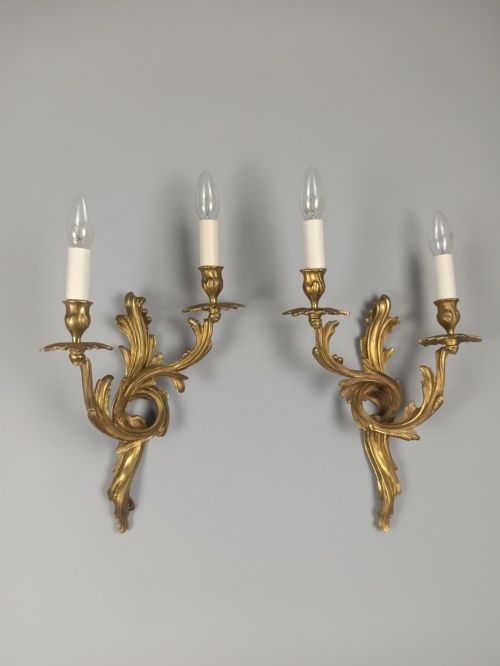
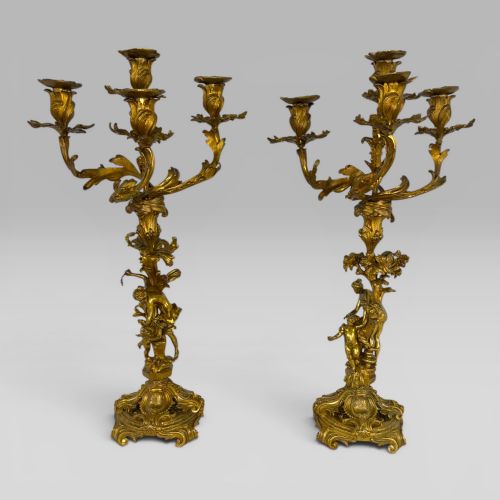
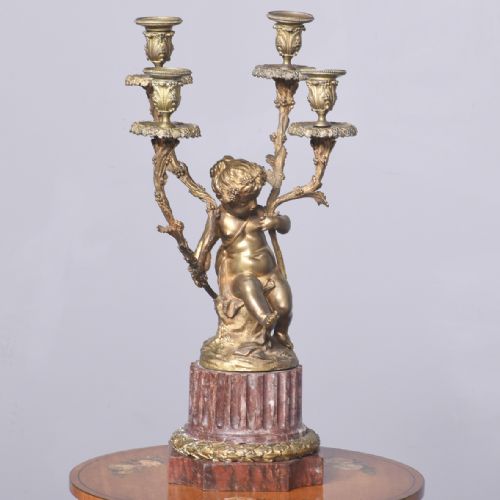
Louis xv ormolu candelabra bring elaborate French rococo splendour to interiors through cast metalwork and scrolling asymmetrical forms.
Louis XV Ormolu Candelabra
When you search for louis xv ormolu candelabra, you encounter monumental pairs of multi-arm light fittings and clock garniture sets created during the nineteenth century. These pieces draw directly upon eighteenth-century French design, adopting the fluid asymmetry and naturalistic motifs characteristic of the period.
The selection here encompasses table candelabra, wall lights, and garniture sets incorporating porcelain elements or marble bases. Most examples date from the nineteenth century, reflecting sustained Victorian and revivalist enthusiasm for French chateau aesthetics.
Makers and manufacturers of the period utilised porcelain figures, enamel dials, and red marble alongside the dominant metal components. These decorative accessories functioned as centrepieces for formal mantelpieces and side tables in grand reception rooms.
Materials and Construction
The primary material is bronze or brass treated with a gold-coloured mercury gilding process known as ormolu, which produces a warm, reflective surface. Artisans cast these metals using traditional foundry methods before chasing and finishing the details by hand.
Many items combine this gilded metalwork with glazed porcelain figures, hand-painted Sevres style panels, or sections of contrasting red and white marble. These mixed-media assemblies require precision engineering to secure heavy bronze arms and decorative beryls without destabilising the base.
Listings feature items dated from the eighteenth through the twentieth century, with nineteenth-century revivals predominating.
Quality Variations
The distinction between standard production and exceptional quality rests in the crispness of the bronze chasing and the depth of the fire gilding. Superior examples display sharply defined acanthus leaves, cherubs, and scrolling foliage without the softening that indicates a worn or secondary cast.
Integration of materials also dictates standing; pieces incorporating fine Meissen or Samson porcelain figures alongside substantial bronze mounts represent the more ambitious end of the nineteenth-century revival. The structural rigidity of multi-arm branches and the stability of marble plinths further separate standard decorative items from superior works.
Meissen·Samson
The Louis XV Ormolu Candelabra Glossary
- Ormolu
- A method of applying finely ground high-carat gold to a bronze base using a mercury amalgam. This historic technique yields a durable, rich golden lustre distinct from modern electroplating.
- Garniture set
- A decorative matching group comprising a mantel clock flanked by matching candelabra or urns. These sets were designed to sit symmetrically upon a fireplace mantel or console table.
- Rococo revival
- A nineteenth-century artistic movement that resurrected the ornate, asymmetrical curves and shell motifs of the mid-eighteenth-century French court. It dominates the ornamentation of these lighting pieces.
- Candelabra
- A branched candlestick designed to hold multiple candles simultaneously. In this context, they frequently feature three to eight arms arranged around a central stem.
Louis XV Ormolu Candelabra: Frequently Asked Questions
How do I clean ormolu candelabra?
Dust these pieces gently with a soft brush and avoid harsh chemical dips that strip historic gilding.
Moisture can damage embedded marble or porcelain elements, so keep cleaning strictly dry.
Were these electrified later?
Many nineteenth-century candelabra and wall lights underwent conversion to electricity during the twentieth century to suit modern domestic use.
Original candle sockets frequently sit alongside discreet contemporary wiring modifications in surviving examples.
What is a clock garniture set?
A garniture combines a central mantel clock with a matching pair of side pieces, usually candelabra or decorative urns.
Placed together on a fireplace, they create a unified decorative scheme typical of formal nineteenth-century drawing rooms.
How can I tell the period?
Examine the casting quality, the construction of the interior threads, and the type of marble or porcelain used in the base.
Nineteenth-century revival pieces display heavier bronze casting methods compared to their eighteenth-century prototypes.