

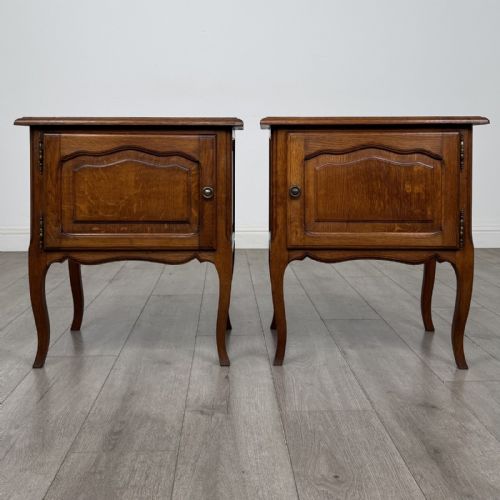
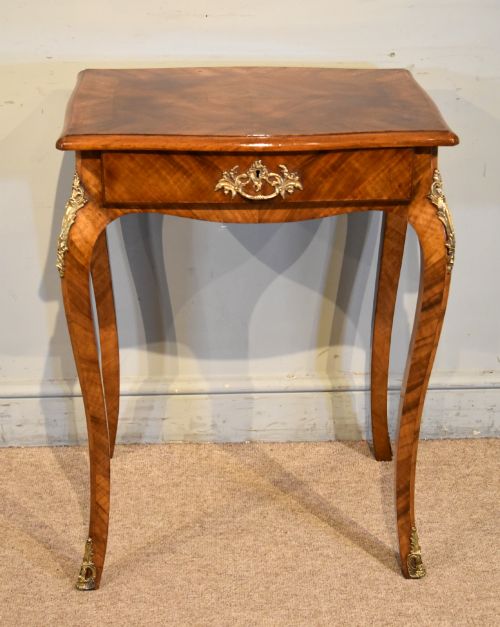
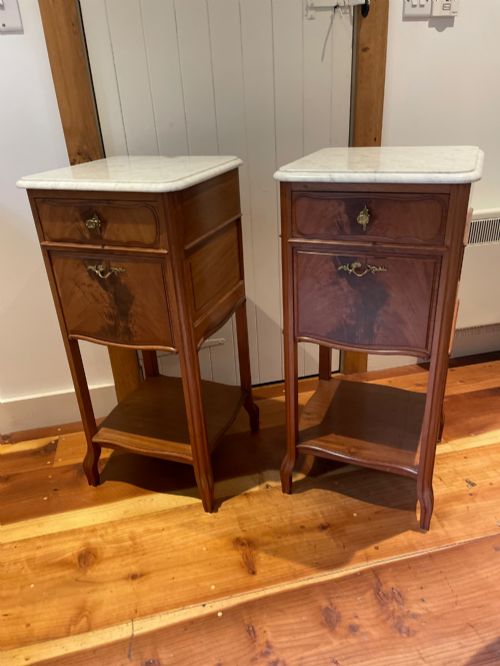
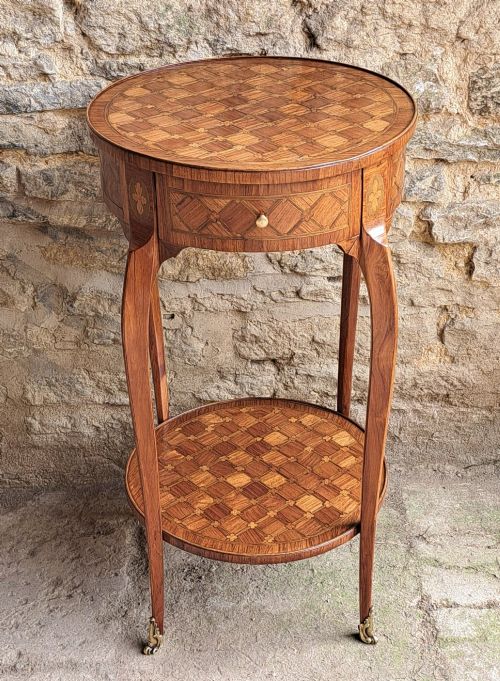
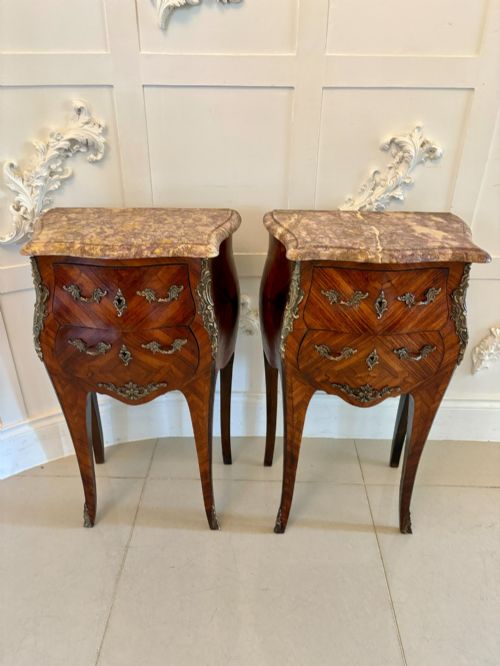
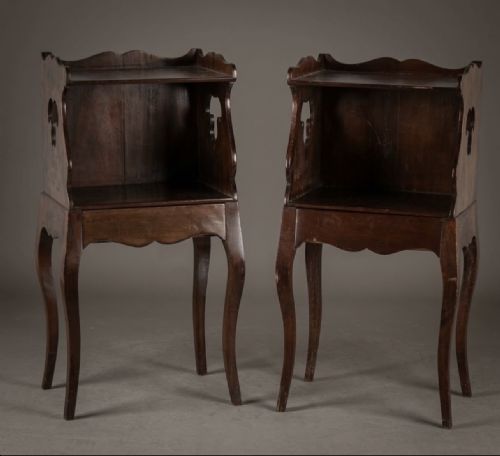
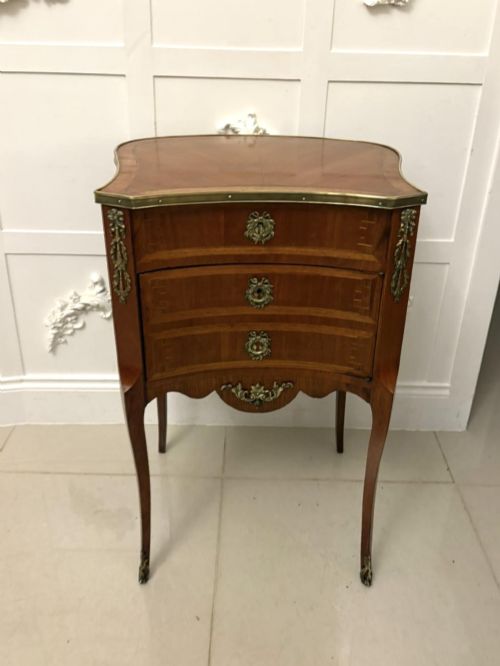
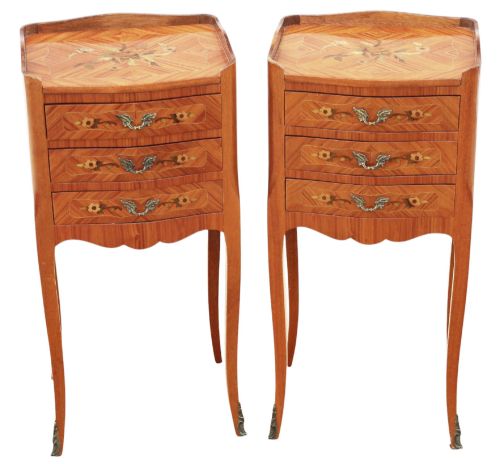
Louis XV Nightstands
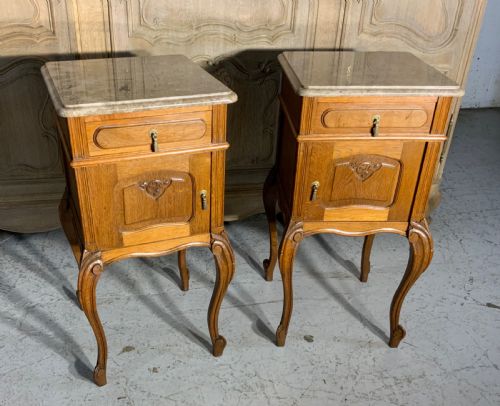
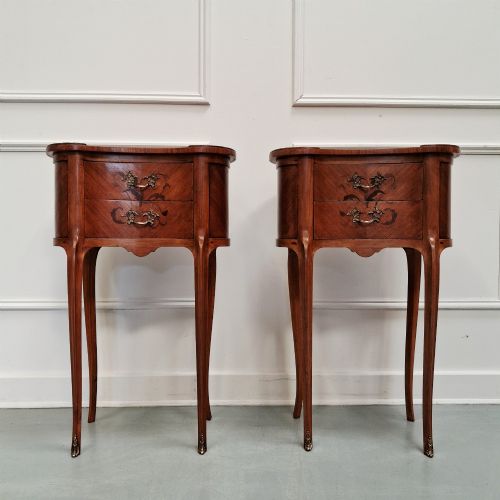
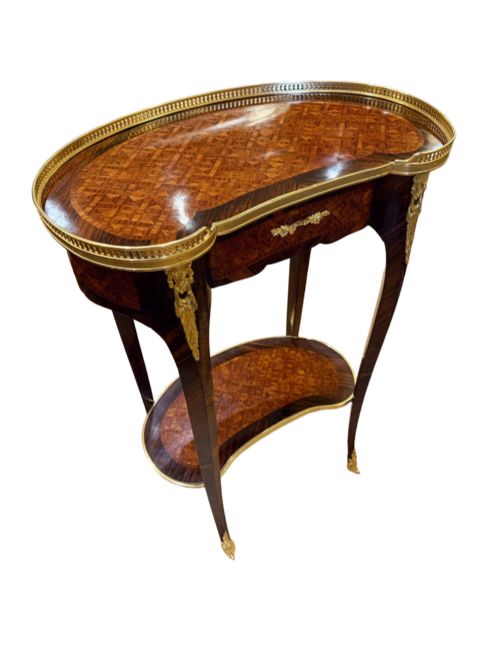
Louis xv nightstands are serpentine or kidney-shaped French bedside pieces that bring elegant storage and historic character to a bedroom.
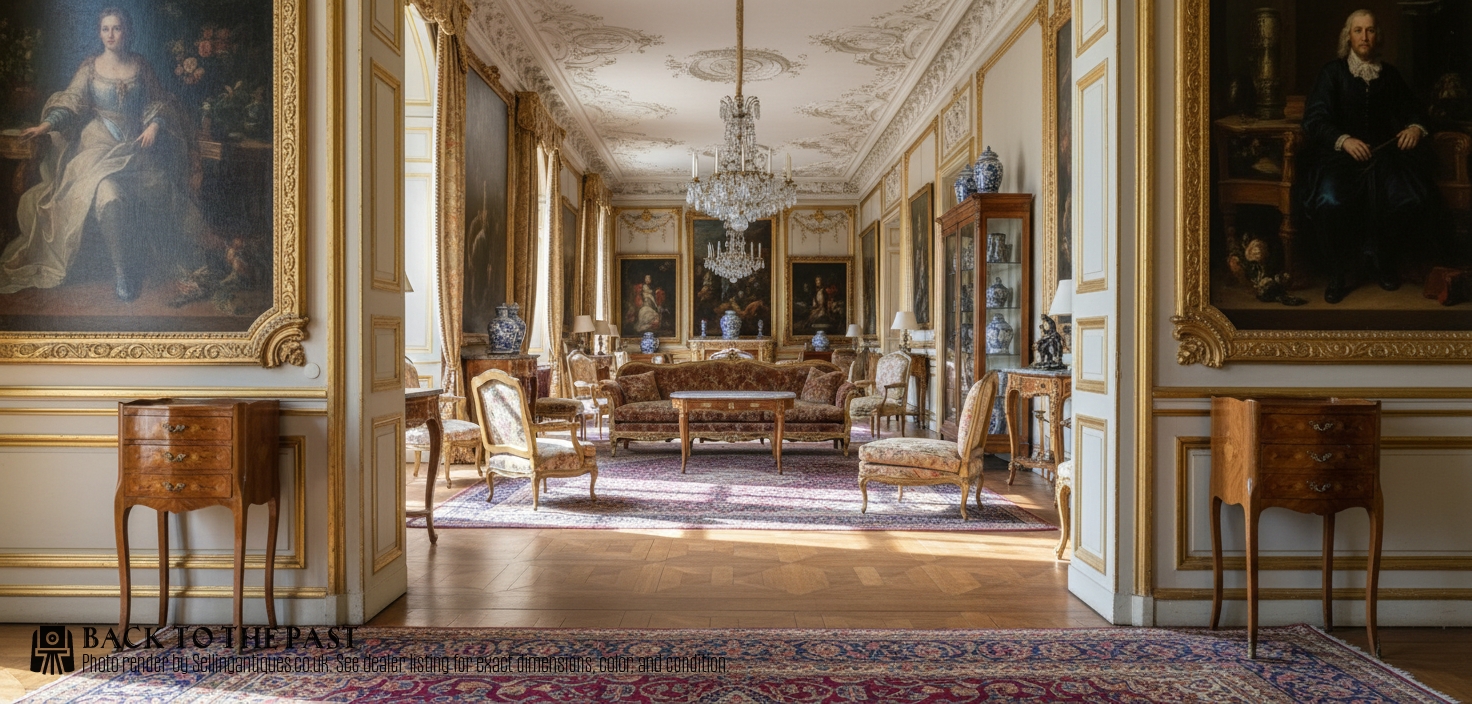
Louis XV Nightstands
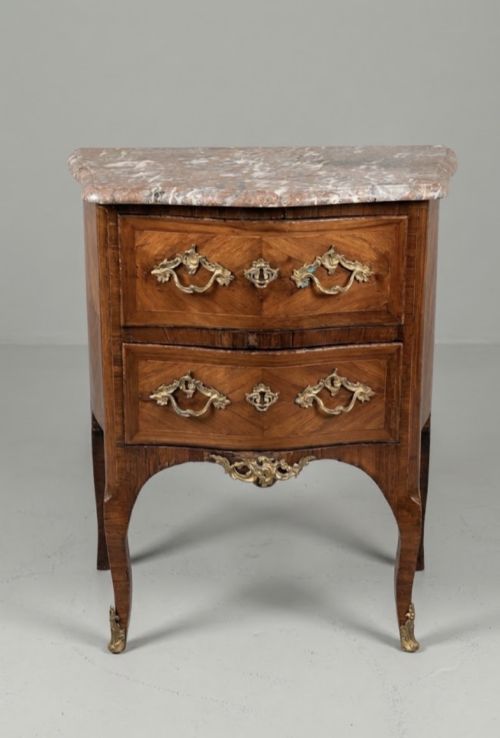
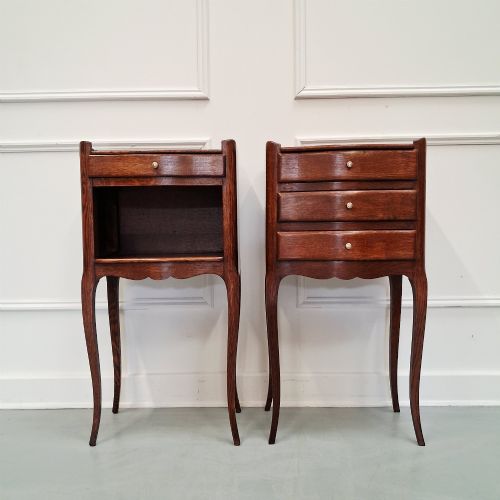
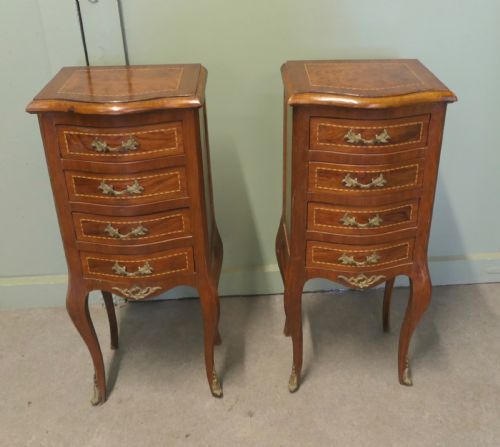
When searching for louis xv nightstands, buyers encounter bedside tables, bedside cabinets, commodes, and side chests originating mainly from the late nineteenth century through the 1930s. These pieces reflect styles such as Louis XV Revival, French Provincial, French Rococo, and French Chateau, often appearing in matched pairs.
The forms vary from tall four-drawer side lockers and bow-front chests of drawers to compact lamp tables and circular cabinets. Most examples follow continental proportions, built for domestic bedchambers with enclosed cupboards or stacked drawers.
Originating largely from French workshops and cabinet-makers, these items bridge functional bedroom storage and decorative artistry. The selection encompasses both natural timber finishes and painted surfaces tailored to period interiors.

How They Were Made
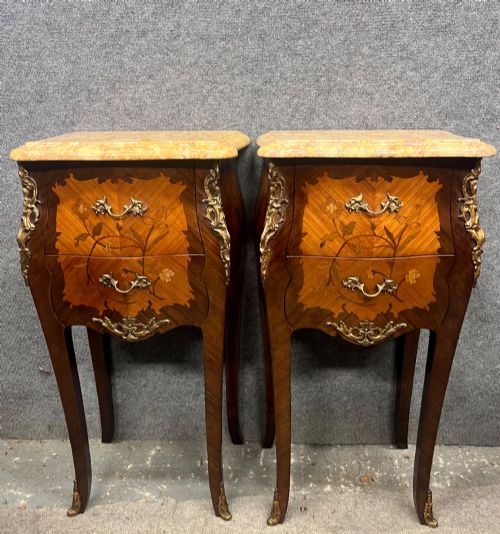
Cabinet-makers built these items using structural timbers like oak, walnut, and cherry, overlaid with decorative veneers including kingwood, rosewood, and mahogany. Marquetry and parquetry inlays formed intricate geometric or floral patterns across drawer fronts and tops.
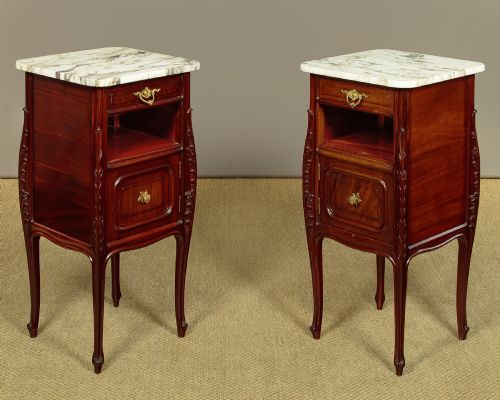
Mounts in cast or gilt brass and ormolu highlighted the curved outlines and protected vulnerable corners, while inset marble slabs provided durable, decorative surfaces for bedside use.
Louis XV Nightstands Retail Price Guide 2026
Typical asking prices for louis xv nightstands among the pieces listed under this phrase on Sellingantiques today, from the lower quarter to the upper quarter. They describe what is for sale here now, not the wider market.
Several listings specifically note neat proportions, proving that even historic cabinet-makers understood the eternal struggle of fitting furniture into small bedrooms.
What Varies in Quality
The standard of execution depends heavily on the precision of the marquetry inlay and the crispness of the cast ormolu mounts. Finer pieces demonstrate seamless veneer matching across curved serpentine surfaces and tight joints in the underlying carcase.
Materials also dictate the tier of the piece, with richly figured kingwood and heavy marble tops marking out superior examples against simpler solid oak or painted utilitarian versions.

E. Kahn·François Linke·Sormani
The Louis XV Nightstands Glossary
- Marquetry
- Decorative veneer work arranged in pictorial or patterned designs using various coloured woods. This technique requires exceptional skill to fit individual pieces precisely into a background veneer.
- Ormolu
- Gilded bronze mounts applied to furniture edges, feet, and corners for ornamentation. The quality of the chasing defines the sharpness of the cast details.
- Serpentine
- A furniture front or top shaped with a double-curved line, curving outward in the centre and inward at the sides. This contour demands advanced woodworking ability to construct.
- Parquetry
- Geometric wood inlay forming repetitive patterns such as cubes or chequers. It creates a durable, decorative surface across table tops and cabinet doors.
- Commode
- A low chest of drawers or cabinet designed for domestic rooms. In French furniture, the term frequently denotes grander storage pieces with curved silhouettes.
Louis XV Nightstands: Frequently Asked Questions
What materials are typical for these nightstands?
The pieces utilise structural woods like walnut, oak, and cherry, frequently decorated with kingwood or mahogany veneers. Inset marble tops and gilt brass or ormolu mounts appear regularly across the styles.
Craftsmen also employed intricate marquetry and parquetry inlays to pattern the surfaces of drawer fronts and cabinet doors.
How do I identify the period?
Dating relies on construction methods, timber choices, and stylistic revival markers spanning the late nineteenth century to the 1930s. Edwardian and early twentieth-century interpretations often blend Louis XV curves with practical modern proportions.
Archive examples and specific maker attributions help anchor pieces within the 1870 to 1930 timeframe.
Are pairs common in these listings?
Many bedside tables and cabinets are offered as matching pairs to flank a bed symmetrically. These matched sets share identical timber grains, mount placements, and dimensions.
Single items also appear for use as occasional lamp tables or independent side storage.
How should I place them in a modern room?
These cabinets function effectively as bedside tables, lamp tables, or small side chests in living spaces. Their compact footprints and marble or wood surfaces accommodate lighting and small daily items.
Pairing them with neutral walls highlights their carved contours, marquetry details, and gilt mounts.