
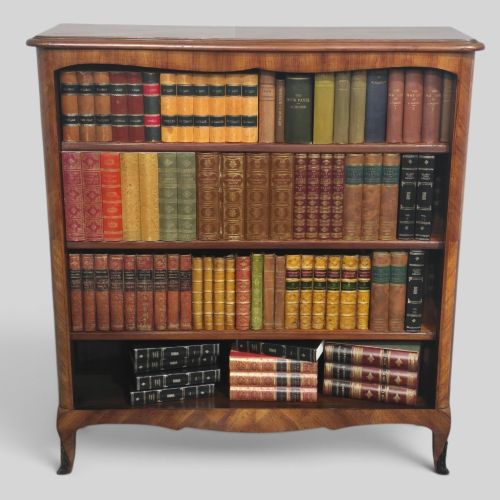

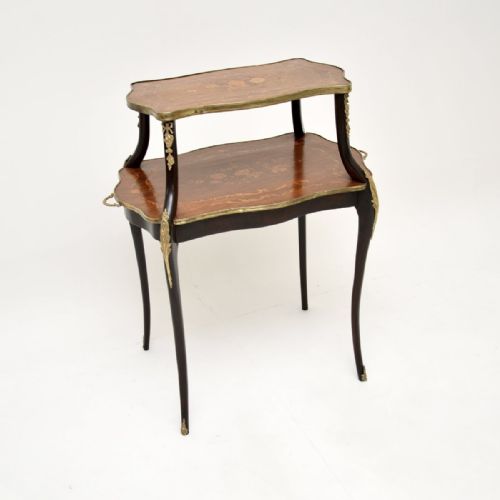


Louis XV Display Stand
A louis xv display stand brings refined French curves and decorative timber work into a room.
Louis XV Display Stand
When you search for a louis xv display stand, you encounter pieces designed to showcase small treasures, books, and plants through curvaceous frames. These items primarily manifest as etageres, pedestal stands, vitrines, and occasional tables reflecting French Rococo and revival aesthetics.
The pieces appearing on this page stem largely from the nineteenth and early twentieth centuries, spanning periods such as the Victorian era and the nineteen-thirties. Walnut, kingwood, and mahogany form the structural backbone of these items, often enriched with marquetry inlay.
Makers and manufacturers during these periods adopted the French Louis XV style to create multi-tiered etageres and glazed display cabinets. Buyers will frequently find pieces featuring brass mounts, marble tops, and ormolu details that emulate eighteenth-century court furniture.
Materials and Construction
Cabinet makers utilised dense hardwoods including walnut, mahogany, and kingwood as the primary substrates for framing and shelving. Marquetry inlay combined contrasting timbers like satinwood and rosewood to create floral and geometric surface patterns.
Structural embellishments relied heavily on cast brass, gilt metal, and ormolu mounts to accentuate the sweeping contours of the style. Marble tops and curved glass panels frequently completed the fabrication of display cabinets and etageres.
Materials recorded across the inventory include walnut, kingwood, mahogany, marble, brass, and ormolu.
Assessing Quality and Execution
The refinement of the marquetry inlay and the crispness of the cast brass or ormolu mounts distinguish finer examples from standard production. Artisans who invested greater time into hand-cut veneers and detailed floral motifs produced pieces with sharper visual depth.
Structural integrity depends on the selection of timber and the precision of the joinery across multi-tiered etageres and glazed vitrines. Superior items maintain smooth operation in adjustable shelving and fitted glass doors without looseness in the frame.
The Louis XV Display Stand Glossary
- Etagere
- An open piece of furniture consisting of multiple tiers for displaying small objects or books. These freestanding units often feature marquetry inlay and delicate cabriole supports.
- Ormolu
- Gilded bronze used for decorative mounts and accents on furniture. This technique adds metallic highlights to the curves of French style pieces.
- Kingwood
- A dense, heavily figured timber prized for its rich brown and violet tones. Cabinet makers used this wood for decorative veneers on high-status tables and cabinets.
- Marquetry
- The art of applying small pieces of veneer to a structure to form decorative patterns. Floral designs are common on nineteenth-century French furniture.
- Vitrine
- A glass-fronted cabinet designed for displaying precious objects and ceramics. Glazed sides allow light to enter from multiple angles.
Louis XV Display Stand: Frequently Asked Questions
What is a louis xv display stand?
A louis xv display stand is a decorative furniture piece designed to hold objects, plants, or books, characterised by curved lines and French styling. These items include etageres, vitrines, and pedestal tables.
Originating mostly from nineteenth-century revivals, they utilise woods like walnut and kingwood alongside brass mounts and marble surfaces.
How do I use an etagere in a room?
An etagere provides multiple open tiers for exhibiting porcelain, small sculptures, or collections of books. Their vertical formats suit corners or wall spaces where floor area is limited.
The open shelving allows light to pass through, keeping the furniture piece visually light within an interior scheme.
What materials are common on these pieces?
Common materials include hardwoods such as mahogany, walnut, and kingwood, frequently decorated with marquetry inlay. Ormolu mounts and cast brass details often accent the edges and legs.
Many examples incorporate marble tabletops or curved glass panels to enhance the refined aesthetic.
How do I identify the style?
The style is identified by asymmetrical curves, cabriole legs, and naturalistic motifs reminiscent of French Rococo design. Marquetry floral patterns and gilt metal mounts are also typical indicators.
These characteristics stem from nineteenth-century revivals of earlier French royal aesthetics.