
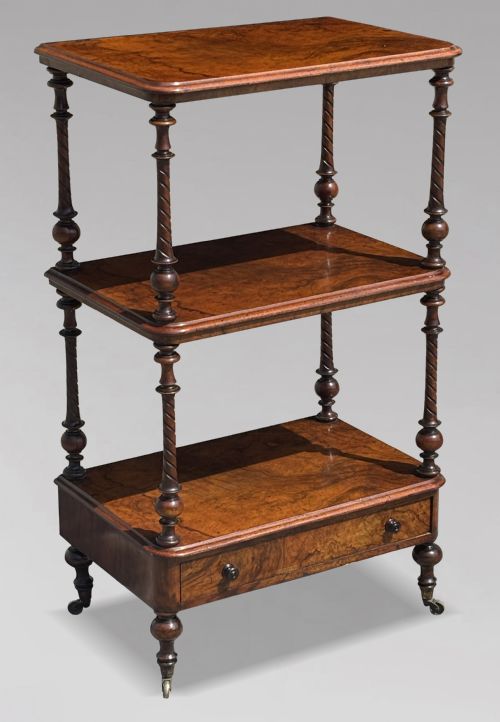
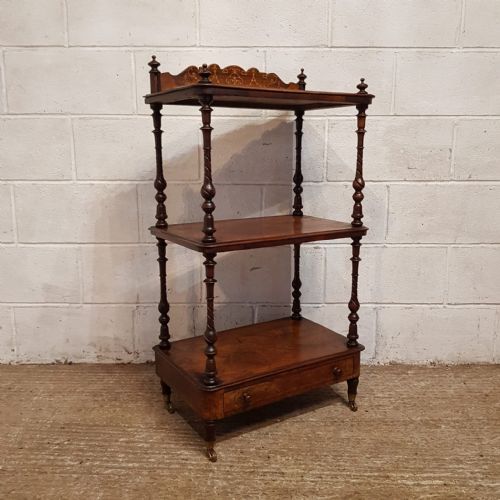


Walnut Three Tier Etagere
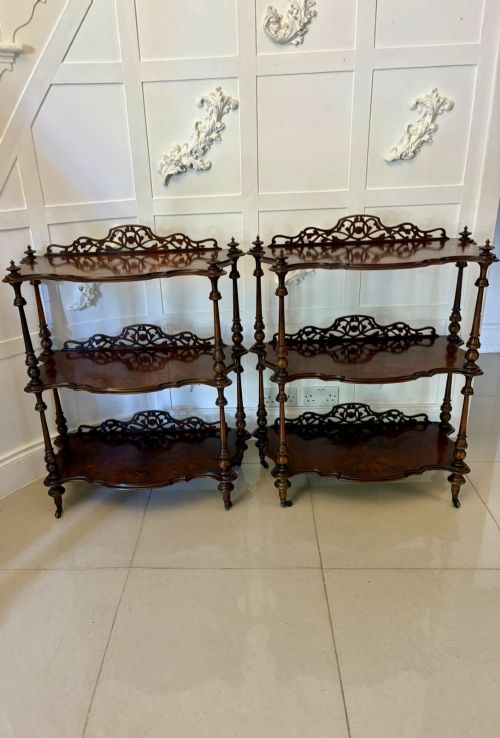
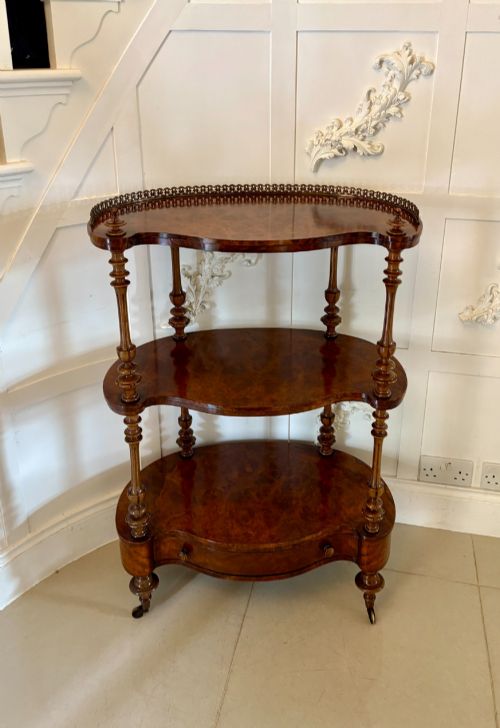
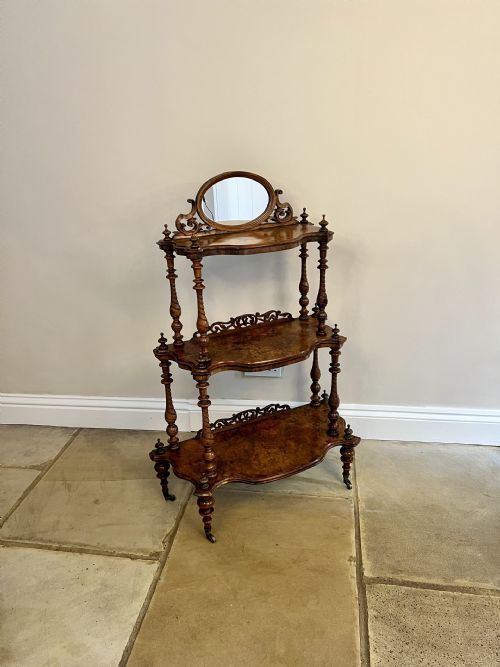
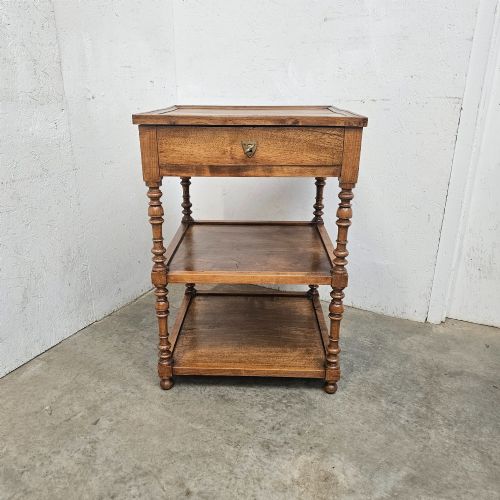
A walnut three tier etagere provides tiered display surfaces in figured wood, offering practical elegance for collectors seeking period display furniture.
Walnut Three Tier Etagere
A walnut three tier etagere is a multi-level display piece primarily originating from the Victorian and Edwardian eras, designed for holding decorative objects and books. When searching for a walnut three tier etagere, buyers encounter freestanding tiers supported by turned columns, corner units, and occasional tables with marquetry inlays.
The form crosses paths with whatnots and display stands, frequently appearing in figured burr walnut with multiple open shelves. These pieces function as versatile display furniture in sitting rooms, utilising vertical space without heavy proportions.
How they were made
Cabinet makers utilised solid walnut and decorative burr walnut veneers, applying marquetry inlay and brass mounts to enhance the tiered surfaces. Turnery shaped the supporting columns, while ormolu and mirror glass occasionally augmented French and English examples from the nineteenth century.
Construction techniques combined robust framework timber with delicate veneer work on the tiers, securing shelves at graduated heights. Brass fittings and ebonised wood details reinforced corners and edges on finer exhibition pieces.
Listings demonstrate forms spanning Victorian burr walnut, French marquetry inlaid pieces, and corner whatnot stands.
What varies in quality
Quality rests in the choice of wood figure, where richly patterned burr walnut and intricate marquetry panels distinguish superior examples from plain timber. The crispness of carved elements and the refinement of brass or ormolu mounts mark the distinction between standard production and exhibition items.
Structural proportion and timber matching across all three tiers dictate the visual harmony of the piece. Subtle details such as turned-leg execution and fine edge banding separate workshop output from master cabinet maker attribution.
Gillows
The Walnut Three Tier Etagere Glossary
- Etagere
- A piece of furniture consisting of a set of open shelves for displaying small objects. The form originated in France during the eighteenth century and remained popular through the Victorian period.
- Whatnot
- A multi-tiered stand used for storage or display in nineteenth-century interiors. These pieces often feature three or more shelves supported by slender columns.
- Burr walnut
- A wood harvested from walnut tree growths that produces intricate, swirling grain patterns. Cabinet makers prized this veneer for high-status Victorian cabinet work.
- Marquetry
- Decorative veneer work arranged in pictorial or geometric patterns using various woods. Artisans applied these designs across the top tiers of French and English etageres.
- Ormolu
- Gilded bronze mounts used as decorative trim on nineteenth-century furniture. French workshops frequently applied these metal accents to etageres and display stands.
Walnut Three Tier Etagere: Frequently Asked Questions
What is the difference between an etagere and a whatnot?
An etagere generally originates from French design traditions with an emphasis on open display shelves and ornamental mounts. A whatnot serves a similar multi-tiered function within English domestic interiors.
Both terms describe tiered shelving units, though historical makers often used them interchangeably in nineteenth-century trade catalogues.
Where were these etageres placed in period homes?
Victorian and Edwardian households placed these tiered stands in drawing rooms and parlours to exhibit porcelain, small sculptures and bound books. Corner variants utilised unused wall angles efficiently.
Their open construction allowed light to pass through while keeping decorative collections visible from multiple angles.
How do I date a walnut etagere?
Dating relies on stylistic markers such as turned columns, marquetry patterns, and the choice of walnut veneer. Victorian examples from the mid-nineteenth century often display heavy burr walnut figures and brass mounts.
Later Edwardian pieces tend to show lighter French-influenced marquetry work and refined ormolu details.