





Louis Style Bergere
When you want a louis style bergere, you are choosing a French seating form designed for deep comfort with enclosing arms.
Louis Style Bergere
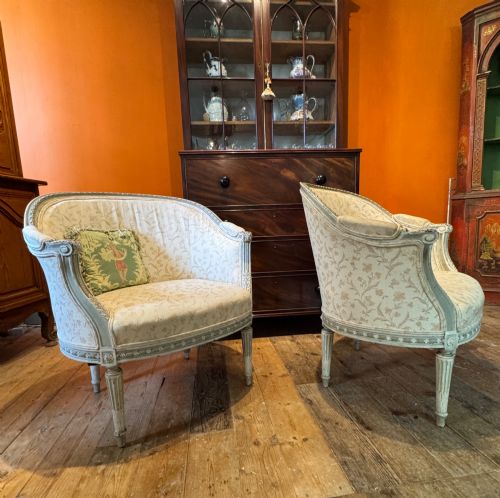
A louis style bergere is an enclosed upholstered armchair originating from French design traditions, built with padded armrests and a deep seat. Buyers seeking this phrase encounter pieces spanning the nineteenth century through the mid-twentieth century, heavily weighted toward nineteenth-century origins and early twentieth-century revivals.
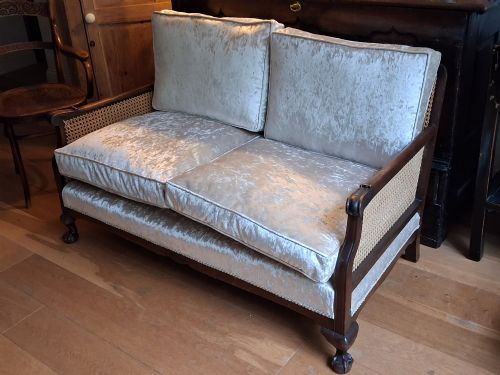
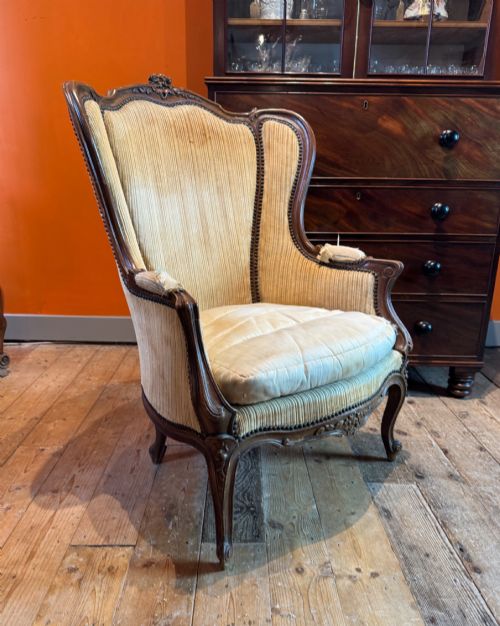
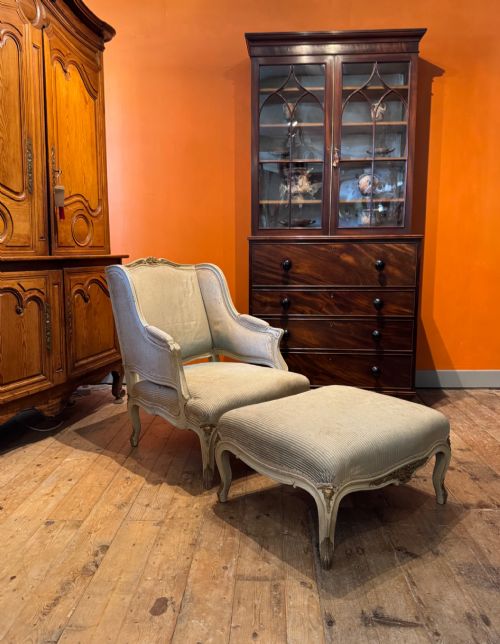
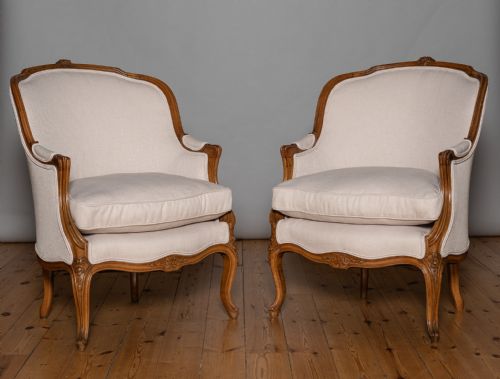
The dominant forms on this page include pairs and single armchairs, alongside tub shapes, wingbacks, and related salon seating such as duchesse brisée chaise longues and window seats. These items channel the aesthetics of Louis XV and Louis XVI periods, leaning into curved rococo lines or restrained neoclassical geometry.
Construction origins point directly to French workshops and salon contexts, adapted later by English and continental makers in identical styles. You will find them grouped primarily as low-slung library chairs, bedroom suite components, and formal salon seating.
How they were made
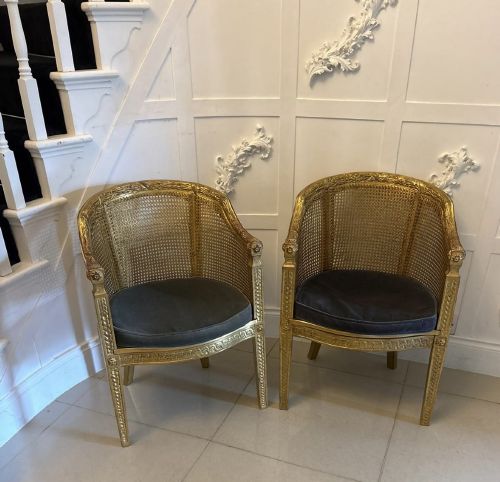
The wooden frames of these chairs rely heavily on solid beech, walnut, and oak, carved with floral motifs, scrolls, or fluted neoclassical lines depending on the specific revival period. Giltwood, original paint finishes, and parcel-gilt treatments surface frequently across the structural timber.
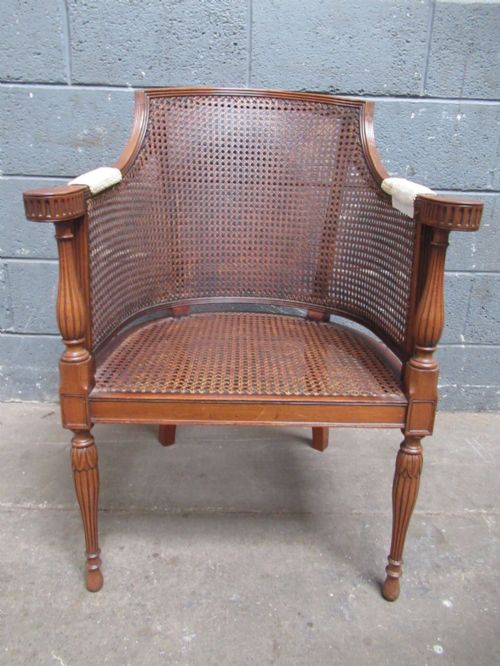
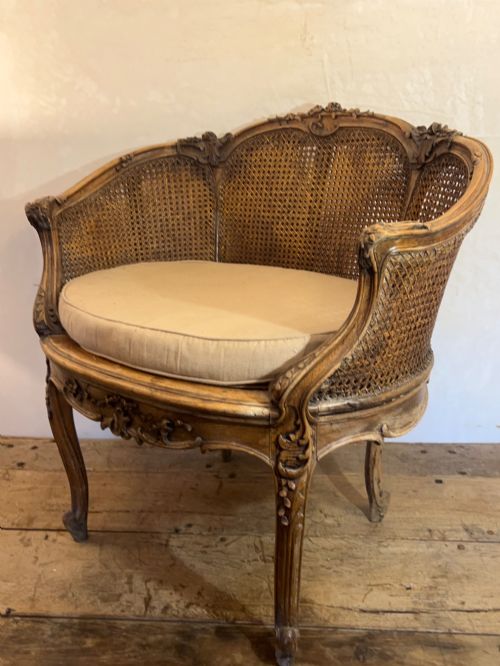
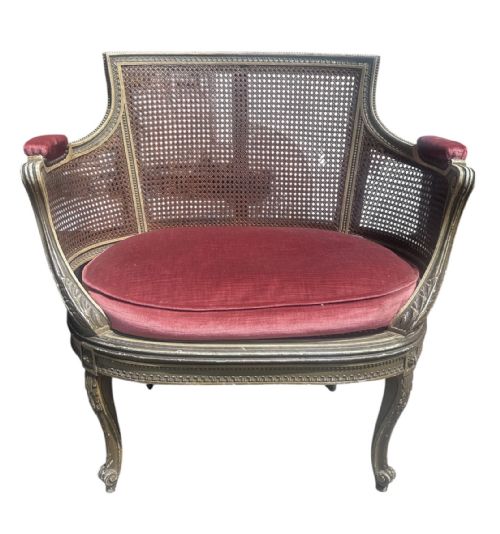
Caning and rattan cane form the distinctive tight mesh panels seen on the backrests and sides of many examples, while other versions utilise full fabric or silk upholstery over internal webbing. Down and horsehair stuffing traditionally filled the loose seat cushions and padded frames, paired with textiles like velvet and silk.
Louis Style Bergere Retail Price Guide 2026
Typical asking prices for louis style bergere among the pieces listed under this phrase on Sellingantiques today, from the lower quarter to the upper quarter. They describe what is for sale here now, not the wider market.
Several listings include miniature child-sized editions, proving that eighteenth-century comfort standards applied strictly to the entire family.
What varies in quality
The integrity of the woven cane panels marks a distinct tier of craftsmanship, where tight, uniform hand-weaving contrasts against loose or modern machine repairs. Original surface treatments, such as untouched period giltwood or early layered paint, elevate the historical standing of a frame far above later refinishing attempts.
The Louis Style Bergere Glossary
- Bergere
- An enclosed upholstered armchair with closed sides, typically featuring a visible wooden frame and a loose seat cushion. This form developed in France during the early eighteenth century for relaxed indoor sitting.
- Duchesse brisee
- A multi-part chaise longue comprising an armchair accompanied by a matching stool or a divided long seat. This configuration allows the user to recline fully with leg support.
- Giltwood
- Timber coated with a thin layer of gold leaf or gilt preparation. This finish appears frequently on formal eighteenth- and nineteenth-century salon furniture.
- Caning
- A woven lattice material made from rattan palm peel, used for lightweight and flexible backrests and side panels. It provides structural transparency and ventilation to enclosed chair designs.
Louis Style Bergere: Frequently Asked Questions
What is a bergere chair?
A bergere is a French upholstered armchair characterised by enclosed sides filled with upholstery or cane work. It offers a wider and deeper seat than a standard dining or side chair.
The style emerged to provide greater comfort and warmth away from draughty rooms, creating a private seating enclosure for reading or socialising.
How do I tell Louis XV and Louis XVI styles apart?
Louis XV style pieces display flowing, asymmetrical curved lines, cabriole legs, and naturalistic rococo leaf carvings. These forms feel organic and rounded in their silhouette.
Louis XVI style shifts toward geometric straight lines, symmetry, fluted columns, and neoclassical motifs like ribbons and oval medallions. The structural stance appears much more architectural and upright.
Were these chairs used in dining rooms?
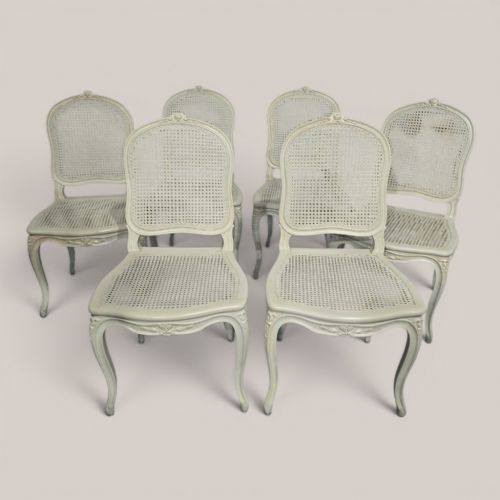
While most bergeres function as low salon, library, or bedroom seating, variations like caned dining chairs appear in sets. Their low profile suits lounging rather than upright dining.
When utilised around a table, they offer substantial comfort due to their enclosed padded arms and sprung or stuffed seat bases.
How do I care for antique cane panels?
Antique cane requires gentle dusting with a soft brush and occasional light moisturising to prevent the natural rattan fibres from drying out and snapping. Avoid placing them near direct heat sources.
Sagging cane can sometimes be tightened by dampening the reverse side with warm water and allowing it to dry naturally as it shrinks back into tension.