





Louis XV Upholstery Chair
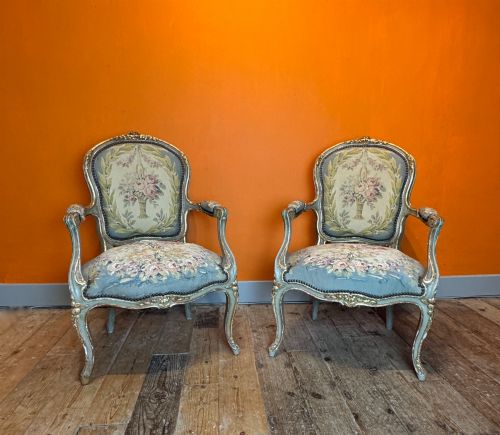
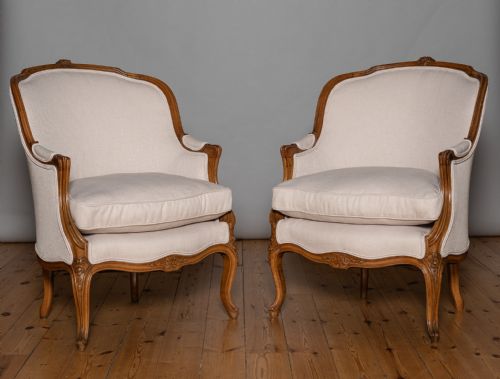
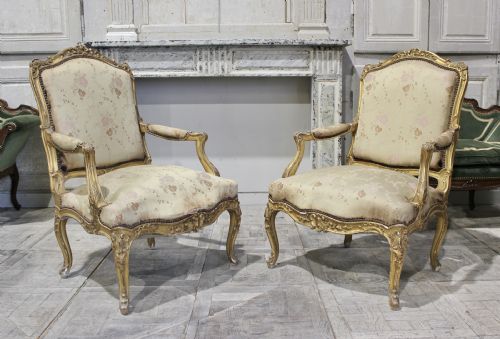
These louis xv upholstery chair examples bring genuine Rococo elegance to a room through curved walnut, giltwood, and fine period textiles.
Louis XV Upholstery Chair
A louis xv upholstery chair combines fluent Rococo lines with comfortable padded seating, appearing in forms from single salon chairs to complete suites. When exploring a louis xv upholstery chair, buyers encounter genuine 18th-century originals alongside later revival pieces produced across the 19th and early 20th centuries.
The prevailing format on this page is the armchair, often presented in pairs, accompanied by occasional salon suites and drawing room sets. Origins lean toward France and Continental Europe, spanning periods from the 18th century through to the Victorian era and the early decades of the 19th and 20th centuries.
How they were made
Makers shaped structural frames from solid walnut, beechwood, and carved wood, applying giltwood or gold leaf finishes, and sometimes retaining original paint or parcel gilt details. Woodworkers relied on fluid carving to define the characteristic asymmetrical curves and foliage motifs associated with the style.
Upholstery completed the work using traditional textile coverings such as tapestry, needlework, damask, fabric, and velvet. These textile panels were secured directly to the padded seats and backs of the armchairs and salon chairs.
Louis XV Upholstery Chair Retail Price Guide 2026
Typical asking prices for louis xv upholstery chair among the pieces listed under this phrase on Sellingantiques today, from the lower quarter to the upper quarter. They describe what is for sale here now, not the wider market.
The inventory spans the 18th century, the Victorian era, and 1910, encompassing individual armchairs and multi-piece salon suites.
What varies in quality
Quality rests in the depth and crispness of the wood carving, where fluent, hand-chiseled details distinguish superior frames from mechanical or shallow work. The integration of the frame with its original finish, whether giltwood, paint, or polished walnut, shapes the integrity of the piece.
The character and preservation of the textile upholstery elevate a piece, particularly when needlework, tapestry, or damask retain their original colours and tight weave. Matching pairs and complete salon suites demonstrate a higher degree of initial investment and survival compared to isolated chairs.
The Louis XV Upholstery Chair Glossary
- Giltwood
- Wood that has been coated with gold leaf or a gold-colored preparation. This surface treatment was favored for formal salon chairs and suites to catch candlelight.
- Tapestry
- A thick textile featuring hand-woven pictorial designs. It provides durable and decorative coverage for period armchair seats and backs.
- Fauteuil
- An open-armed French upholstered armchair with wooden armrests left exposed. It represents a standard form within the Louis XV and revival repertoires.
- Damask
- A reversible figured fabric woven on a jacquard loom. It is frequently utilised for formal upholstery on period seating.
- Parcel Gilt
- A decorative treatment where only specific raised portions of a carved wooden frame are gilded. This technique highlights particular details against a painted ground.
Louis XV Upholstery Chair: Frequently Asked Questions
Are these chairs comfortable for daily use?
These chairs provide a supportive upright seat suited for drawing rooms and formal spaces rather than lounging. Their padded backs and arms offer genuine comfort when seated.
Original webbing and interior stuffing may require professional reinforcement if intended for regular daily sitting. Many examples function well as occasional seating while maintaining their decorative presence.
How do I identify a true 18th-century piece?
Dating relies on inspecting the construction methods, tool marks, and wood ageing visible on the underside of the frame. Eighteenth-century pieces exhibit hand-cut joints and timber characteristics distinct from later revival work.
Revival pieces from the 19th and 20th centuries often adopt the same forms but display different timber patination and modern fastening techniques. Comparing the frame construction to known dated examples clarifies the period.
Can I reupholster these chairs safely?
Reupholstering is a common practice for pieces found with worn fabric or those requiring a specific interior colour scheme. Traditional methods should be maintained to protect the structural integrity of the carved frame.
Certain pieces retain historical needlework or tapestry that collectors prefer to preserve intact. Professional upholsterers experienced with antique frames ensure the work respects the age of the wood.
What is the difference between an armchair and a salon chair?
Armchairs feature supportive side rests designed for relaxed seating in studies and drawing rooms. Salon chairs often encompass lighter, more upright forms intended for formal gatherings.
Both types share the carved wooden frames and decorative upholstery characteristic of the period style. Armchairs generally offer a more substantial presence within a room arrangement.