

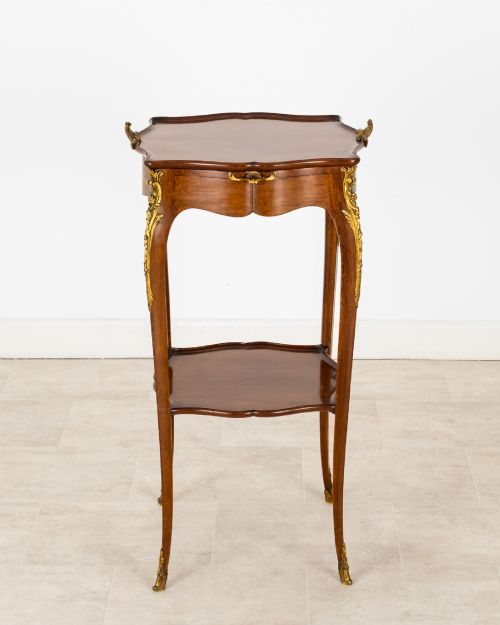


Louis Revival Side Table
When choosing a louis revival side table, you encounter nineteenth-century walnut, kingwood and mahogany pieces styled after French court aesthetics.
Louis Revival Side Table
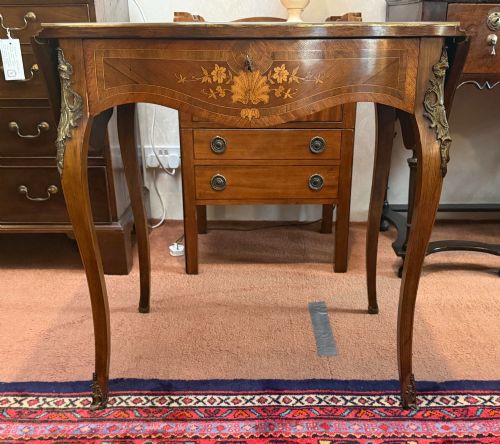
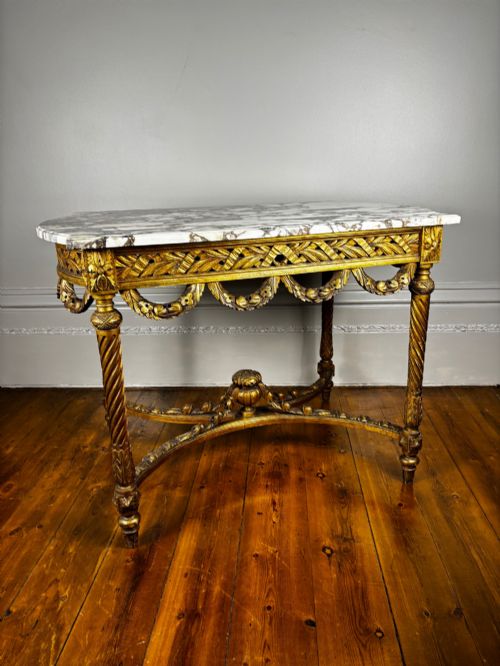
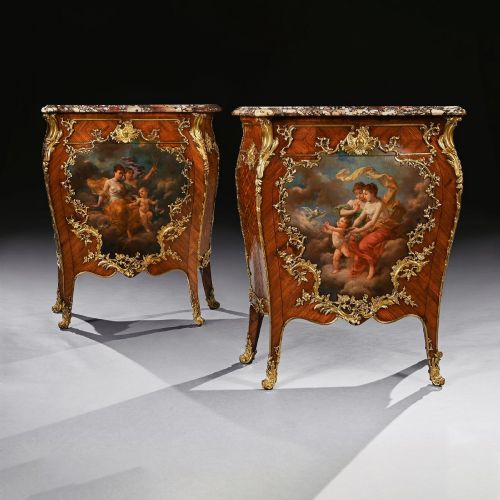
A louis revival side table brings continental nineteenth-century decorative forms into modern rooms, drawing on the fluid curves of Louis XV rococo or the geometric restraint of Louis XVI neoclassicism. These pieces operate as occasional tables, centre tables, console tables, or bedside cabinets designed to punctuate a room with historic detail.
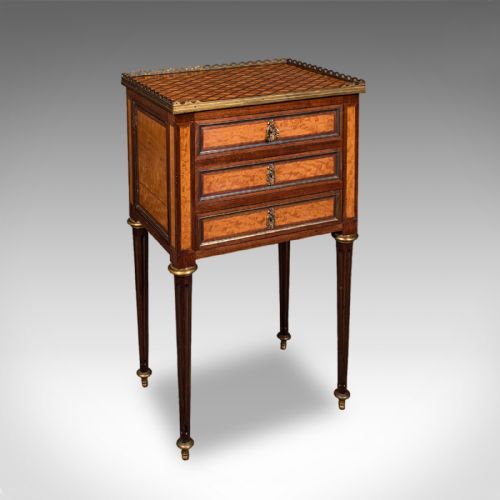
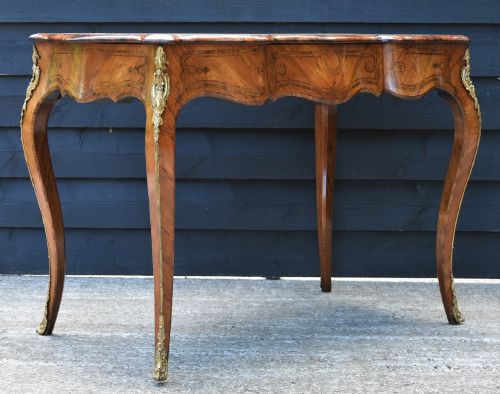
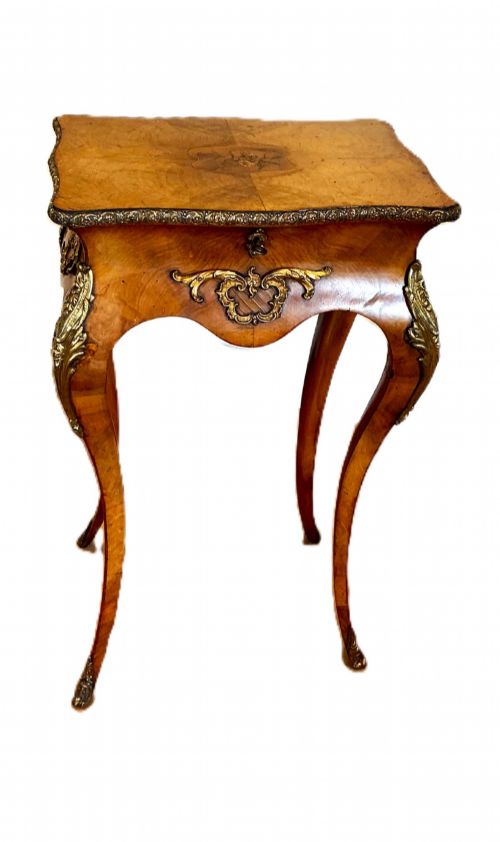
The selections on this page span the nineteenth century and early twentieth century, capturing Victorian interpretations alongside continental French workshops. Walnut, kingwood, rosewood, and mahogany form the primary timbers, frequently shaped with serpentine edges and supported by cabriole legs.
Buyers meet varied iterations ranging from smaller lamp and wine tables to large marble-topped console tables and elaborate marquetry writing desks. The revival aesthetic prioritises decorative presence, utilising contrasting veneers and gilt mounts to recreate nineteenth-century chateau interiors.
How they were made
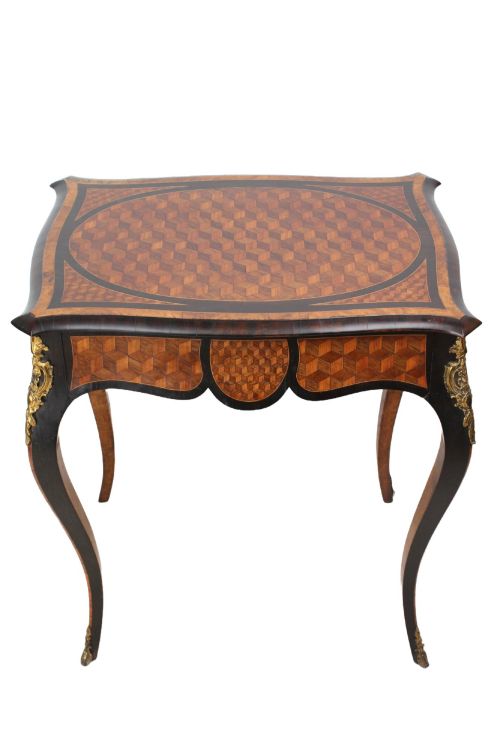
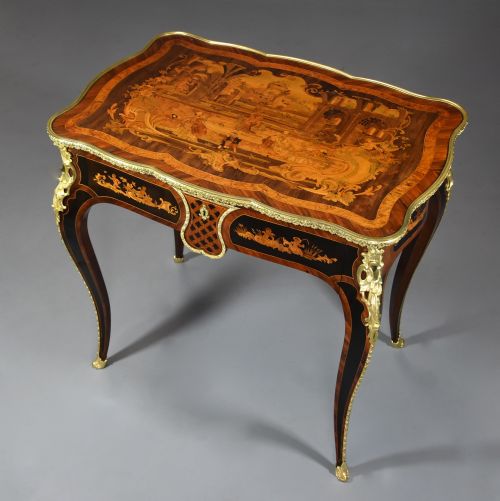
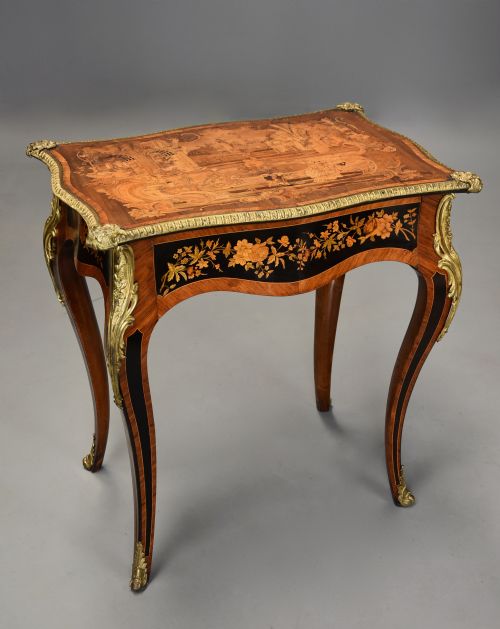
Cabinetmakers constructed these tables using dense hardwood carcases of walnut, mahogany, or oak, overlaid with decorative veneers such as kingwood, tulipwood, satinwood, and rosewood. Parquetry and floral marquetry were meticulously cut and fitted by hand to create intricate geometric and pictorial patterns across the tabletops.
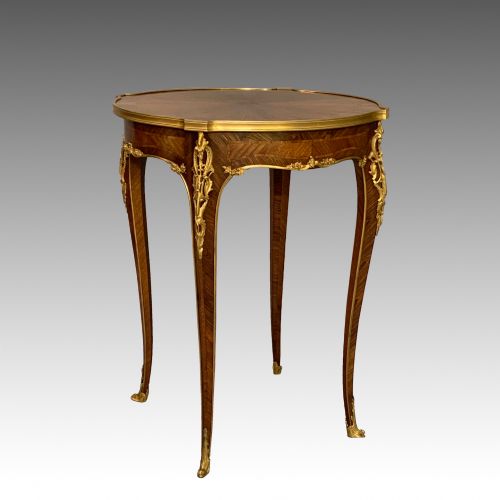
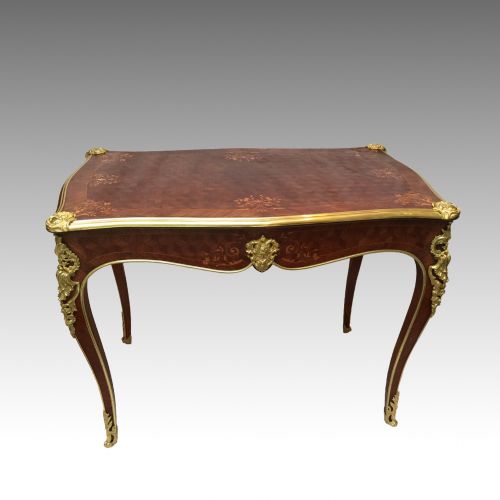
Cast ormolu and gilt bronze mounts were applied to protect vulnerable corners and accentuate the structural lines of the aprons and cabriole legs. Marble slabs, set into the upper frames of console and occasional tables, provided durable, cool surfaces that contrasted with polished wood and polished metal fittings.
Some nineteenth-century tables include hidden drawers designed specifically for secret love letters and clandestine notes.
What varies in quality
The distinction between standard production and exceptional work rests on the precision of the marquetry inlay and the crispness of the cast ormolu mounts. Finer examples display hand-chased bronze details and carefully selected grain patterns that align seamlessly across the curves of serpentine tops.
Structural integrity also separates the output, with superior pieces retaining rigid joints beneath complex veneered surfaces and heavier marble tops that sit flush within their gilded frames. Maker attribution, through stamps, paper labels, or documented signatures, elevates certain tables into notable collector items.
JAS Shoolbred·Joseph-Emmanuel Zwiener·François Linke·Haentgos Freres Paris·Alphonse Tahan
The Louis Revival Side Table Glossary
- Ormolu
- Gilded bronze used for decorative mounts on nineteenth-century furniture. This technique involves applying a gold amalgam to bronze and heating it to drive off the mercury.
- Marquetry
- Decorative veneer work forming pictures or patterns by assembling small pieces of different coloured wood. Cabinetmakers cut these delicate veneers together in packets to ensure tight joints.
- Parquetry
- Geometric wood inlay forming repeating patterns such as cubes or chequers across tabletops. This technique demonstrates the precision of the workshop.
- Gueridon
- A small French occasional table, often round and supported by a central column or three legs. These tables served various domestic functions in nineteenth-century drawing rooms.
- Boulle
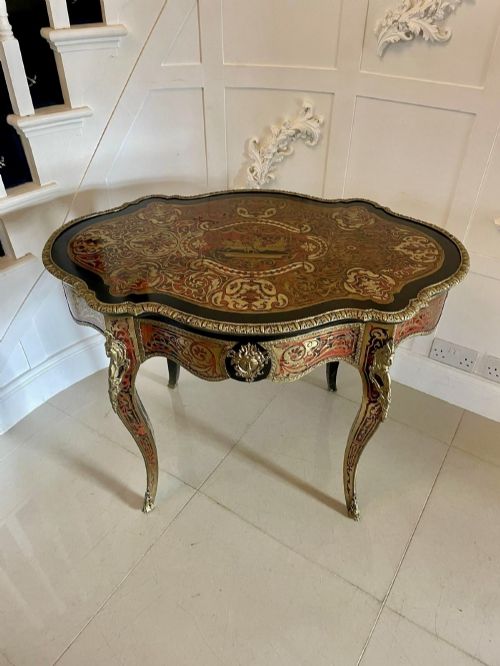
- A form of marquetry employing tortoiseshell and brass inlay, named after seventeenth-century cabinetmaker André-Charles Boulle and revived in the nineteenth century.
Louis Revival Side Table: Frequently Asked Questions
How do I spot Louis XV and Louis XVI styles apart?
Louis XV revival pieces feature asymmetrical curves, flowing rococo scrolls, and prominent cabriole legs. The decoration emphasises organic forms, floral marquetry, and sweeping serpentine outlines.
Louis XVI revival pieces introduce neoclassical symmetry, straight tapered legs, fluted columns, and geometric or rectangular table surfaces. The ornamentation relies on architectural straight lines and classical motifs.
Were these tables used in bedrooms or reception rooms?
Nineteenth-century side tables served multiple domestic functions depending on their specific form. Console tables and centre tables occupied grand hallways and drawing rooms to display decorative objects or anchor the room layout.
Smaller occasional tables, bedside cabinets, and writing desks functioned in private chambers, boudoirs, and libraries for correspondence or holding bedside lamps.
How do I care for antique ormolu mounts?
Ormolu mounts require gentle dusting with a soft, dry cloth to prevent dust accumulation in the recessed chased details. Avoid abrasive cleaners and chemical polishes that strip away the historic fire gilding.
If the metal requires cleaning, consult a specialist conservator to preserve the original surface finish without damaging the surrounding wood or veneer.
Can I use a marble-top table daily?
Marble-topped console and occasional tables handle normal daily use well because the stone provides a hard, heat-resistant surface. However, acidic liquids like wine or citrus juice can etch polished marble if left unattended.
Using coasters and wiping spills promptly protects the polished stone from staining and preserves the integrity of the antique top.