


Bouillotte Side Table
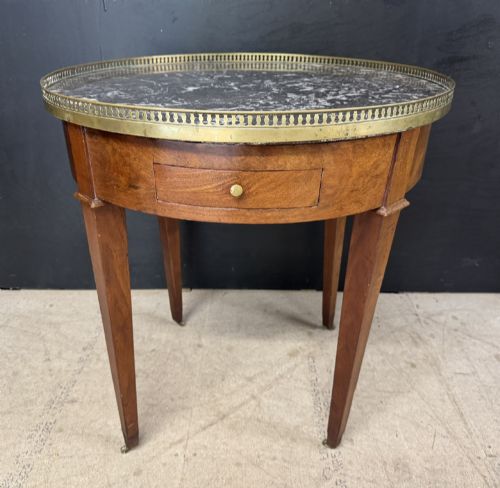
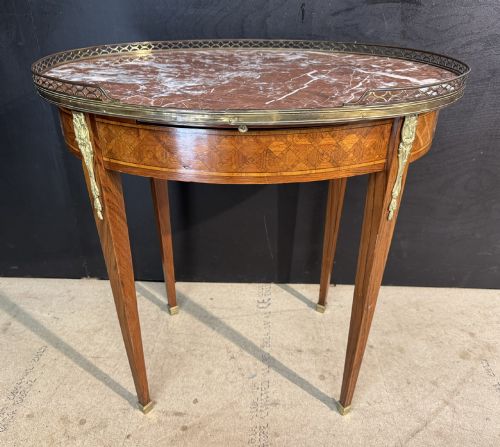
A bouillotte side table is a circular table with a raised gallery, offering an elegant surface for a lamp or small display.
Bouillotte Side Table
A bouillotte side table is a small circular piece traditionally designed for card games, featuring a raised gallery edge to keep items secure. The examples seen here span the nineteenth century, including pieces from the eighteen-eighties, eighteen-nineties, and nineteen-twentieth century.
Most pieces appearing on this page take the form of side tables or occasional tables with marble tops and brass galleries. French neoclassical and Louis the sixteenth styles dominate the selection, often incorporating circular forms and drawers.
Makers drew on traditional French designs, producing both intimate side tables and occasional pieces suited to domestic sitting rooms. Buyers encounter various woods alongside the characteristic marble and metal mounts.
How they were made
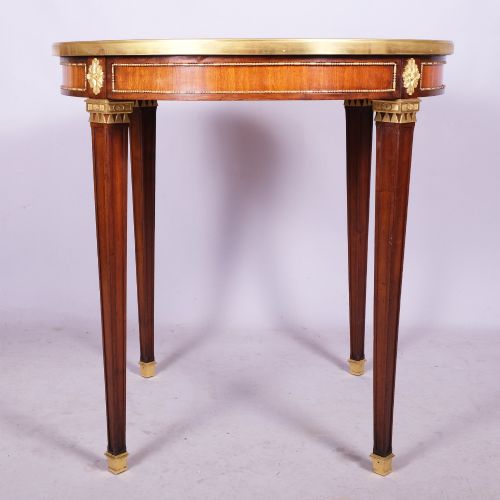
Craftsmen built these tables using timber frames of mahogany, walnut, kingwood, and tulipwood, frequently finished with intricate marquetry and inlay work. Tops were typically fitted with inset marble slabs surrounded by cast brass or ormolu galleries.
Metalwork played a defining role, with brass and ormolu utilised for gallery rims, sabots, and decorative mounts. Toleware and bronze also appear on related table lamps from the period, demonstrating diverse workshop materials.
Listings feature nineteenth-century pieces incorporating marble, brass, mahogany, and kingwood in French styles.
What varies in quality
Quality rests in the crispness of the cast brass galleries and the selection of figured timbers like kingwood and mahogany. Finer examples display meticulous marquetry and well-fitted marble tops that sit flush with the wooden frame.
The weight and finish of the ormolu mounts separate standard production from superior pieces. Proportion and stability also dictate value, with better tables offering balanced weight and precise drawer construction.
Charles Topino
The Bouillotte Side Table Glossary
- Gallery
- A raised rim around the edge of a table top, usually pierced brass, designed to prevent items from rolling off. This feature is particularly characteristic of French bouillotte tables.
- Ormolu
- Gilded bronze used for decorative mounts and furniture trimming. It provides a bright metallic finish that does not tarnish easily.
- Marquetry
- Veneers applied in decorative patterns to wood surfaces. Skilled cabinetmakers used contrasting timbers to create floral or geometric designs.
- Toleware
- Enamelled and painted sheet metal used for decorative objects and lamp bodies. It offers a smooth, coloured surface finish.
- Sabot
- A metal sleeve fitted to the foot of a furniture leg. It protects the timber from wear and adds a decorative accent.
Bouillotte Side Table: Frequently Asked Questions
What is a bouillotte table?
A bouillotte table is a small circular French table typically featuring a raised brass gallery and a marble top. They were originally designed for a specific card game of the same name.
Today, these pieces function well as bedside tables or intimate lamp tables in a drawing room.
How do I style a bouillotte table?
Place one beside an armchair or sofa to hold a small lamp, book, or drinking glass. The raised gallery ensures objects stay safely on the surface.
Their compact circular footprint allows them to fit easily into corners or tight spaces where rectangular tables fail.
Are these tables French?
Most surviving examples originate from France and reflect neoclassical or Louis the sixteenth revival styles. Makers favoured marble tops, brass galleries, and fine wood veneers.
Regional French workshops produced various interpretations throughout the nineteenth century.
What woods were used?
Cabinetmakers utilised mahogany, walnut, kingwood, and tulipwood for the frames and veneer surfaces. These timbers were often paired with marquetry inlay.
The natural grain of the wood contrasts against the smooth marble tops.