



Longcase Hall Clock
A longcase hall clock measures time through centuries of timber and chime, anchoring the room with its steady pendulum.
Longcase Hall Clock
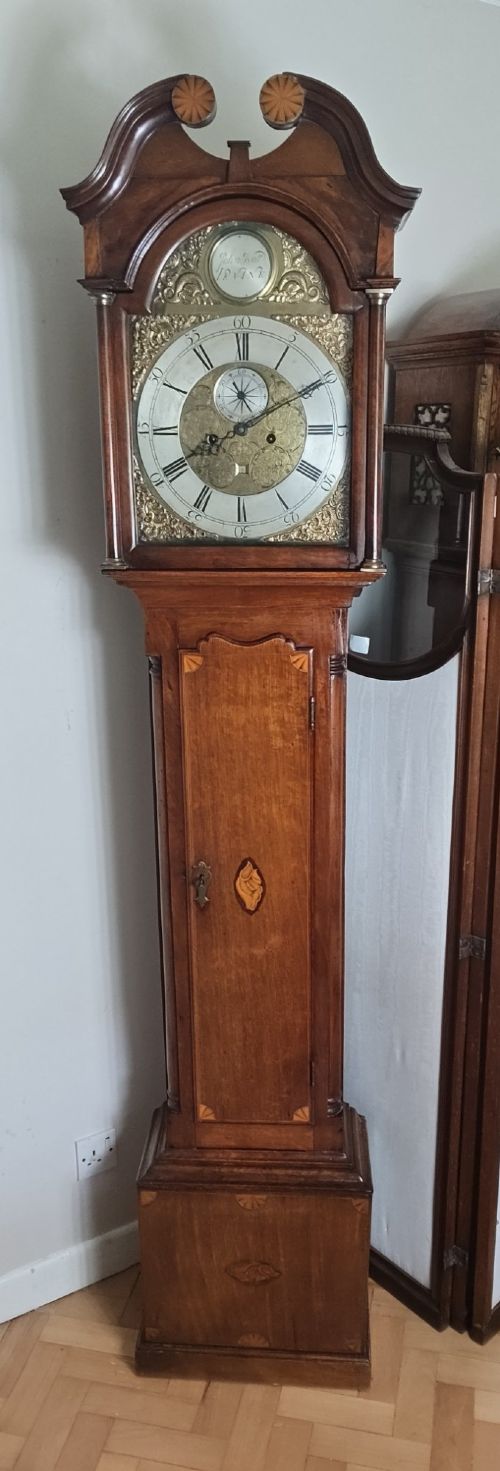
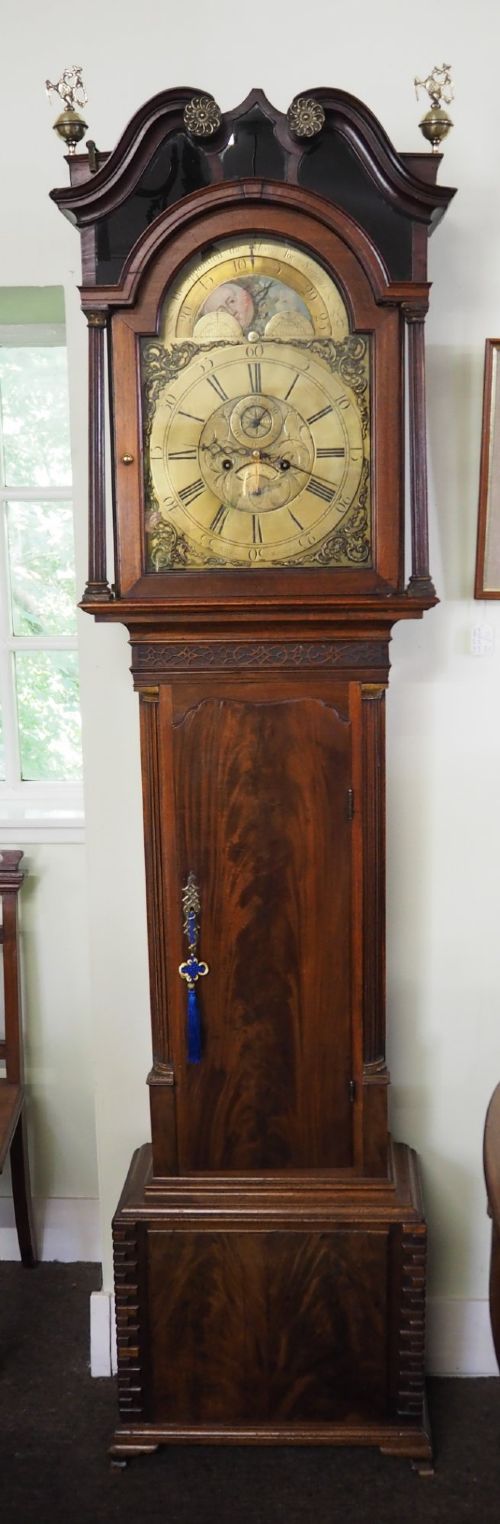
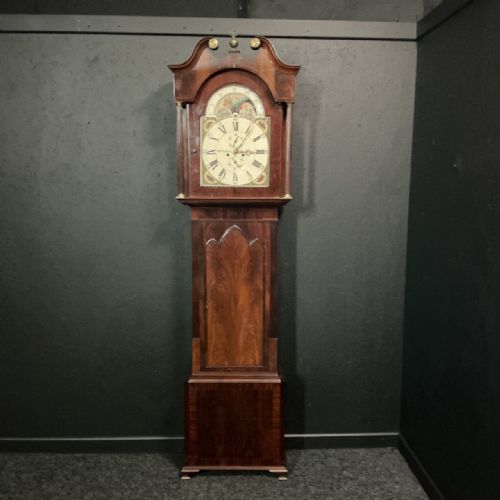
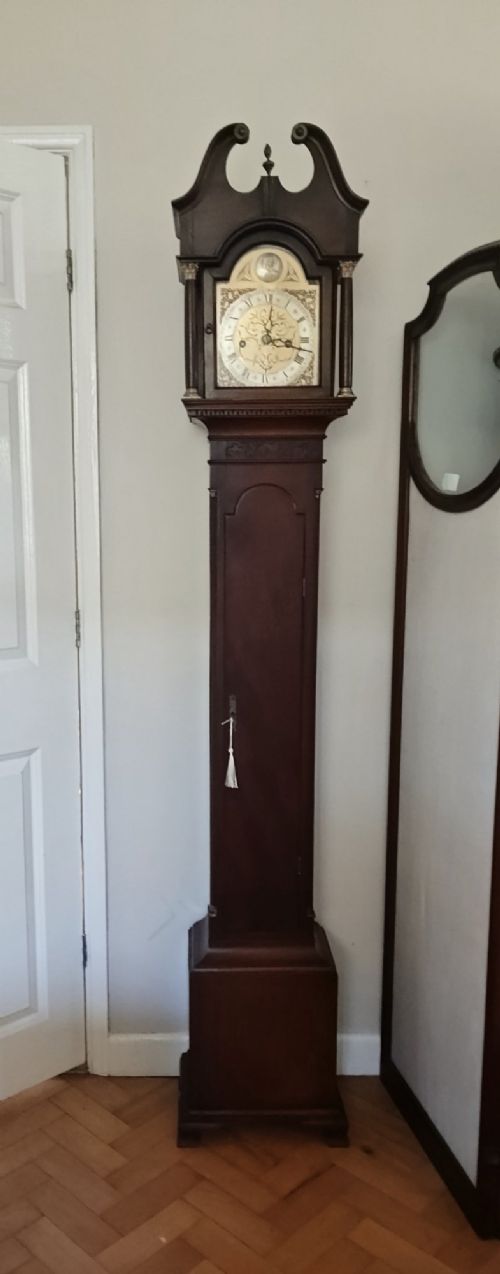
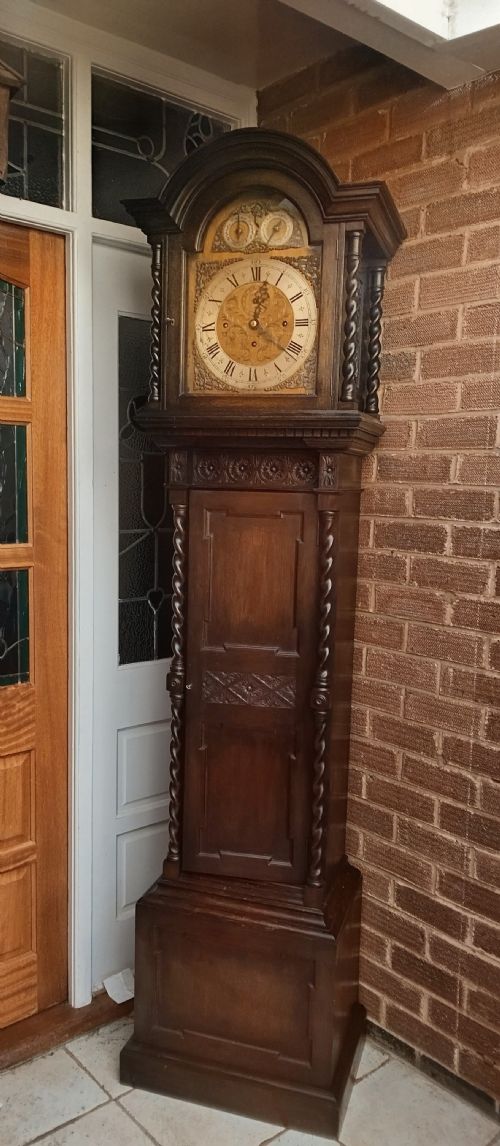
A longcase hall clock is a tall, floor-standing timepiece enclosing a weight-driven or spring-driven movement within a wooden trunk. These pieces span periods from the eighteenth century through the Georgian and Edwardian eras into the twentieth century, appearing in forms ranging from grand eight-day grandfather clocks to more compact grandmother clocks.
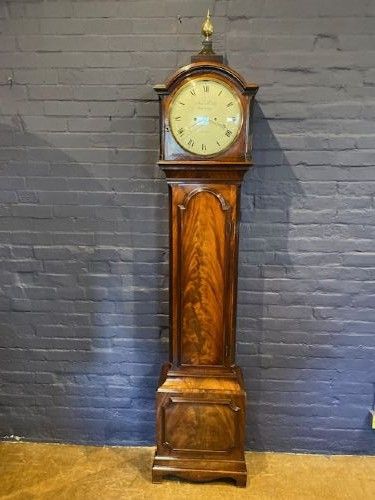
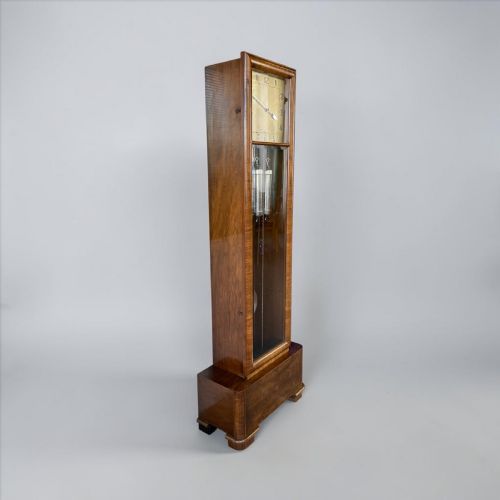
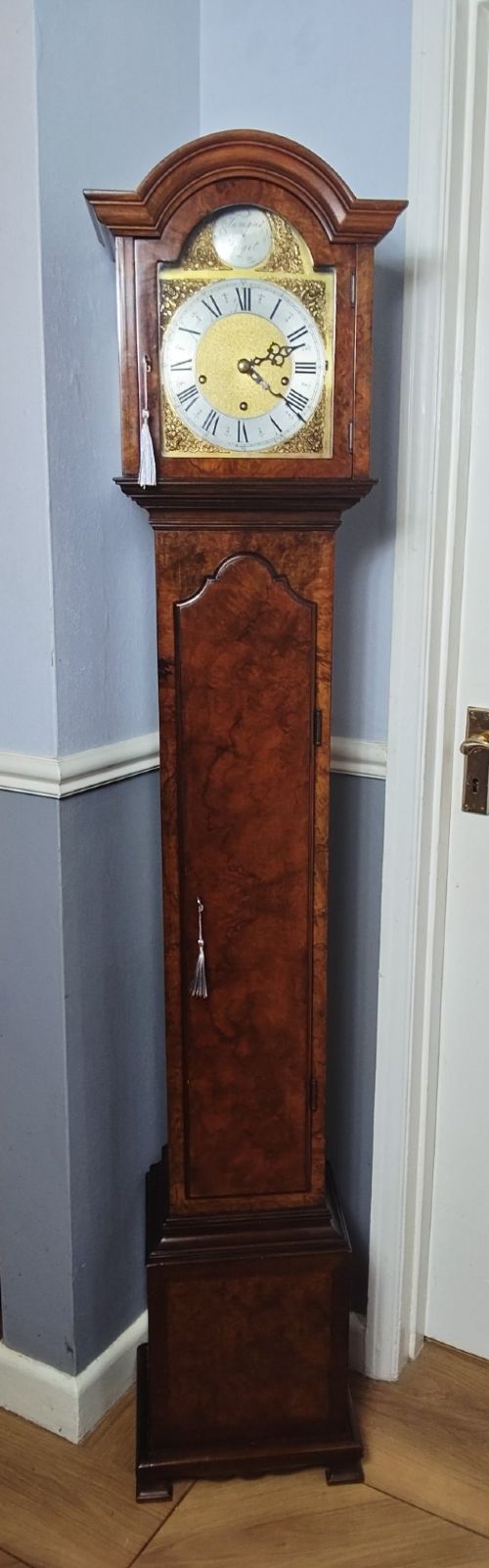
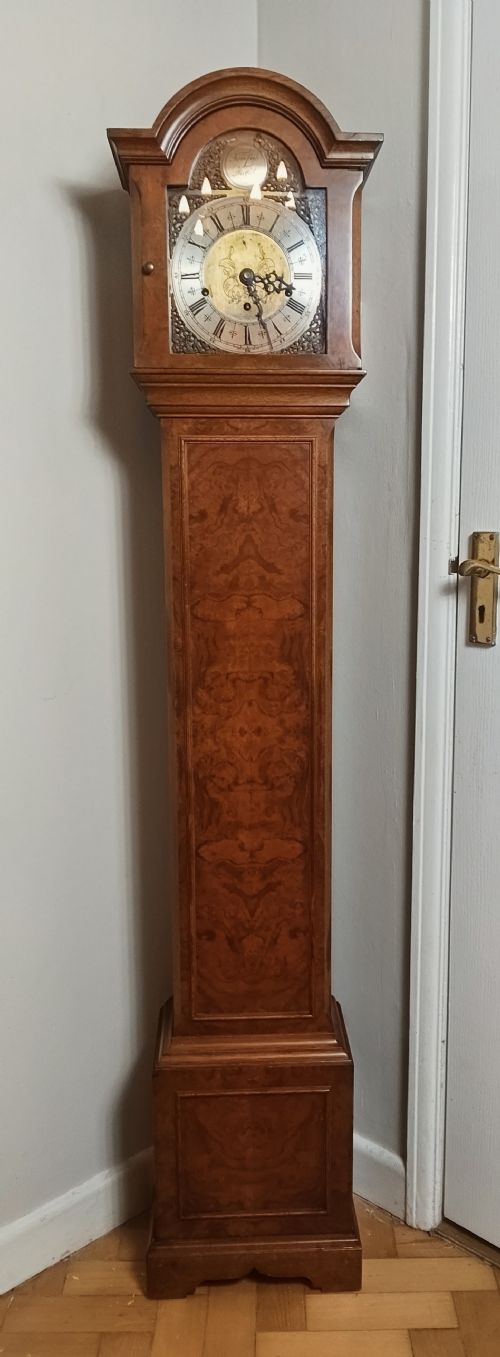
The version most commonly met on this page is the mahogany or oak longcase clock dating from the Georgian or Edwardian periods, often fitted with a brass or painted iron dial. Alongside these traditional examples, buyers encounter smaller musical variants, chiming models with tubular bells, and occasional twentieth-century interpretations in walnut and Chinoiserie finishes.
Materials and Movement Construction
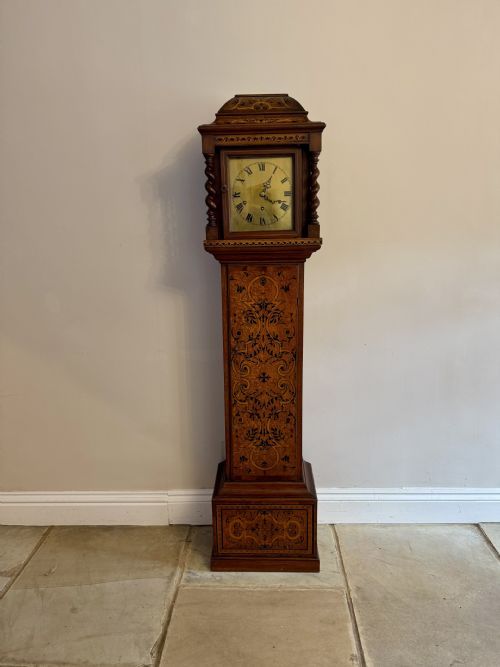
Cases rely primarily on cabinet timbers such as mahogany, oak, and walnut, sometimes enhanced with satinwood inlay, marquetry, or carved details. Timber selection dictated the visual weight of the piece, with figured grains reserved for finer proportions.
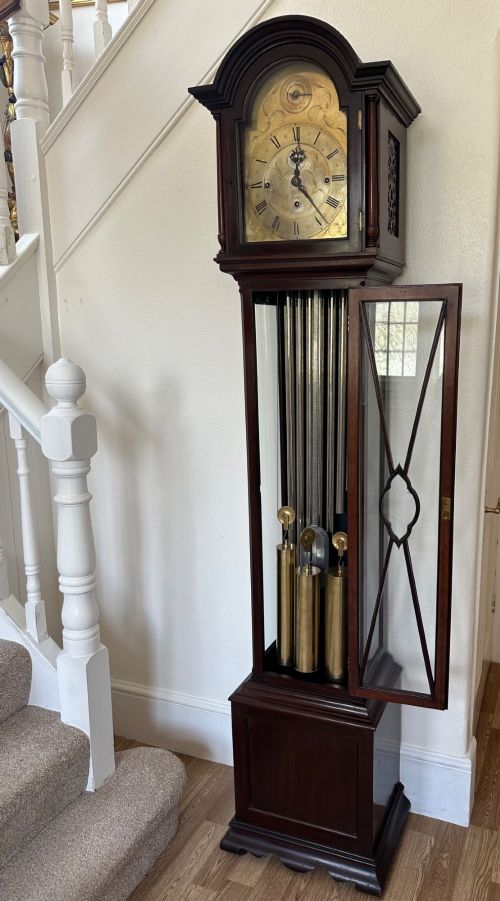
Internal mechanics combine brass dials and gear trains with steel components, glass access doors, and lead or iron weights. Musical and chiming editions incorporate complex tubular bell or gong arrangements to deliver quarter-hour strikes.
Some timepieces include a rocking seesaw automation on the dial, watching a tiny ship pitch upon painted waves with every tick.
Distinctions in Quality
Quality rests in the harmony of the case proportions and the sophistication of the movement. Pieces with slender dimensions, crisp cabinet carving, and elaborate chiming or musical gear trains represent the upper tier of production.
James McCabe·Richard Sharkey Birmingham·John Wylde Nottingham·Richard Northen·Garman Meonstoke·Dwerrihouse and Carter·Halliwell Warrington·Thomas Hall of Holkham·Richard Marshall Wolsingham·Joseph Hallifax Of Barnsley·George Hallifax Of Doncaster·Burchall Nantwich
The Longcase Hall Clock Glossary
- Grandfather clock
- A large, tall longcase clock typically housing an eight-day movement and standing over six feet in height. These tall cases allow the pendulum to swing freely behind the locked trunk door.
- Grandmother clock
- A smaller, more compact version of the longcase clock introduced in the twentieth century. Their reduced proportions suit lower ceilings and narrower hallways.
- Dial
- The visible face of the clock, constructed from brass or painted iron and marked with numerals. These faces frequently display the maker name and subsidiary dials for seconds or date.
- Chiming movement
- An internal mechanism designed to play melodies or strike gongs on the quarter hour. Tubular bells and gong rods generate the acoustic resonance in these clocks.
- Marquetry
- Decorative veneer work created by fitting together small pieces of wood to form pictorial patterns. This technique appears on cabinet doors and trunk fronts of selected Edwardian examples.
Longcase Hall Clock: Frequently Asked Questions
How do I wind a longcase hall clock?
Winding requires raising the weights using a crank or pulling the chains depending on the specific movement mechanism. Care must be taken not to over-wind the barrels.
Most eight-day movements require weekly attention, while thirty-hour versions demand daily winding. Maintaining a regular schedule preserves the tension on the internal gear train.
Where should I place a grandfather clock?
Position the piece against an interior wall on a level surface away from direct sunlight and temperature drafts. Stability prevents the case from rocking.
Placing the clock on solid flooring ensures the pendulum swings evenly without catching against the sides of the trunk.
How do I tell an 18th-century clock from an Edwardian one?
Eighteenth-century examples feature solid oak or mahogany construction with square or arched brass dials built by regional makers. The cabinet work displays hand-cut joinery and simpler proportions.
Edwardian models often incorporate factory-made movements, lighter marquetry inlay, and sometimes smaller proportions known as grandmother clocks. Their styling frequently revives earlier historic motifs.
What is the difference between a grandfather and a grandmother clock?
Grandfather clocks are tall, traditional timepieces dating mainly from the Georgian and Victorian periods with large eight-day movements. They dominate a room through their height and presence.
Grandmother clocks are shorter, slender alternatives produced largely in the early twentieth century. Their scale fits modest spaces while retaining the mechanical chime functions of their larger counterparts.