


Longcase Clock Movement
A longcase clock movement carries centuries of mechanical mastery, bringing together brass, steel, and wooden architecture to track time with measured precision.
Longcase Clock Movement
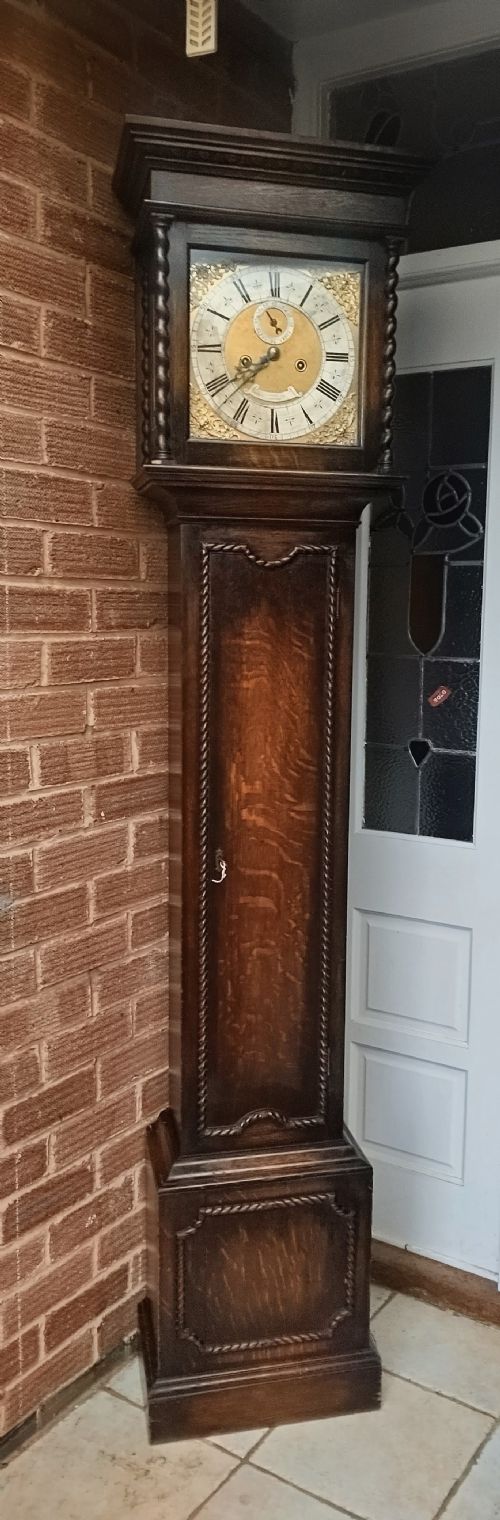
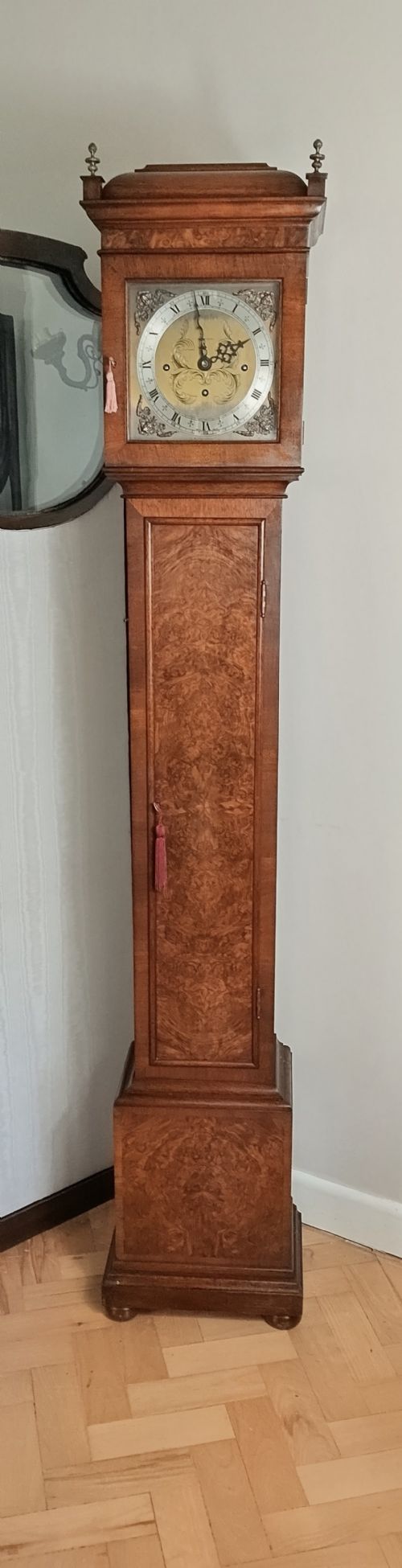
A longcase clock movement forms the mechanical heart of a grandfather, grandmother, or dwarf clock, combining wheels, gears, and escapements inside a protective housing. Buyers searching for this phrase encounter bare mechanisms as well as complete clocks paired with dials.
The selections span from early eighteenth-century brass and iron assemblies to later Edwardian and twentieth-century musical and tubular bell movements. Examples range from simple thirty-hour versions to intricate eight-day moonphase, regulator, and quarter-chiming variants.
Regional British makers from Birmingham, London, and smaller Welsh and English towns dominate the earlier periods, while later movements incorporate continental mechanisms alongside traditional designs.
Materials and Construction
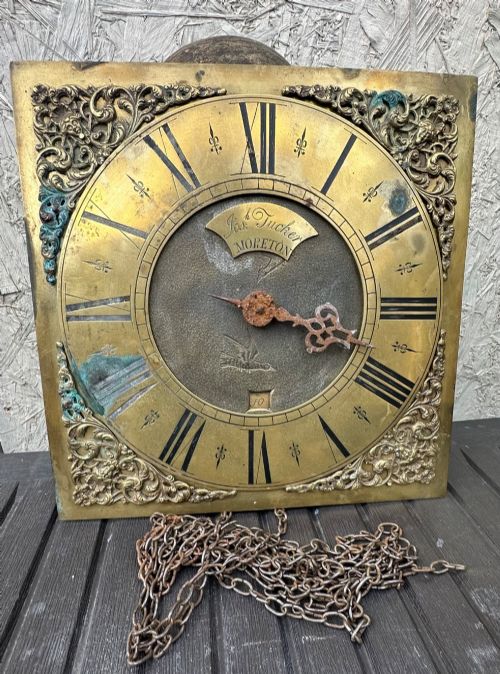
Makers utilised brass for wheels, plates, and dials, often pairing it with sturdy iron and steel for pivots, arbors, and springs. Movements with five pillars or early birdcage construction reflect robust eighteenth-century workshop engineering.
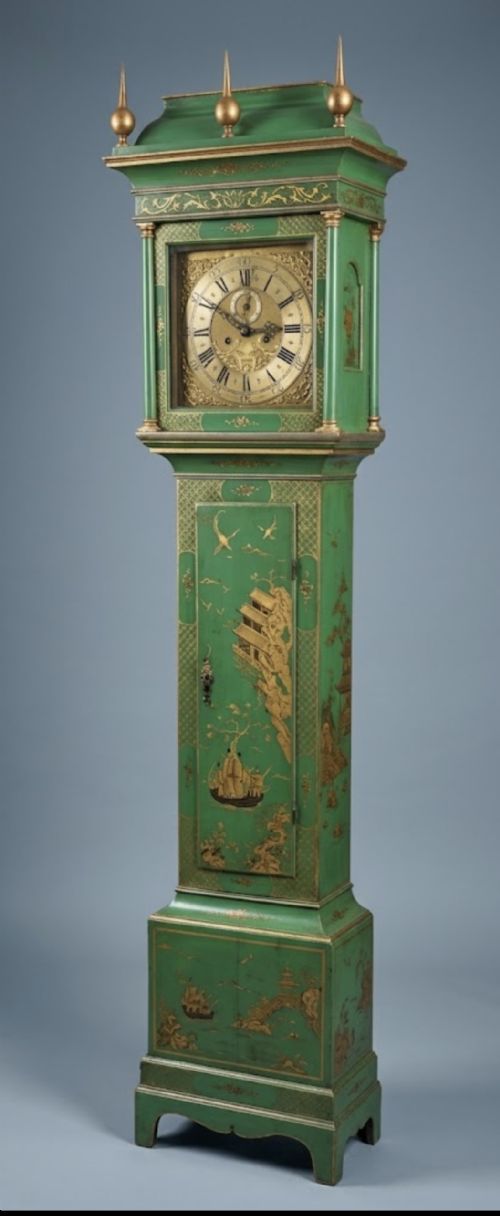
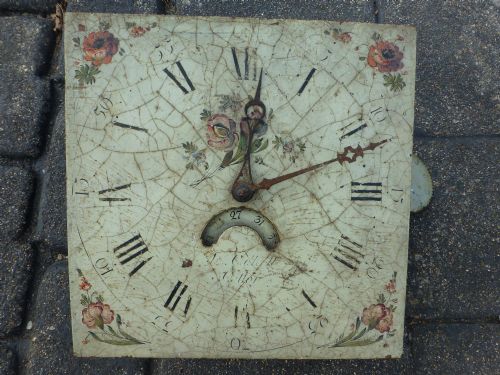
Associated clock housings employ oak, mahogany, walnut, and lacquered wood adorned with gold leaf, glass panels, and inlaid details. Dials feature hand-painted surfaces, engraved brass brasswork, and silvered chapter rings.
Some grandfather clock movements include rocking ships that bob up and down on painted waves with every tick of the pendulum.
Evaluating Craftsmanship
Superior quality shows in the crispness of wheel-cutting, the finish of the brass plates, and the complexity of the train, such as maintaining power or triple-weight musical chimes. Finer examples often bear the signature of a skilled regional or London maker on the dial or movement backplate.
The integrity of the gear trains, the presence of original components like count wheels or moon roller mechanisms, and the harmonious integration of dial and movement distinguish standard pieces from exceptional survivals.
John Fielder of Alton·Edward White Birmingham·James Harvey of Abergavenny·R Biggs of Rumsey·John Stokes of Bewdley·Simpson Yarmouth·Geo Borrett of Stowmarket·Ebenezer Handscomb·Barber of Stratford·Gustav Becker·Winterhalder and Hoffmeier
The Longcase Clock Movement Glossary
- Moonphase
- A rotating dial disc tracking the lunar cycle and phases of the moon. It typically completes a full rotation every lunar month.
- Regulator
- A high-precision timepiece designed for exceptional accuracy. These movements often feature deadbeat escapements and heavy pendulums.
- Fusee
- A conical pulley used with a cord or chain to equalise the drive force of the mainspring as it unwinds. This ensures consistent power delivery throughout the running period.
- Birdcage movement
- An early structural style where the movement plates are held apart by turned brass pillars resembling a cage. It is frequently found on thirty-hour clocks.
Longcase Clock Movement: Frequently Asked Questions
What is an eight day movement?
An eight day movement requires winding once a week to keep the clock running continuously.
These mechanisms use heavier weights or stronger springs than thirty-hour versions, demanding robust gear trains and solid framing.
How do musical and chiming movements work?
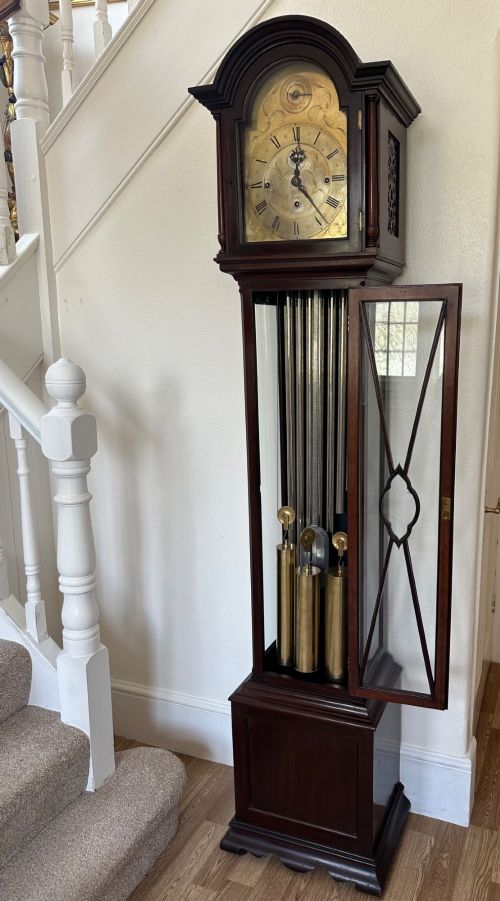
Musical and chiming movements use extra trains of gears, often driven by additional weights or springs, to play melodies on bells, gongs, or tubular rods.
Mechanisms vary from simple hourly strikes to complex triple-tune quarter chimes operated by pinned revolving barrels.
What is a moonphase dial?
A moonphase dial displays the visual phases of the moon through a shaped aperture on the clock face.
A painted rotating disc moves behind the dial plate to track the lunar month over roughly twenty-nine and a half days.
How do I identify an eighteenth century movement?
Eighteenth century movements often feature square brass dials, simpler count wheel striking systems, and hand-engraved maker signatures on the brass plate.
They rely on heavy lead or iron weights suspended by cords rather than steel cables.