
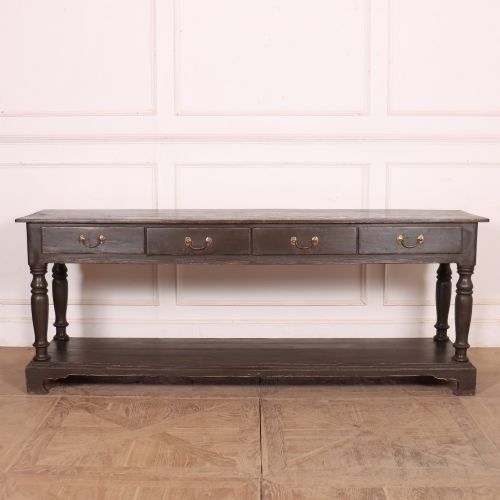
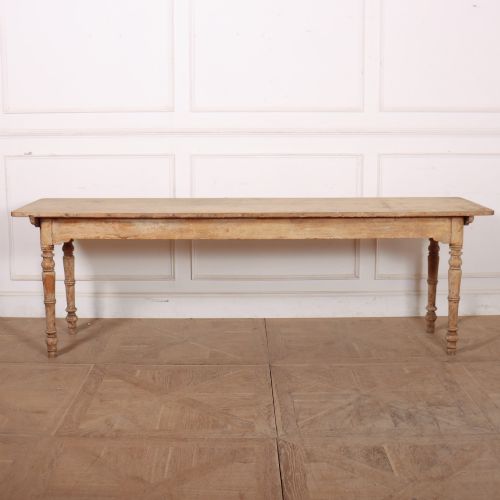

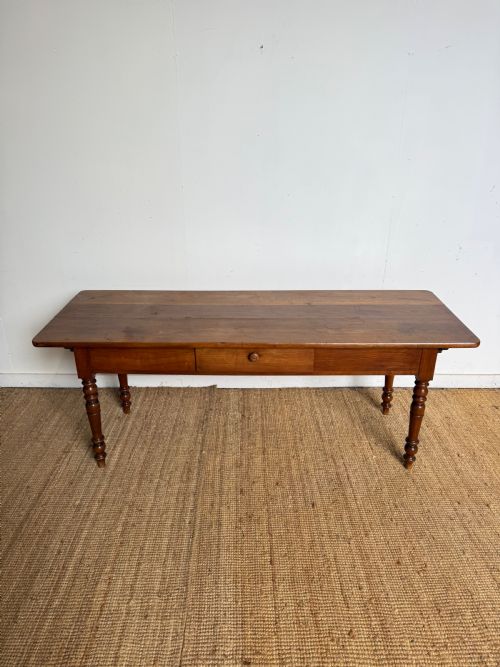

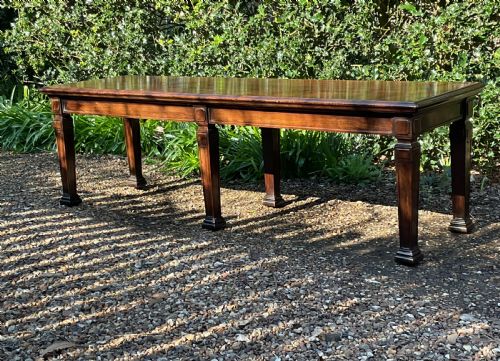


Long Wooden Hallway Table
A long wooden hallway table serves as the primary anchor of an entrance space, combining surface area with narrow proportions for circulation.
Long Wooden Hallway Table
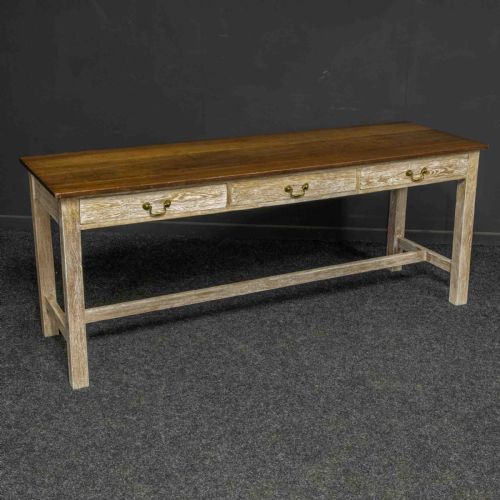
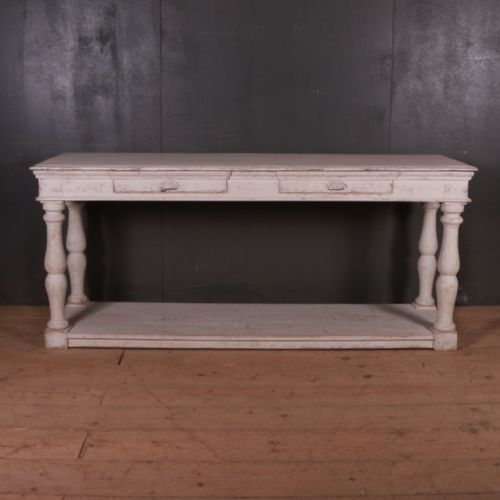
A long wooden hallway table spans formats from console tables and narrow servers to benches and serving tables, designed specifically to fit restricted circulation spaces. These pieces emerge primarily from the nineteenth century and the Edwardian period, often reflecting country house, provincial, or rustic farmhouse aesthetics.
The physical form is defined by an elongated rectangular top supported on timber legs, occasionally featuring drawers or lower potboards for storage. Pieces span diverse regional styles including French provincial, Italian country, and English country house traditions.
How they were made
Construction relies heavily on traditional timbers such as oak, pine, mahogany, and cherrywood, shaped into structural frames, tops, and legs. Scrubbed or painted surfaces appear alongside polished hardwoods, showing the natural grain or applied coatings recorded in the evidence.
Joinery techniques support long spans, utilising trestle frames, sturdy legs, and sometimes brass hardware for drawers. The structural integrity depends on the density of the hardwood or softwood selected by the maker.
Materials across these listings span pine, oak, mahogany, cherrywood, brass, and painted finishes.
What varies in quality
Quality rests upon the selection of timber and the proportion of the structure, where dense hardwoods like oak and mahogany hold an edge over softer pine. The integrity of the original surface finish, whether scrubbed timber or authentic painted layers, dictates the visual merit.
Proportion and scale separate functional utility from refined design, particularly in pieces adapted from tavern refectory tables, drapers consoles, or butlers furnishings. Construction depth is revealed in the stability of the long top and the precision of any integrated drawers.
The Long Wooden Hallway Table Glossary
- Console table
- A table designed to stand against a wall, frequently anchored with brackets or slender legs to maintain a narrow footprint in a hallway or reception room.
- Potboard server
- A low sideboard or server featuring an open lower shelf traditionally used for storing pots, pans, or heavy serving dishes.
- Refectory table
- A long, narrow dining or tavern table adapted into high-end residential use due to its substantial length and sturdy trestle construction.
- Chinoiserie
- A decorative style reflecting European interpretations of Chinese artistic traditions, often seen in carved woodwork and applied surface designs.
- Scrubbed pine
- Timber that has been repeatedly washed and scrubbed to create a pale, clean, matte surface texture typical of utilitarian workspace tables.
Long Wooden Hallway Table: Frequently Asked Questions
Where should I place a long wooden hallway table?
These tables fit naturally in entrance halls, corridors, or behind living room sofas where narrow dimensions prevent blocking walkways.
Their elongated surface provides a practical spot for lamps, correspondence, or decorative objects without dominating the room's floor plan.
How do I clean a painted pine console?
Maintenance requires only a soft, dry cloth to remove dust from the painted timber surfaces.
Avoid harsh chemical cleaners that can strip or damage historical painted finishes and aged patinas.
What is the difference between a console and a serving table?
Console tables are generally built to stand flat against a wall, sometimes relying on wall fixings for total stability.
Serving tables are typically freestanding furniture pieces designed to hold food, dishes, or butler supplies in dining or reception areas.
Can I use a refectory bench in a hallway?
Long benches built from oak or pine provide seating alongside narrow profiles suitable for transitional spaces.
They offer an alternative to traditional tables by combining surface utility with an integrated seat for putting on shoes.