
Long Trestle Table
A long trestle table brings generous proportions and enduring utility to a room, serving as the gathering place for meals and work.
Long Trestle Table
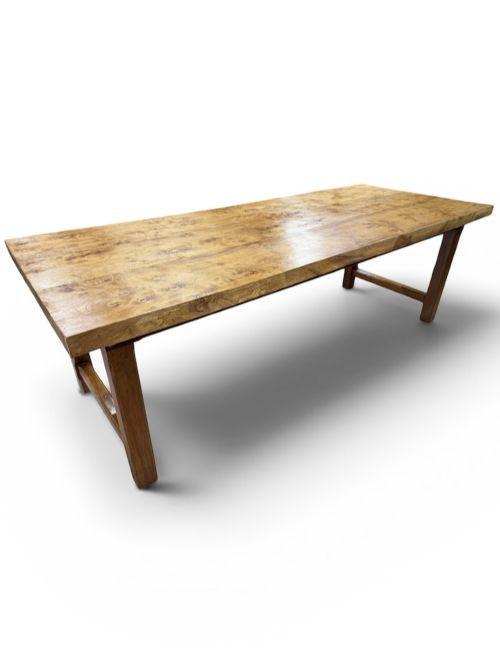
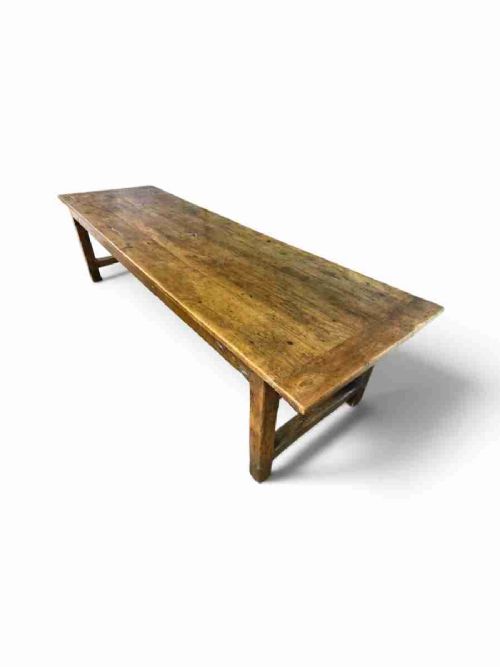
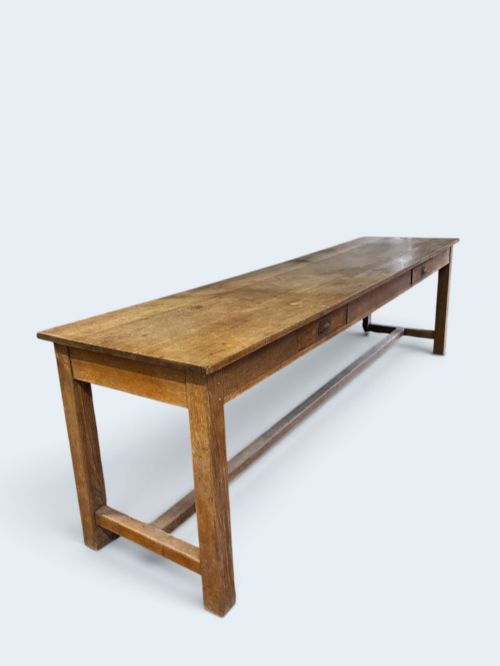
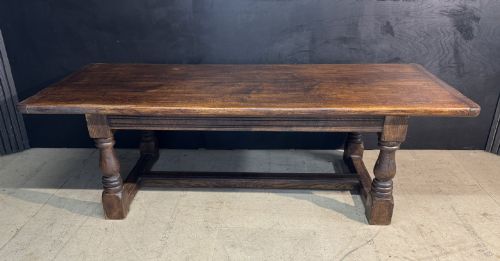
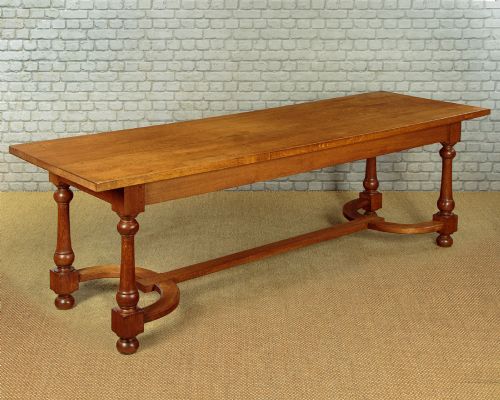
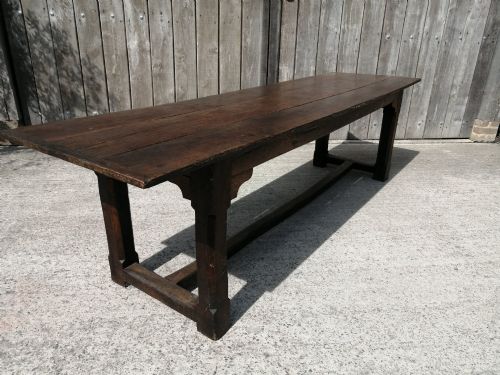
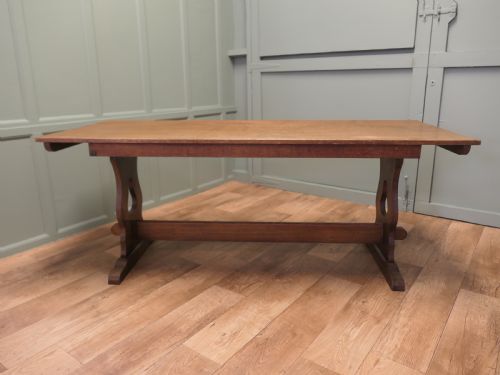
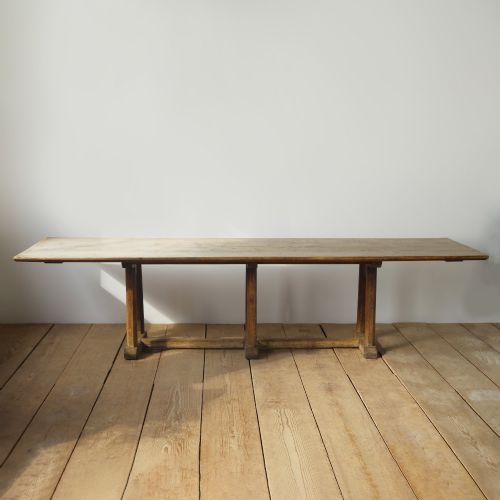
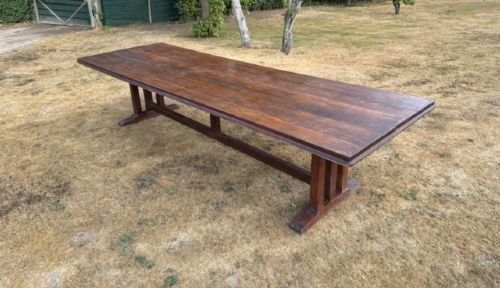
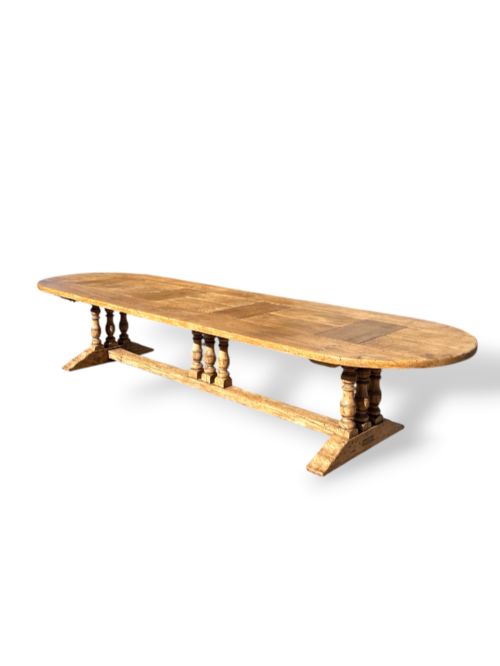
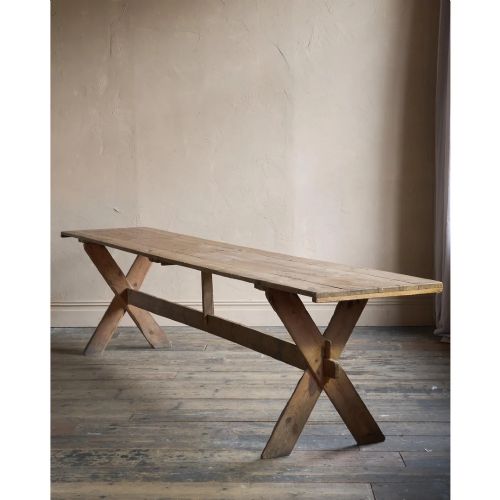
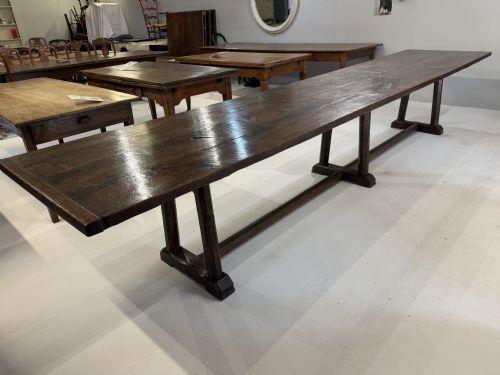
A long trestle table provides an expansive surface supported by end uprights rather than four corner legs, allowing maximum seating along the sides. The pieces seen here span centuries of craftsmanship, ranging from seventeenth-century oak examples to twentieth-century interpretations.
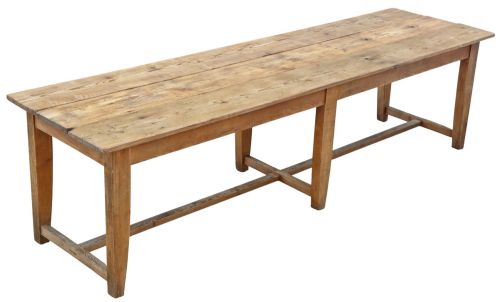
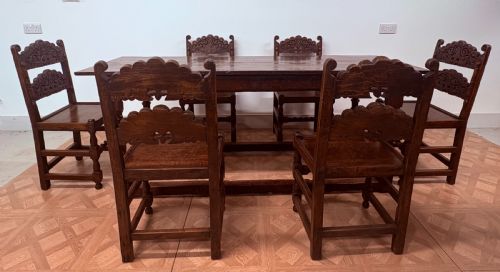
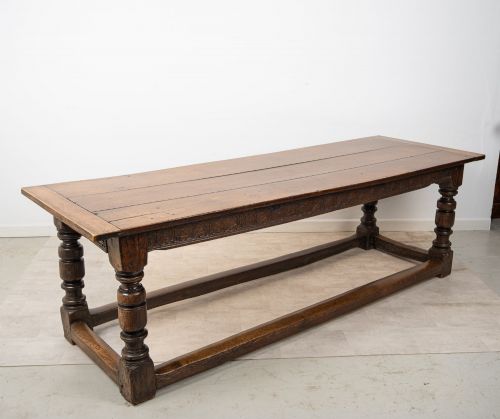
The most frequent form encountered on this page is the refectory table or farmhouse table built from timber, often reaching several metres in length. These pieces originate from English and French country houses, serving traditional dining and communal functions.
Makers utilised sturdy woods suited to heavy daily use, resulting in substantial tops paired with robust underframes. Buyers select these large formats to anchor spacious dining rooms and kitchens.
How they were made
Joiners constructed these tables primarily from solid oak, pine, elm, walnut, and cherrywood planking, selecting dense timbers for the top surfaces to withstand sustained friction and weight. Iron and brass hardware occasionally reinforced the structural joints beneath the surface.
Carpenters joined the massive planks using traditional framing techniques, securing heavy tops to underframes with wooden pegs or wedged tenons. The resulting construction allowed the timber to expand and contract naturally with changes in humidity.
Listings feature oak, pine, elm, walnut, and cherrywood across seventeenth, eighteenth, and nineteenth-century periods.
What varies in quality
The distinction between standard examples and exceptional pieces lies in the choice of timber and the integrity of the original construction. Single-plank tops and deeply figured grain command greater regard than joined multi-board surfaces.
Proportion and underframe detailing separate ordinary utility tables from finer country house commissions. Well-balanced stretchers and cleanly cut feet indicate the hand of a skilled carpenter rather than a regional vernacular maker.
The Long Trestle Table Glossary
- Refectory table
- A long dining table historically used in monasteries and large households for communal dining. These forms typically feature a narrow top supported by sturdy legs joined by a longitudinal stretcher.
- Trestle
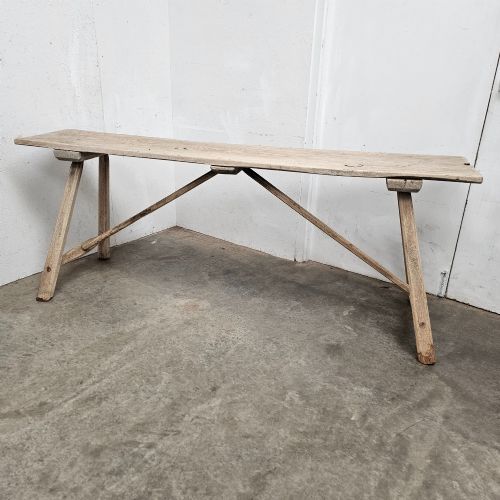
- A structural support consisting of a horizontal beam fixed to two splayed uprights at each end. This design distributes weight evenly and eliminates corner legs.
- Plank top
- A table surface constructed from parallel boards joined edge to edge. Older examples often utilise single wide boards derived from mature trees.
- Stretcher
- A horizontal wooden brace connecting the legs or trestle uprights of a table to prevent lateral movement. Strong stretchers provide essential rigidity to extended frames.
Long Trestle Table: Frequently Asked Questions
How do I style a long trestle table?
Pair the long surface with benches or a mix of chairs to maintain an open aesthetic along the room. Keep centrepieces low and utilitarian to preserve the practical character of the timber.
Allow the natural grain and worn patina of the wood to remain visible without heavy tablecloths. Lighting positioned directly overhead highlights the length and construction details.
Can I use these tables outdoors?
Historic timber tables are designed for interior environments where humidity and temperature remain relatively stable. Exposure to direct sunlight and moisture causes the old wood to warp and split.
Covered porches suit some sturdy pine or oak examples during mild weather. Indoor placement remains the safest method for preserving historic surfaces.
How do I clean a historic wooden top?
Dust the surface regularly with a dry cloth and remove spills promptly using a slightly damp sponge. Avoid harsh chemical detergents that strip the aged patina.
Apply natural beeswax periodically to nourish dry timber and protect the grain. Rub the wax thoroughly into the wood until the surface absorbs the treatment.
What determines the age of a wooden table?
Tool marks, timber species, and construction methods reveal the period of manufacture. Hand-sawn boards and pegged joints typically indicate eighteenth-century or earlier origins.
Hardware types and wear patterns around the edge provide further clues to dating. Comparing the construction to documented pieces helps confirm the era.