
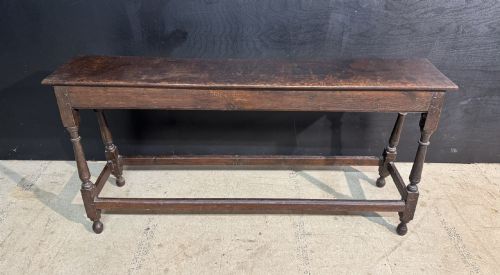
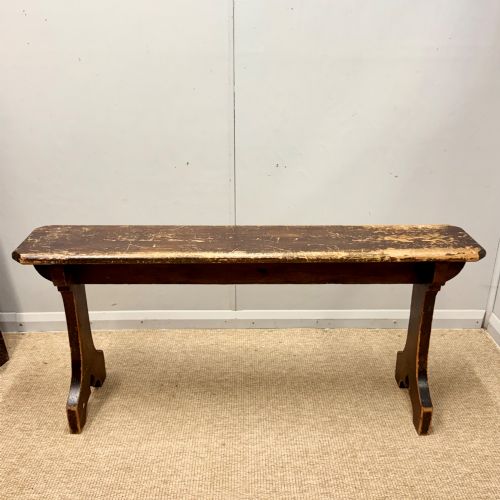
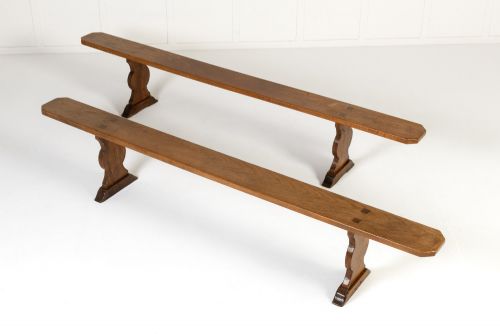
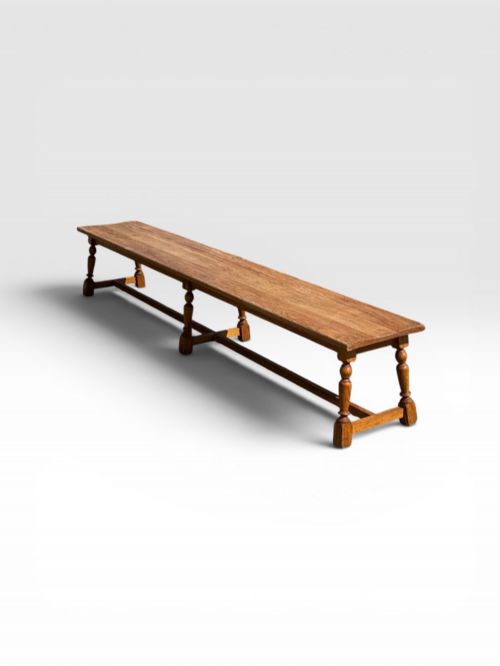
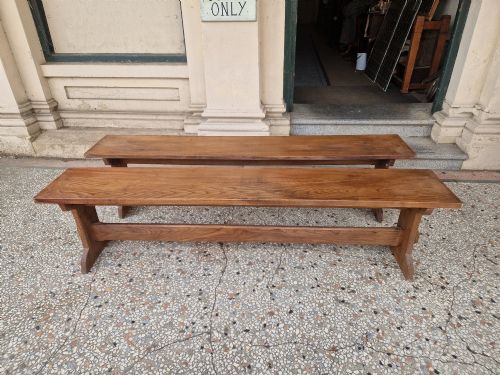


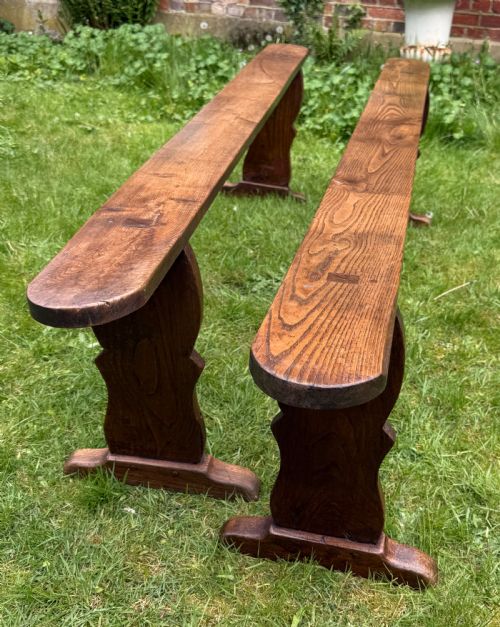
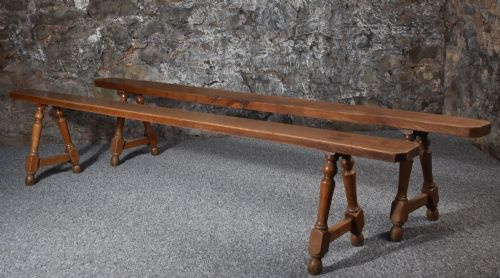
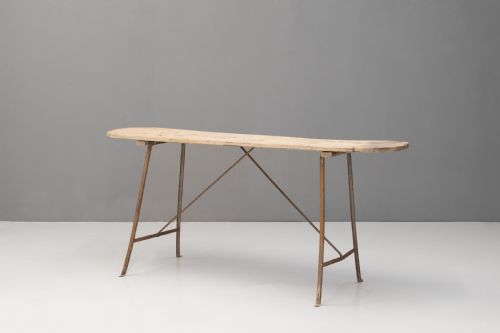
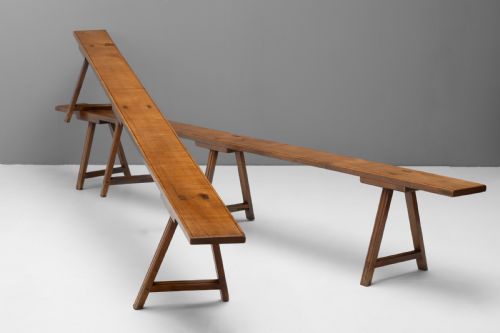


Long Trestle Bench
A long trestle bench offers straightforward communal seating rooted in centuries of practical domestic and institutional life.
Long Trestle Bench
A long trestle bench is a substantial seating form designed to accompany refectory and dining tables in kitchens, halls and dining rooms. The pieces gathered here span centuries from the eighteenth through the early twentieth, reflecting periods like the Victorian era and the Georgian period.
Most examples you encounter on this page are constructed from timber, predominantly oak and pine, alongside cherry wood, elm, fruitwood and hardwood. Forms range from rustic farmhouse and French provincial styles to Scandinavian country and Georgian designs.
These items function primarily as dining benches, hall seats and school forms, often appearing as matched pairs or single extended lengths reaching up to nine feet. Their origins stretch across British, French, Scandinavian and Welsh workshops.
Assessing Quality and Character
Quality rests in the selection of timber and the integrity of the original construction, where thick, stable boards of oak or pine demonstrate superior longevity. Finer pieces maintain their structural fasteners and exhibit balanced proportions across extended lengths without excessive sagging.
Patina dictates much of the visual appeal, separating surfaces that retain honest, weathered textures from those compromised by unsympathetic restoration. The best examples display uniform wear across the seat and supports, reflecting decades of genuine communal service.
Several heavy oak benches trace their working lives directly to Bishopthorpe Palace and the Archbishops Palace in York.
The Long Trestle Bench Glossary
- Trestle
- A structural support consisting of a horizontal beam fixed to two splayed legs. This design provides maximum legroom along the length of the seating.
- Refectory
- A term describing long dining furniture originally built for communal dining halls in monasteries and large institutions. These pieces are typically narrow and built to seat many people.
- Joint Stool
- An early form of wooden stool constructed with mortise and tenon joints pegged together. They predate widespread chair usage and share construction methods with early benches.
- Patina
- The surface sheen and colour developed by timber over decades of handling, polishing and exposure to light. This layered finish is valued for recording the age of the piece.
Long Trestle Bench: Frequently Asked Questions
How do I style a long trestle bench at home?
Place your bench alongside a matching dining table or position it against a hallway wall as a functional seat. It provides generous linear seating without overwhelming the room.
Keep the space around the bench clear to allow the timber grain and trestle structure to remain visible as a central feature of the interior.
Were these benches originally made for dining?
Many examples served in institutional settings, schools, taverns and palaces rather than domestic dining rooms. Their robust construction suited heavy communal use.
Over time, these utilitarian forms transitioned naturally into domestic spaces to accompany large refectory tables.
How do I determine the age of a wooden bench?
Examine the timber species, tool marks and construction methods used in the frame and underside. Eighteenth-century examples often feature dense oak boards and hand-cut joinery.
Later Victorian and early twentieth-century pieces utilise pine and cherry wood with machine-sawn components while retaining traditional proportions.