

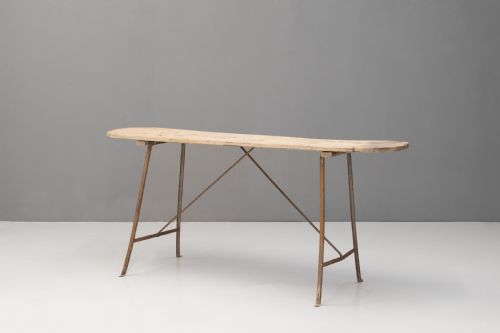


Long Side Table
A long side table provides generous surface space and narrow proportions, making it an adaptable choice for hallways and reception rooms.
Long Side Table
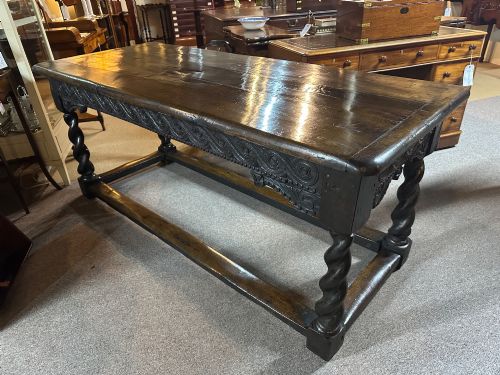
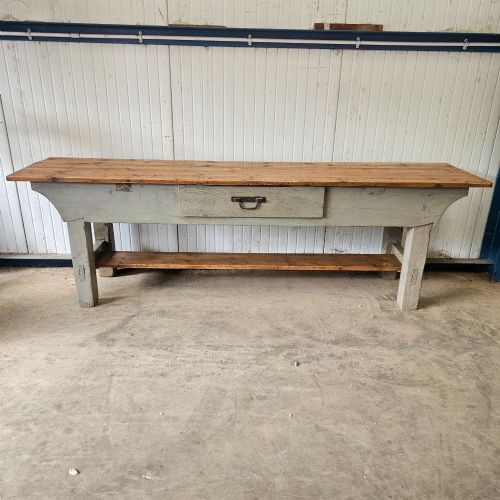
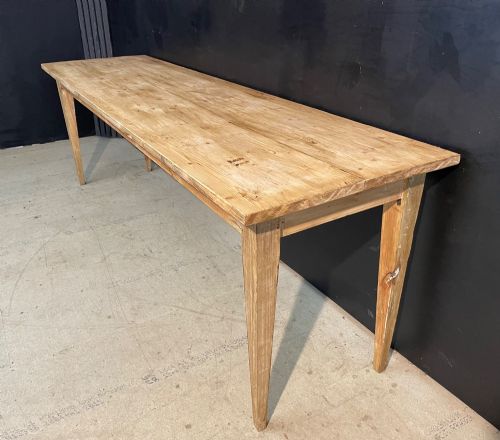
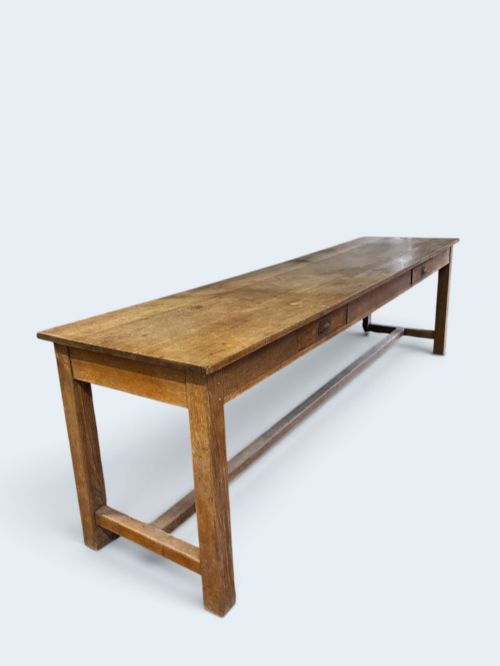
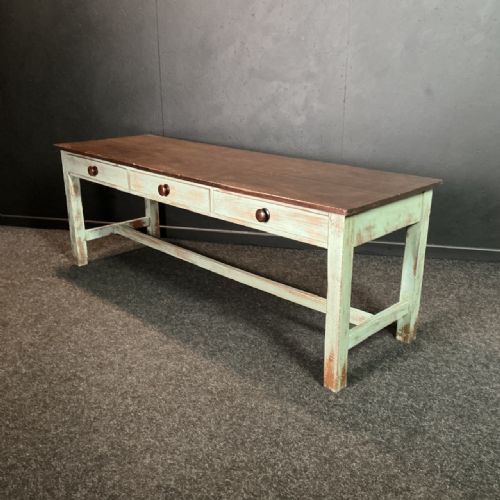
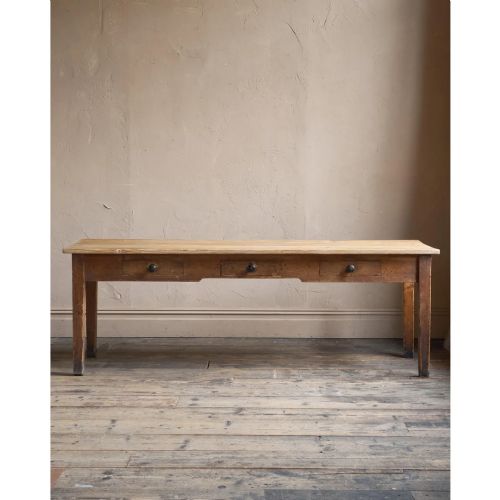
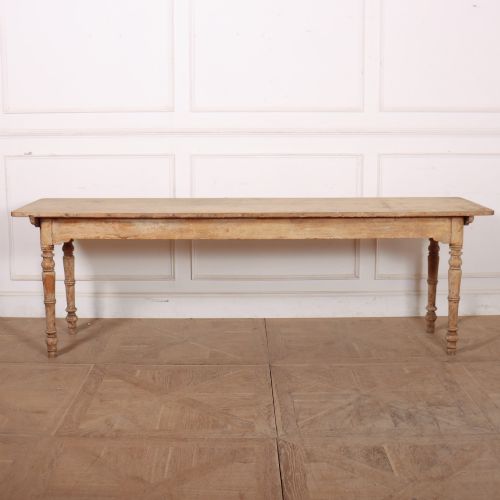
A long side table bridges domestic and utilitarian forms, taking shape as console tables, serving tables, drapers tables, and altar tables. You will encounter nineteenth-century examples in pine, oak, elm, and painted finishes alongside Chinese hardwood and altar forms.
These extended surfaces originate from country houses, sculleries, shops, and overseas workshops where length served a practical function. Their narrow footprint allows them to sit comfortably against walls or behind seating without blocking movement in a room.
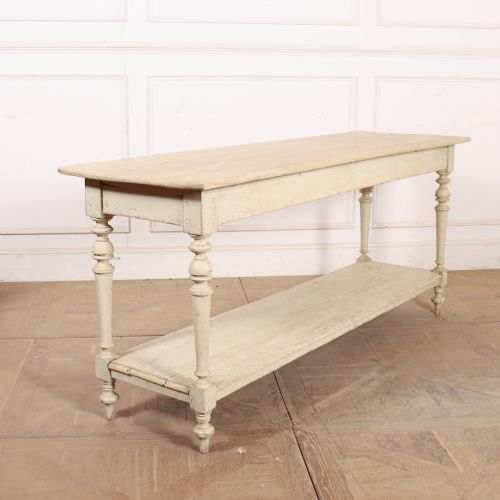
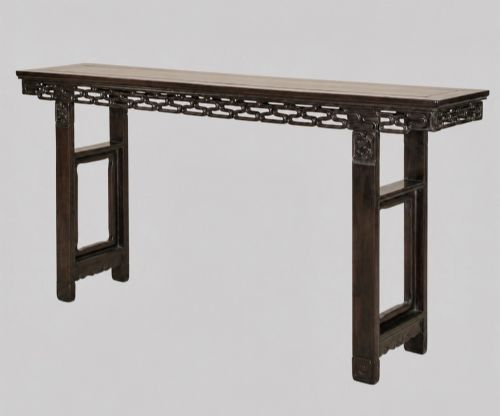
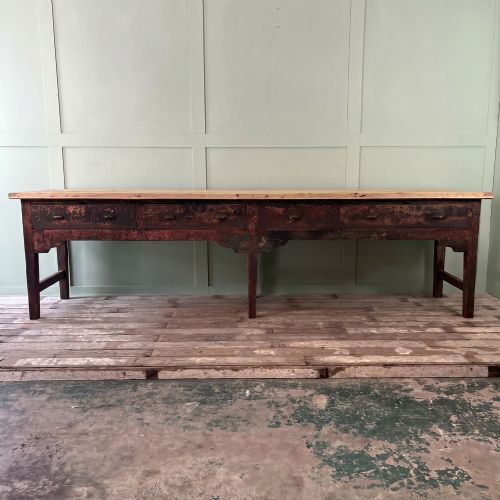
The selection ranges from French provincial painted consoles to monumental oak drapers tables and carved Chinese altar tables. Each piece carries the marks of its working past, whether through scrubbed timber tops or accumulated layers of historical paint.
How they were made
Makers relied on durable native timbers like pine, oak, elm, and cherry, selecting solid planks capable of spanning long distances without excessive sagging. Joinery prioritised utility and strength, often employing pegged mortise and tenon joints to withstand heavy daily use.
Painted finishes frequently involved layered pigments applied to pine, beech, or softwood frames, sometimes distressed through decades of service. Hardwood alternatives from China utilised dense elm or structured altar frames carved with traditional joinery methods.
Several tables stretch over four metres in length, originally built to measure endless bolts of cloth in nineteenth-century shops.
What varies in quality
Quality rests in the integrity of the timber proportions and the honesty of the surface wear. Superior examples retain their original structural timber without excessive replacement boards in the top, and painted versions show harmonious patination rather than recent redecoration.
Proportion and scale dictate the distinction between standard utility items and finer architectural pieces. Refined underframes, such as Gothic stretchers, cast iron supports, or crisp carved detailing, elevate a utilitarian form into a piece of distinct character.
The Long Side Table Glossary
- Drapers table
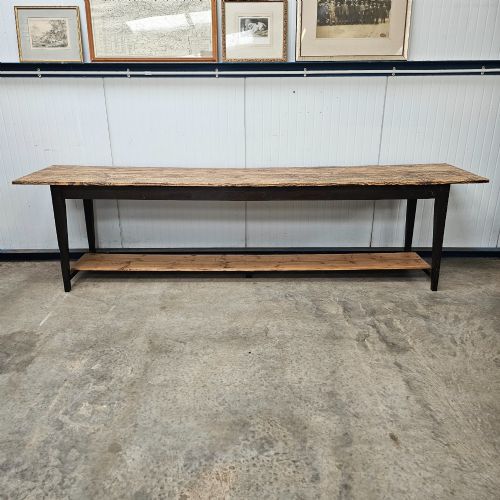
- A long, deep-surface table traditionally used in fabric shops for measuring and folding cloth. These pieces typically feature substantial length and useful under-tier storage.
- Altar table
- A ceremonial or domestic Chinese table characterised by elongated proportions and often ending in upturned flanged ends. They are constructed from dense hardwoods like elm or regional timber.
- Console table
- A table designed to stand flat against a wall, frequently secured with brackets or supported by distinctive front legs. Their narrow depth suits hallways and living spaces.
- Serving table
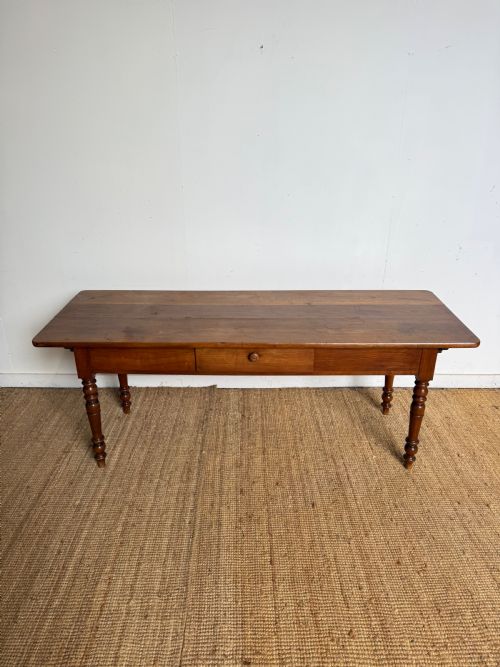
- A sturdy domestic table positioned in dining areas or kitchens for food preparation and service. They often incorporate drawers for utensils and robust timber tops.
- Pot-shelf
- A lower slatted or solid shelf incorporated beneath a table or dresser base for storing pots and kitchen utensils. This feature adds structural rigidity to long framework.
Long Side Table: Frequently Asked Questions
Where should I place a long side table?
These pieces suit narrow circulation spaces like hallways, corridors, and long landings where depth is restricted. Their extended surface also functions effectively behind large sofas or along dining room walls for serving.
Positioning depends on the height and depth of the individual piece. Ensure clearance for doorways and walkways before selecting an extended format.
How do I clean a painted finish?
Dust surfaces regularly with a soft, dry cloth to prevent dirt accumulation on historic paint. Avoid chemical solvents or modern detergents that can lift or soften aged layers of pigment.
Feed exposed timber sections with appropriate wax where the paint has worn away through use. Gentle maintenance preserves the existing patina without altering the colour.
Are these tables suitable for daily use?
Most surviving examples spent decades in working environments such as sculleries, shops, or farmhouses and remain structurally robust. Solid timber construction handles everyday placement of lamps, books, and decorative objects easily.
Care should be taken with unsealed antique tops exposed to moisture or direct heat. Using protective mats helps preserve vulnerable historic surfaces.
How can I tell a Chinese altar table from a European table?
Chinese altar tables typically feature distinct structural elements such as recessed leg placement, mortise and tenon joinery without metal nails, and often upturned flange ends. Timbers like elm and dense regional hardwoods display different grain patterns compared to European pine and oak.
Proportions on altar tables tend to emphasise height and narrow linear span. Carved spandrels and traditional Chinese joinery details further distinguish them from Western vernacular furniture.