


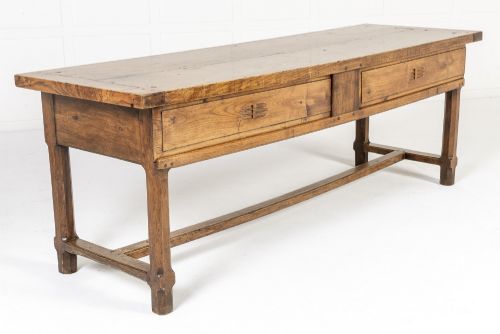


Long Rustic Kitchen Island
These long rustic kitchen island pieces bring honest weight and working history to a room, offering vast timber surfaces built for heavy daily tasks.
Long Rustic Kitchen Island
When you search for a long rustic kitchen island, you are looking at substantial working furniture designed for food preparation, serving, and storage in domestic spaces. The pieces gathered here span from the eighteenth century through to the early twentieth century, originating primarily from French and Scandinavian country houses.
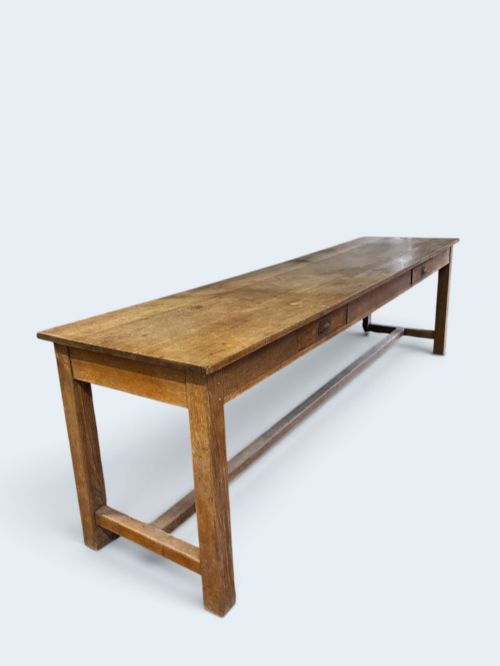
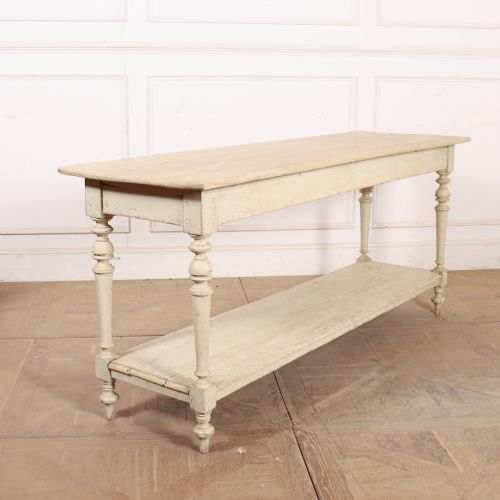
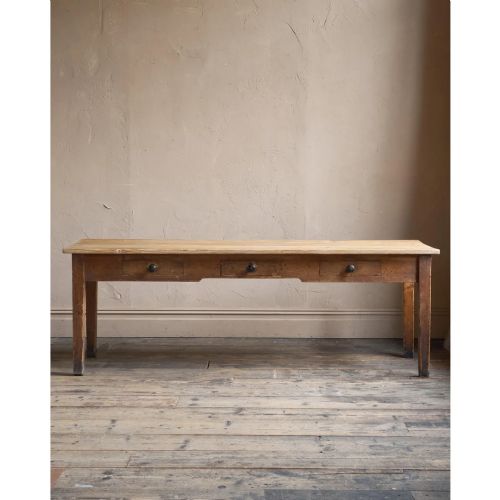
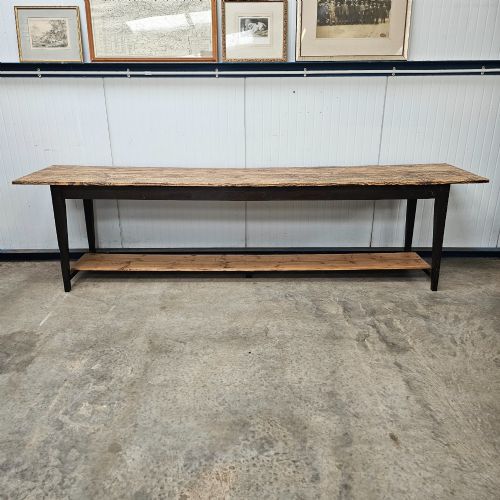
The forms you are most likely to meet on this page include drapers tables, preparation tables, harvest tables, and country house workbenches. These tables often measure several feet in length, sometimes reaching four metres, featuring deep tops and occasionally pot-shelves or banks of drawers below.
Makers working within these styles built pieces to withstand hard graft rather than for show, relying on robust proportions and honest construction. Whether configured as a serving table or a scullery table, each example brings a utilitarian past straight into a modern kitchen.
Materials and construction
Carpenters constructed these tables using solid oak, pine, and softwood, selecting timber for density and strength under daily pressure. Surfaces show the marks of decades of chopping, kneading, and scrubbing, often left bare or retaining traces of historic paint.
Metal fittings appear sparingly, limited to iron and brass handles on drawers or structural braces that keep the heavy timber frames rigid. Joinery relies on traditional methods designed to handle the continuous weight and movement of large wooden boards.
Some of these workbenches still retain the stubborn ink stains and deep chop marks left by busy nineteenth-century cooks.
Judging quality and proportion
Quality in these pieces rests upon the integrity of the primary timber and the harmony of the overall proportions. Tables built with thick, unwarped oak or pine tops and original structural stretcher bases stand apart from those altered or rebuilt over time.
The presence of untouched historic surfaces, whether bleached oak or worn painted softwood, distinguishes a superior example. Good working height and balanced length dictate how successfully the piece integrates into a contemporary kitchen scheme.
The Long Rustic Kitchen Island Glossary
- Drapers Table
- A long, narrow table traditionally used in fabric shops for measuring cloth, featuring a low pot-shelf below for storage. These boards provide excellent narrow surfaces for kitchen prep.
- Preparation Table
- A sturdy utilitarian table built for culinary tasks such as pastry making or vegetable chopping. They prioritize unpretentious strength and clean timber surfaces.
- Harvest Table
- A long dining or work table designed to accommodate large groups during seasonal gatherings. Their extended proportions make them natural centrepieces for large kitchens.
- Scullery Table
- A heavy table intended for the wet work of a country house scullery, built from timbers that tolerate moisture and hard scrubbing. They often incorporate drawers for utility storage.
- Pot-Shelf
- An open lower shelf fitted between the legs of a table, historically used for storing heavy pots and pans. It adds vital structural rigidity to very long frames.
Long Rustic Kitchen Island: Frequently Asked Questions
How do I use a drapers table in a kitchen?
These long, narrow tables function brilliantly as central prep stations or freestanding breakfast bars. Their shallow depth allows room to walk around them easily in busy domestic kitchens.
The lower pot-shelf offers convenient storage for baskets, crockery, or cookware. They bring an authentic workspace aesthetic without needing permanent fitted cabinetry.
What is the difference between a work bench and a prep table?
Workbenches originate from trade workshops and feature exceptionally thick timber tops, sometimes with integrated vices or tool wells. Preparation tables are lighter domestic pieces designed specifically for culinary tasks.
Both offer immense durability, but workbenches carry a more industrial, heavy-duty visual weight. Prep tables tend to have cleaner lines suited to serving and dining.
Can these tables be used for everyday dining?
Many of these tables were built for communal meals in French and Scandinavian country houses. Their generous length and knee clearance make them ideal for gathering family and friends.
The worn timber surfaces only improve with the spills and knocks of daily dining. Pairing them with simple wooden chairs creates an inviting, unpretentious eating space.
How do I care for historic wooden tops?
Wipe timber surfaces clean with a damp cloth and mild soap, avoiding harsh chemical cleaners that strip the grain. Regular waxing helps nourish dry pine and oak.
Accepting minor stains and knife marks is part of living with antique utility furniture. These scars reflect the genuine working history of the piece.
How do I date an antique kitchen table?
Examine the tool marks, timber selection, and fastener types used in the construction. Hand-sawn boards and pegged mortise and tenon joints point towards earlier nineteenth or eighteenth-century origins.
Changes in hardware styles and overall wear patterns also offer clues to age. Comparing proportions against documented regional types helps confirm the period.