



Long Pine Bench
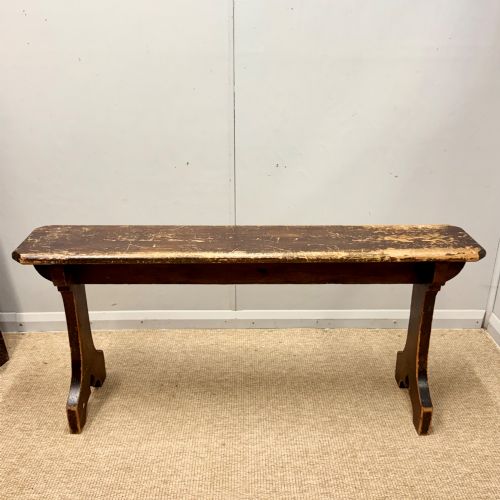
A long pine bench brings utility and a sense of history to a hallway or kitchen, offering straightforward seating built from honest timber.
Long Pine Bench
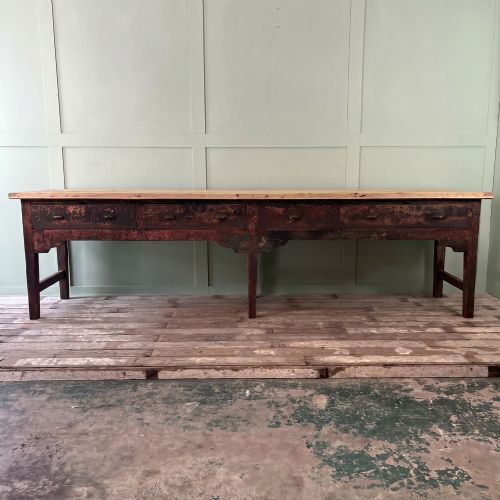
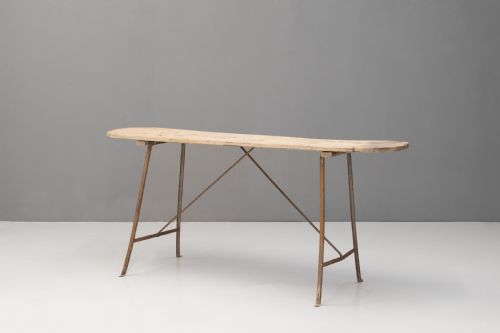
A long pine bench serves as practical, linear seating developed from utilitarian origins in schools, churches, chapels, and country houses. These pieces range from simple plank-and-leg forms to settles with integrated storage and backs, designed to seat multiple people along a wall or table.
The versions most common on this page date from the nineteenth century into the early twentieth century, reflecting domestic, institutional, and rural uses. Examples appear in various regional styles, including Victorian, Scandinavian, and French country traditions.
Buyers frequently select these items for daily dining use or hallway placement where extended length provides ample seating capacity without overwhelming a room. Their straightforward construction makes them adaptable to both contemporary and traditional interiors.
How they were made
Makers constructed these seats primarily from softwood timber such as pine and pitch pine, selected for accessibility and workability. Joinery relied on sturdy framing, pegged joints, and solid planks capable of withstanding heavy daily use.
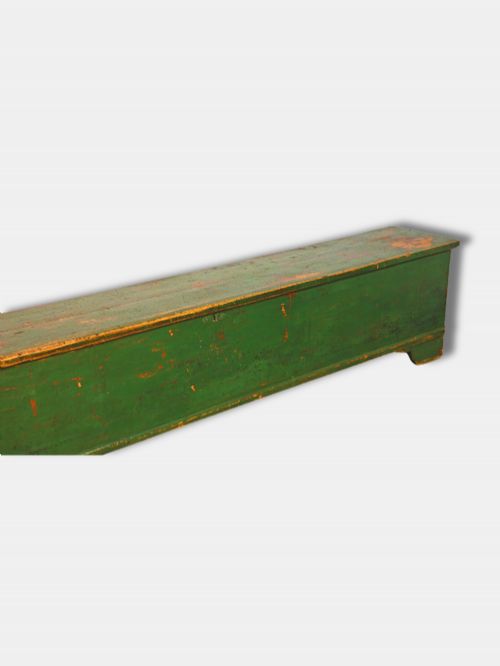
Surface treatments range from bare timber finished with natural wax to painted wood or applied coats of green pigment. Iron and wrought iron hardware, including hinges and brackets, frequently reinforce structural stress points on lidded or folding variations.
One Victorian chapel bench carries a specific painted mark from Llanfair, proving that even humble church seating once had to report for roll call.
What varies in quality
The integrity of the original timber and the degree of surface patination set superior examples apart from more utilitarian or heavily altered ones. Depth of character shows in the natural wear accumulated across decades of service in institutional or domestic settings.
Proportion and scale dictate quality, with longer spans requiring substantial thickness in the seat boards to prevent bowing. Original painted surfaces or untouched waxed finishes hold greater interest for collectors than stripped or overly restored wood.
The Long Pine Bench Glossary
- Pitch pine
- A resinous softwood known for its durability and prominent grain pattern, frequently used in nineteenth-century institutional seating.
- Settle
- A wooden bench with a high back, solid arms, and often a storage compartment beneath the seat to block draughts.
- Pew
- A long wooden bench with or without a back, traditionally utilised in churches and chapels for congregational seating.
- Softwood
- Timber derived from conifer trees, including pine, which forms the primary structural material for country furniture.
- Patina
- The surface sheen and colour developed on wood through age, handling, and repeated waxing over many years.
Long Pine Bench: Frequently Asked Questions
How do I clean a pine bench?
Dust the timber regularly with a dry cloth to prevent dirt accumulation in the grain. Apply a clear beeswax occasionally to nourish the wood and maintain its surface protection.
Avoid using harsh chemical sprays or excess water, which can strip historic finishes or cause the softwood to warp.
Are these benches suitable for daily dining?
Many nineteenth-century examples were built specifically for kitchens, schools, and refectories, making them robust enough for regular use around a dining table. Their linear format allows several people to sit together comfortably.
Check the height of the seat relative to your table before purchase to ensure proper legroom and comfort.
What is a chapel bench?
A chapel bench is a long, utilitarian seating form produced for religious or community assembly rooms during the Victorian era. These pieces often feature simple board backs and sturdy legs designed for heavy communal use.
Some bear specific markings or inscriptions indicating their original institutional location.
How do I spot an original painted finish?
Original paint shows natural craquelure, softening around edges where hands touched the wood, and multiple thin layers rather than a flat modern coat. Historic pigments often include muted tones like green or aged white applied to softwood.
Look for consistent wear patterns that match the age of the underlying timber structure.