
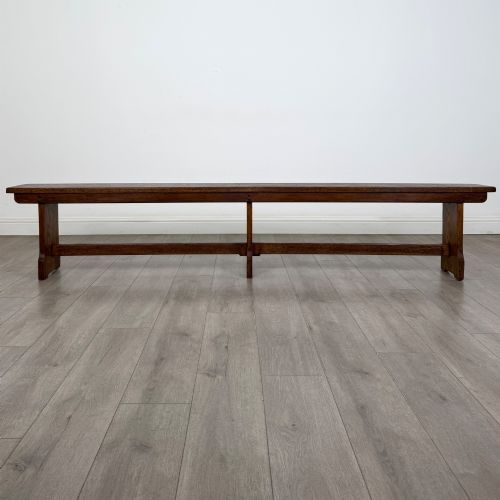
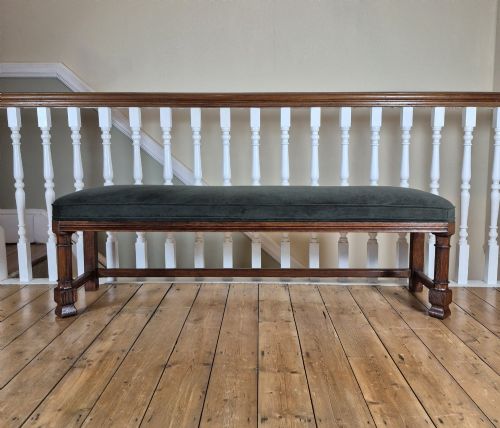
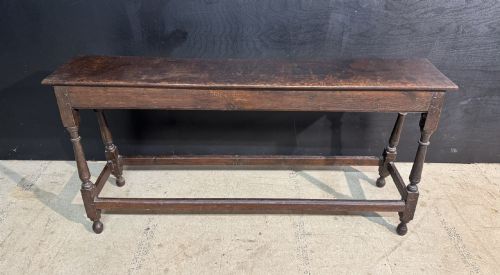
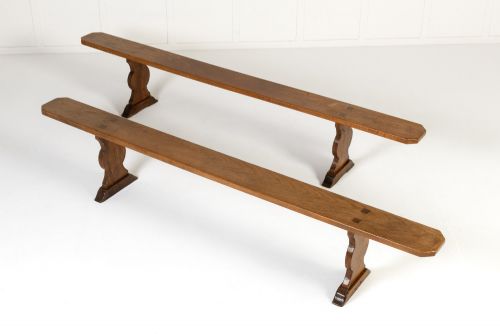


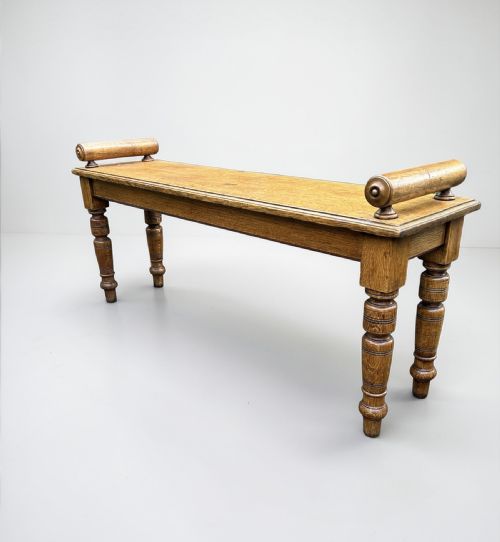

Long Oak Bench
A long oak bench brings honest timber and utility into a hall, dining room or kitchen, built to endure generations of daily use.
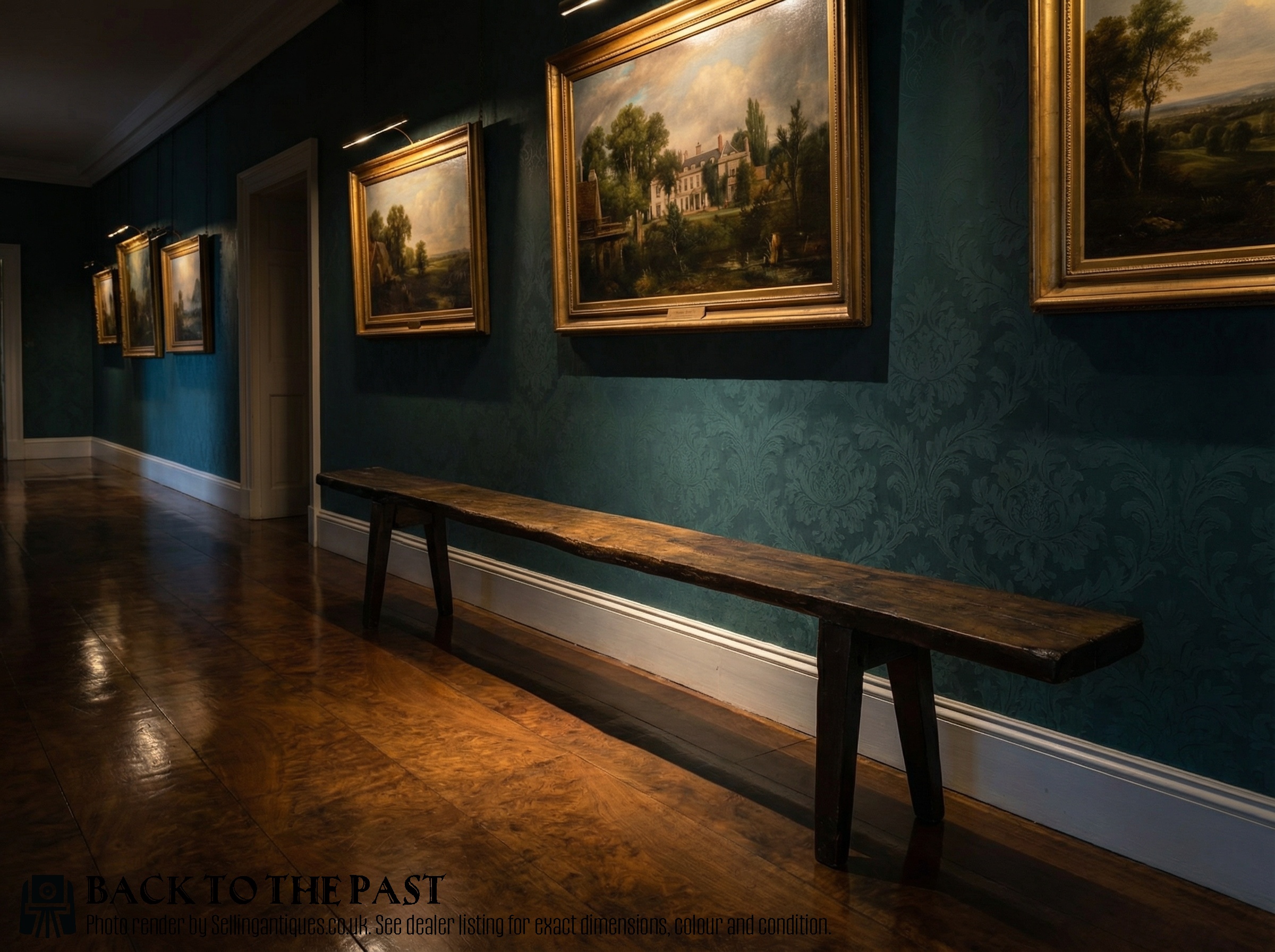
What a long oak bench is
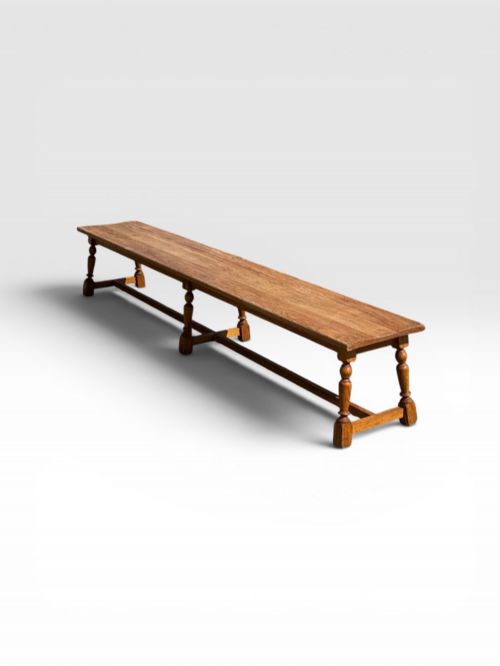
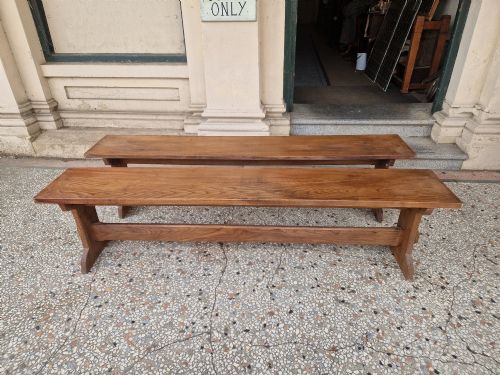
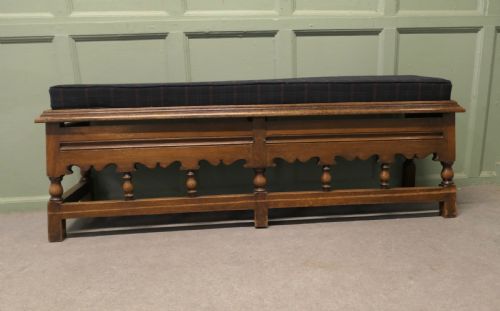
When you search for a long oak bench, you encounter seating built for practical spaces, including taverns, halls, schools and churches. These pieces span centuries of domestic and institutional life, appearing in forms ranging from simple rustic planks to sophisticated Georgian dining seats.
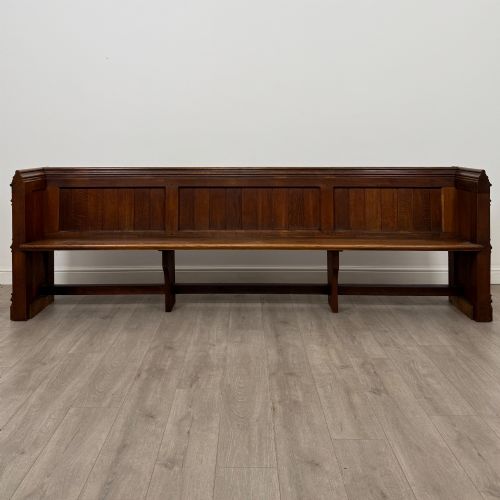
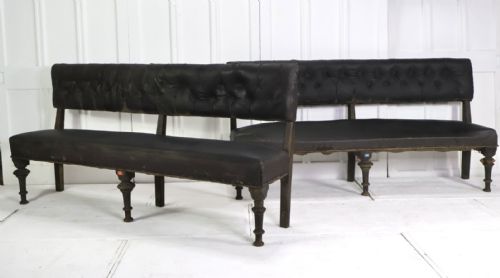
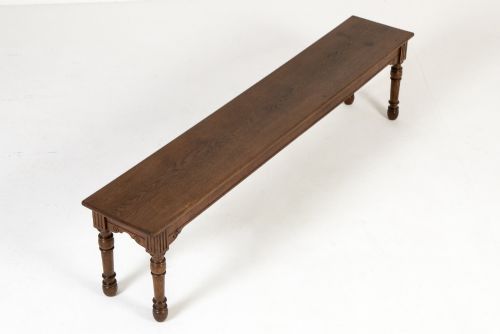
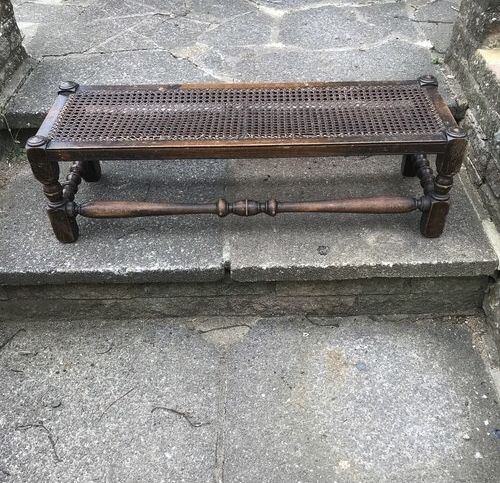
The pieces on this page are predominantly constructed from solid oak, sourced from English, French and Hungarian traditions. You find them in lengths suited for long tables, narrow hallways or window recesses, serving as settles, pews, forms and hall benches.
Dating ranges from the eighteenth century through the Victorian period, Edwardian era and into the early twentieth century. The aesthetic varies from stark country utility to carved French designs and Aesthetic movement decorative detailing.
How they were made
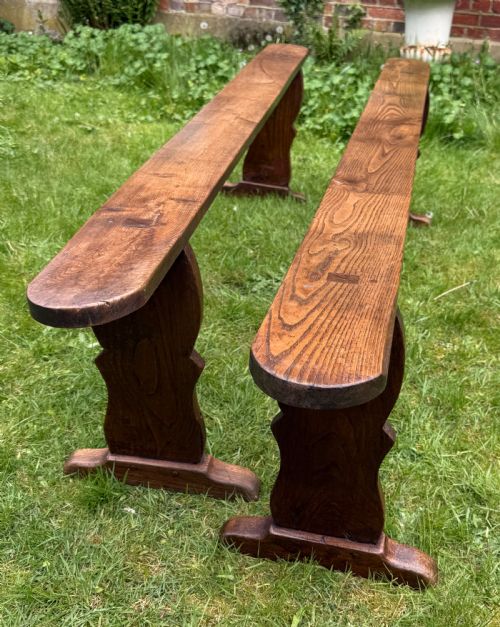
These benches are fashioned entirely from solid oak, utilising traditional joinery such as pegged mortise and tenon joints to secure the heavy timber frames. Carpenters and joiners selected heartwood and quarter-sawn boards for stability, often allowing the natural grain and knots to show.
Surface preparation relied on hand planes, adzes and saws, leaving subtle tool marks that reveal the manual labour behind each piece. Finish was typically achieved through natural waxing or centuries of handling, developing a deep patina over the bare timber.
Retail Price Guide 2026
Typical UK retail prices for long oak bench, calculated from the Sellingantiques database of over a million retail prices indexed since 2003. This retail price guide relies exclusively on Sellingantiques data; no external sources or auction records are used, so the figures do not describe the wider market.
Listings feature oak benches spanning the eighteenth, nineteenth, and early twentieth centuries, including styles from English, French, and Hungarian traditions.
What varies in quality
Quality in a long oak bench rests upon the integrity of its construction and the character of the timber. Superior pieces display substantial thickness in the seat boards, tight joints without excessive modern reinforcement, and balanced proportions across exceptional lengths.
Provenance and untouched surface condition elevate certain examples, such as those originating from specific estates, palaces or institutions. The distinction between a utilitarian workshop piece and a finer domestic settle lies in the subtlety of the edge mouldings, leg turnings and the depth of the accumulated patina.
The Long Oak Bench Glossary
- Settlement
- A wooden bench with a high back and solid arms, designed to block draughts in older homes. These often feature enclosed storage beneath the seat.
- Form
- An early term for a long wooden bench without a back, easily moved around a communal hall or dining table. It represents the simplest form of communal seating.
- Pew
- A long bench with or without a back, traditionally used in churches, chapels or public waiting rooms. Their construction prioritises durability over ornamentation.
- Patina
- The glossy sheen and mellow colour developed on the surface of old oak through decades of handling, polishing, and light exposure. It is a key indicator of genuine age.
- Quarter-sawn
- A method of timber cutting where logs are quartered before slicing, producing boards with greater resistance to warping and a distinctive decorative grain pattern.
Frequently Asked Questions
Where should I put a long oak bench?
These benches suit long dining tables, narrow hallways, boot rooms or beneath large windows. Their considerable length requires careful measurement of your available wall space and clearance.
In a hallway, a bench provides a practical spot for removing shoes, while in a dining setting it offers flexible, communal seating compared to individual chairs.
How do I care for antique oak?
Maintain the timber by applying a traditional beeswax sparingly and buffing with a soft cloth to preserve the natural finish. Avoid placing oak furniture near direct heat sources or in fluctuating humidity.
Keeping the wood away from extreme temperature changes prevents the heavy timber from splitting or warping over time.
How do I date an oak bench?
Dating relies on observing construction methods, tool marks, joinery styles and the depth of the surface patina. Hand-cut pegs, pegged tenons and adze marks generally point to earlier centuries.
Later pieces from the Victorian and Edwardian periods often show machine-sawn timber and standardised fixings, while retaining the heavy proportions characteristic of oak.
Are these benches sturdy enough for daily use?
Solid oak construction and pegged joinery make these benches exceptionally robust and well-suited for everyday seating. Their original purpose in schools, taverns and halls demanded immense structural strength.
Most examples remain fully capable of supporting heavy daily use without compromising their historical integrity.