




Long Kitchen Bench
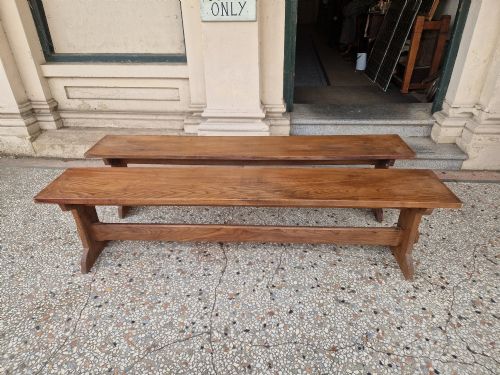
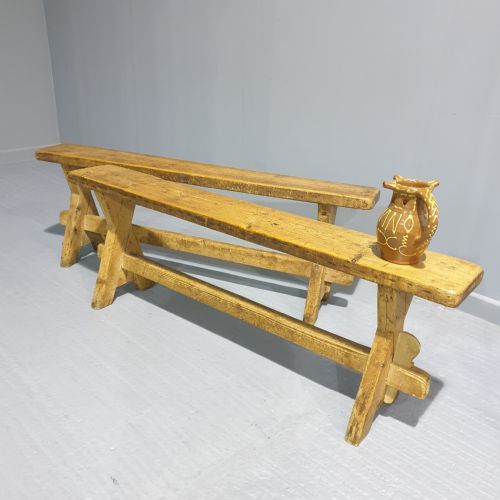
These long kitchen bench options provide robust and practical seating rooted in nineteenth century country traditions.
Long Kitchen Bench
A long kitchen bench serves as a functional seating arrangement derived from nineteenth century country houses, workshops and rural properties. Buyers searching this phrase look for substantial timber forms that accommodate multiple diners or workers along communal tables.
The versions most commonly met on this page span the Victorian era, nineteenth century, and the early twentieth century around nineteen twenty. They appear in sturdy timbers like pine, oak, and cherry wood, often carrying the marks of prolonged domestic or agricultural use.
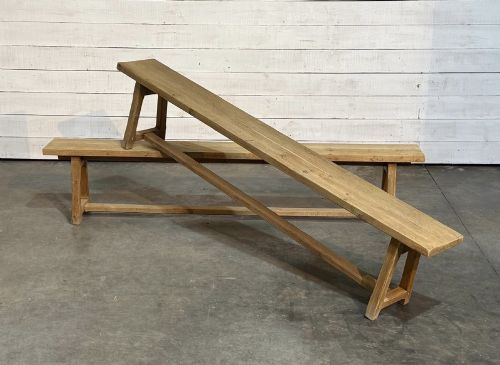
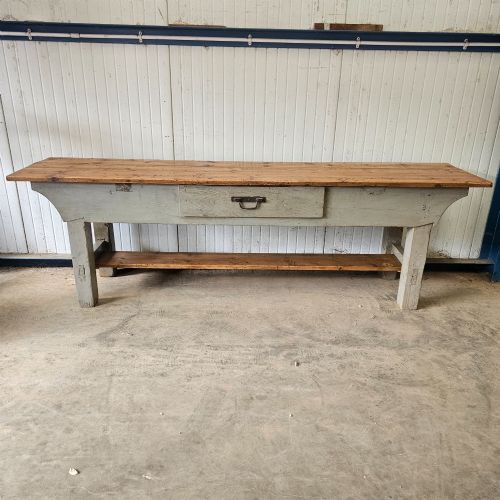
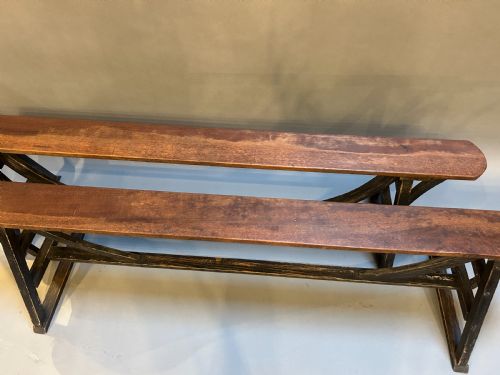
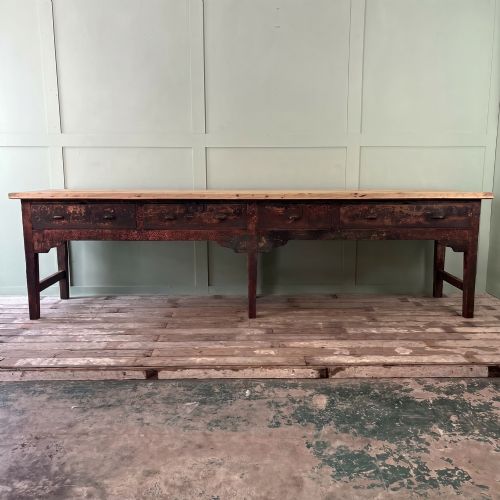
Examples range from paired dining benches and trestle seats to repurposed workbenches and drapers tables. Their generous proportions make them practical for modern kitchens, hallways, and large dining spaces.
How they were made
Makers constructed these pieces using solid hardwoods and softwoods such as pine, oak, and cherry wood. Structural joints relied on traditional carpentry methods to withstand heavy daily use in kitchens and workspaces.
Surfaces frequently show traces of historic paint, scrubbed pine textures, or bleached finishes developed through decades of cleaning and wear. Iron elements appear in structural braces and fixings on specific functional forms like workbenches.
Long Kitchen Bench Retail Price Guide 2026
Typical asking prices for long kitchen bench among the pieces listed under this phrase on Sellingantiques today, from the lower quarter to the upper quarter. They describe what is for sale here now, not the wider market.
Some workbenches arrive with stubborn nineteenth century paint splashes that outlived the original workshop.
What varies in quality
The distinction between standard examples and superior pieces rests on timber selection and structural integrity. Solid oak and cherry wood variants command attention for their density, while substantial pine pieces rely on the thickness of the seat boards and the stability of the underframe.
Proportion and matching pairs elevate certain listings above single utilitarian items. Matched sets of benches, particularly long configurations from the same period, show greater consistency in timber grain and historic patina.
The Long Kitchen Bench Glossary
- Pine
- A softwood commonly utilised for nineteenth century domestic furniture. It takes a scrubbed finish well and forms the majority of everyday kitchen seating.
- Oak
- A durable hardwood prized for its strength and rich grain. Solid oak benches offer exceptional weight and structural longevity.
- Trestle
- A structural support system consisting of horizontal beams and vertical legs. This design provides stable footing for long benches and tables.
- Refectory
- A long dining table style traditionally used in communal halls. Benches designed for these settings match their extended proportions.
- Patina
- The surface sheen and colour acquired by timber through age, handling, and use. A genuine patina develops naturally over many decades.
Long Kitchen Bench: Frequently Asked Questions
What woods are used for these benches?
The listings feature pine, oak, and cherry wood as the primary construction materials. Each timber yields a distinct weight and surface character.
Pine offers a lighter appearance suited to scrubbed rustic finishes, while oak and cherry wood provide denser, heavier seating surfaces.
How long are these benches typically?
Dimensions vary across the selection, with several pieces specifically described as very long or spanning over two metres. Specific entries include measurements such as two hundred and three centimetres and eight point five feet.
These extended lengths accommodate multiple people along dining tables or serving surfaces.
Are pairs available?
Several listings comprise matched pairs of benches rather than single items. These paired options frequently utilise solid oak or cherry wood.
Such sets are particularly suited for flanking opposite sides of a large kitchen or dining table.
Which periods do these pieces date from?
The pieces originate primarily from the nineteenth century and the Victorian era, extending into nineteen twenty. This encompasses vernacular country furniture and practical workshop items.
Stylistic descriptions reference French provincial, Scandinavian, and English country traditions.