





Antique Pine Form
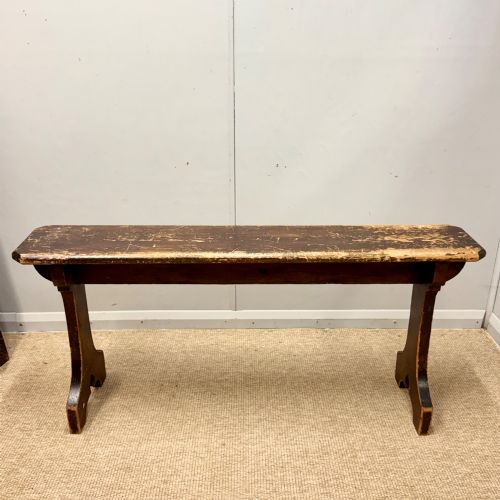
These antique pine form pieces are utilitarian wooden seating and storage items that offer honest utility and weathered charm for modern interiors.
Antique Pine Form
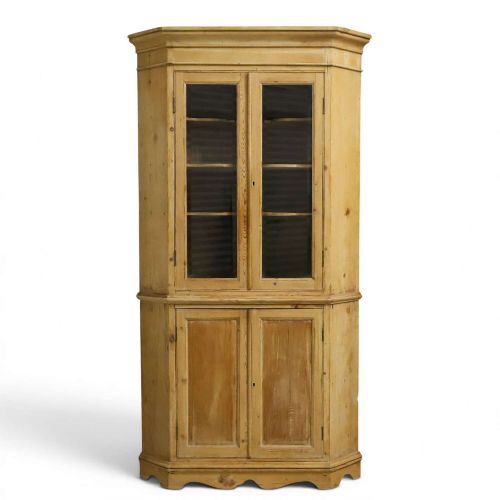
When you search for an antique pine form, you encounter robust seating and cabinetry designed for daily domestic or institutional service. The selection spans sturdy benches, long school seating, trestle seats, corner cupboards, and occasional tables.
You are most likely to meet straightforward pine benches dating from the nineteenth century, alongside occasional painted Scandinavian pieces or Georgian primitive settle designs. These items originate from English, French, and Scandinavian workshops.
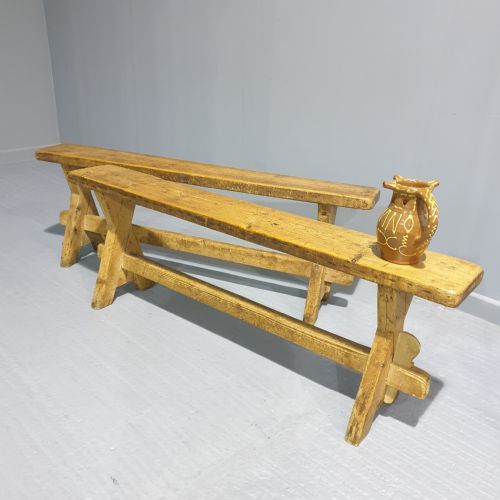
The forms range from simple single seats to long pairs built for communal spaces, kitchens, or schoolrooms. Each piece reflects the functional requirements of its original setting without superfluous ornamentation.
Materials and construction methods
Makers utilised solid pine timber, selected for its availability and workability, often finishing surfaces with historical coats of paint or scumble glazes. Structural integrity relied on straightforward joinery suited to heavy daily use in farmhouses, schools, and kitchens.
Iron fixings and glass doors appear on specific cabinetry variants, while benches utilise heavy timber stretchers and trestle supports to bear considerable weight. Scratch-built and primitive constructions demonstrate direct hand-tool methods without factory standardisation.
Antique Pine Form Retail Price Guide 2026
Typical asking prices for pine form among the pieces listed under this phrase on Sellingantiques today, from the lower quarter to the upper quarter. They describe what is for sale here now, not the wider market.
A scratch-built pine bench carries the distinct, irregular tool marks of a maker who worked without a blueprint.
Distinctions in quality and character
The upper tier of pieces exhibits honest proportions, undisturbed surface patination, and original paint finishes that have matured naturally over decades. Lesser examples suffer from unsympathetic modern alterations, stripped surfaces, or replacement timber that obscures the original utility.
Proportion and scale dictate the appeal of longer school and platform benches, where uniform length and unaltered trestle supports command greater interest. Cabinets and settles derive their standing from unusual configurations, neat proportions, and intact hardware.
The Antique Pine Form Glossary
- Form
- A traditional term for a long wooden bench or seat without a back. These items provided communal seating in institutional and domestic spaces.
- Settle
- A wooden bench with high backs and solid arms designed to block draughts in older homes. Some variants include storage compartments beneath the seat.
- Scumble
- A decorative painting technique involving a translucent glaze dragged over a paler base colour to simulate grain. It appears on regional primitive pine furniture.
- Trestle
- A structural support consisting of a horizontal beam fixed to two splayed legs. This framework underpins many long kitchen and school seating items.
- Triform
- Having three sides or three distinct sections in its architectural arrangement. This geometry appears in specific early tables and stands.
Antique Pine Form: Frequently Asked Questions
What is an antique pine form?
An antique pine form refers to utilitarian wooden seating, particularly long benches and settles, constructed from pine during the eighteenth, nineteenth, and early twentieth centuries.
These items served practical functions in schools, farmhouses, and kitchens before finding a place in contemporary homes as decorative and functional seating.
How were these pine benches used?
Original owners utilised these sturdy wooden benches for communal dining, classroom seating, and daily utility in busy domestic environments.
Their robust construction allowed them to withstand heavy daily wear in institutional settings like schools and large farmhouse kitchens.
How do I live with an antique pine bench?
You can integrate these long seats into dining spaces, hallways, or living rooms alongside modern or traditional furniture.
Their narrow profile makes them practical for placement against walls or behind dining tables where space efficiency matters.
How can I tell the period of pine furniture?
Dating relies on observing construction marks, hardware types, tool signatures, and the natural ageing of the pine timber and surface finishes.
Nineteenth-century examples often display hand-planed surfaces and traditional joinery, whereas later pieces show more standardised machine preparation.