

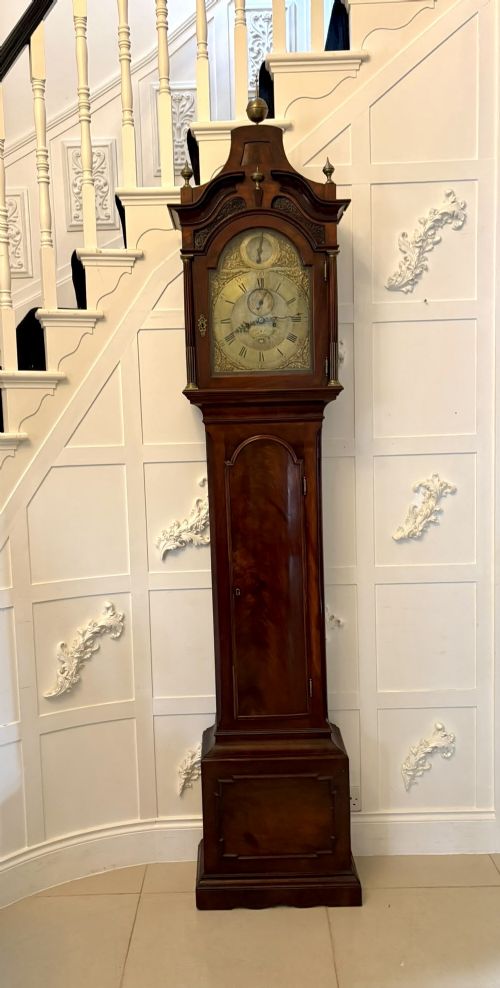
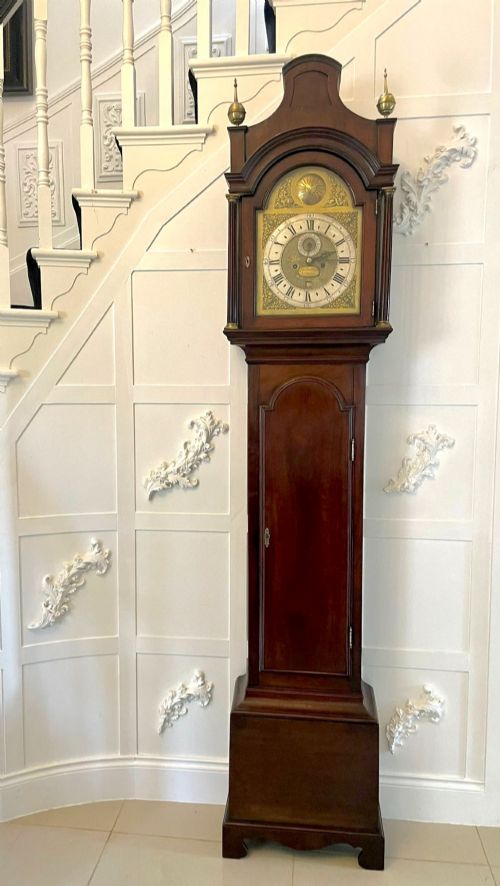
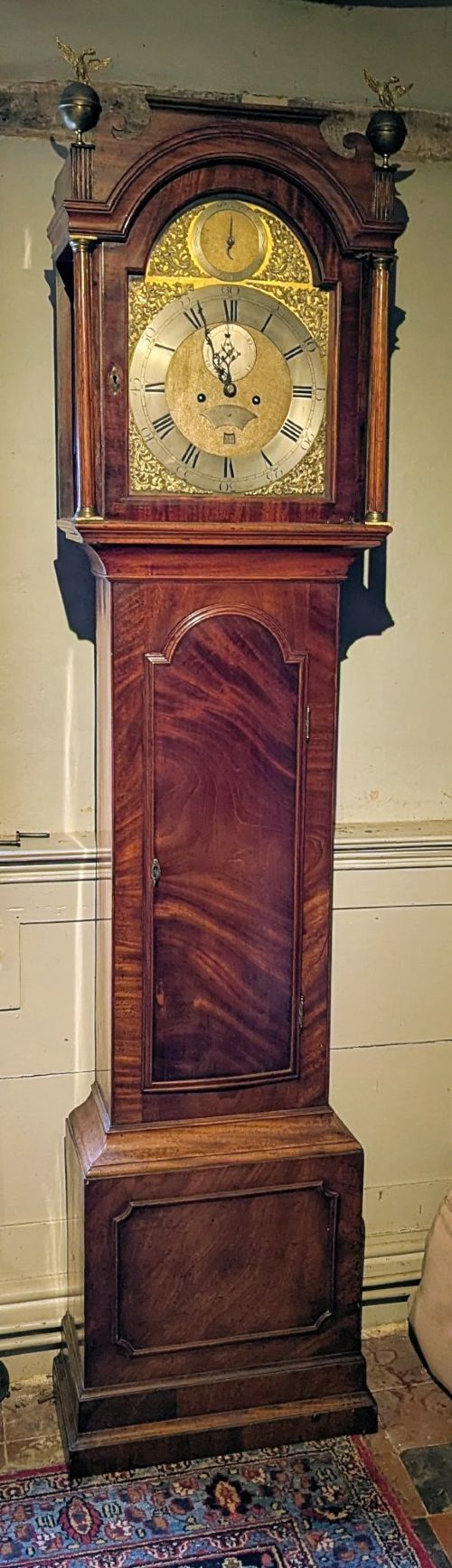
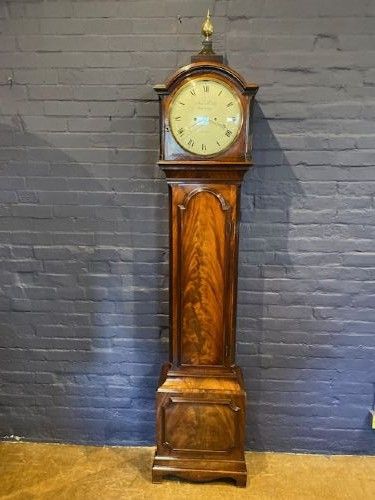
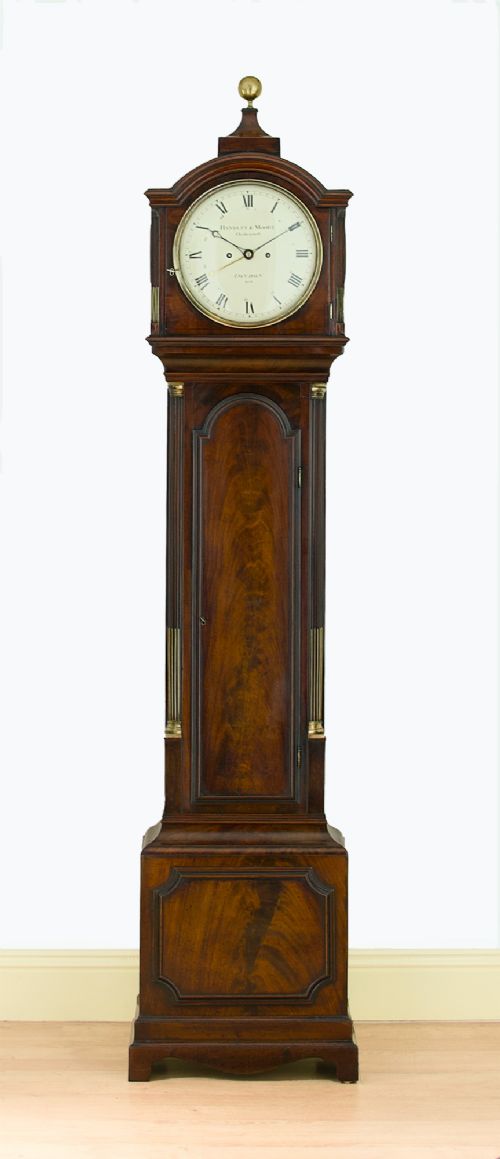
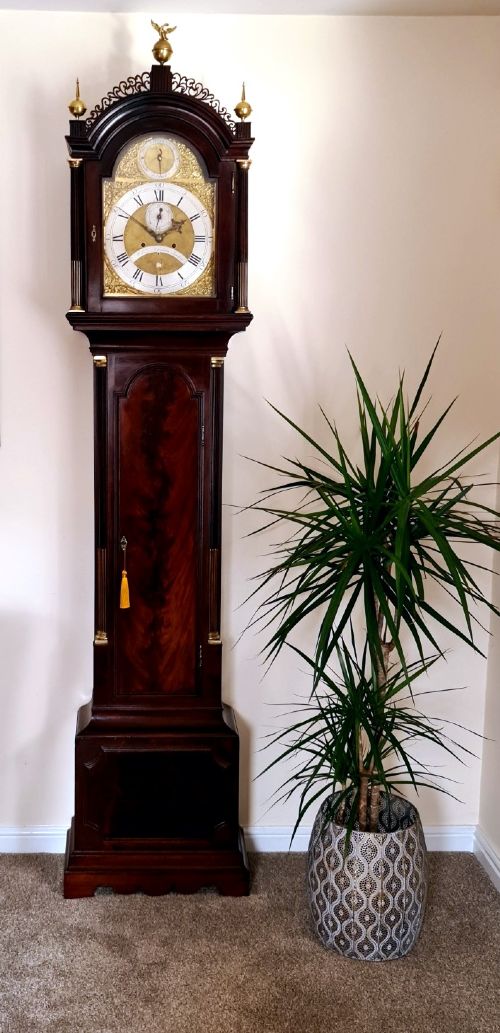
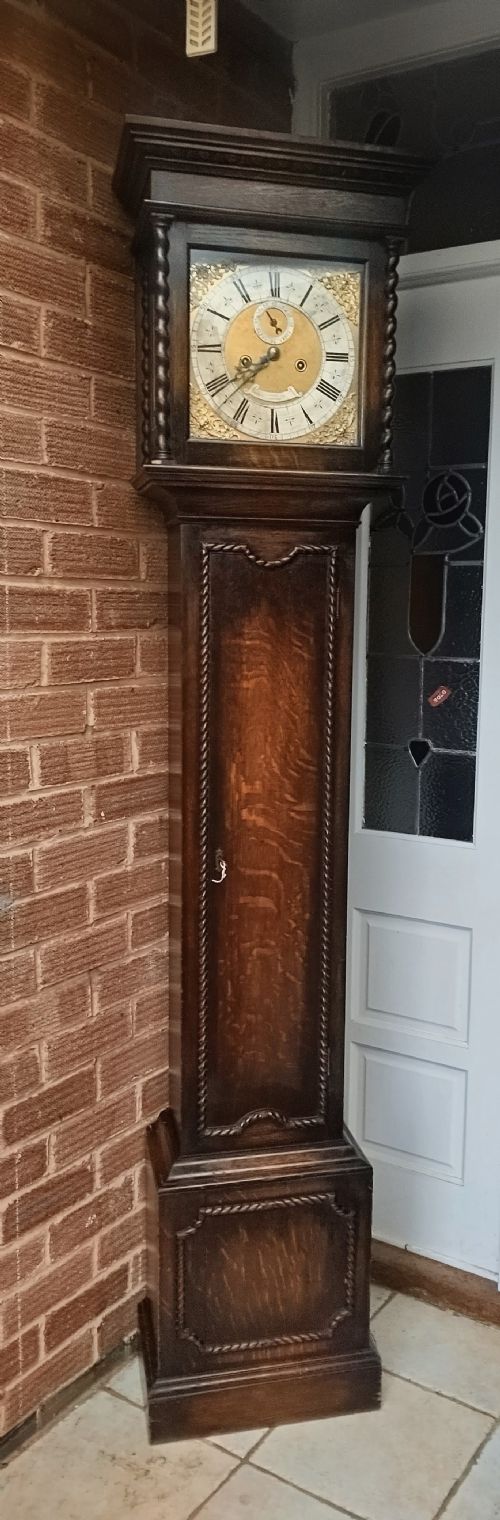
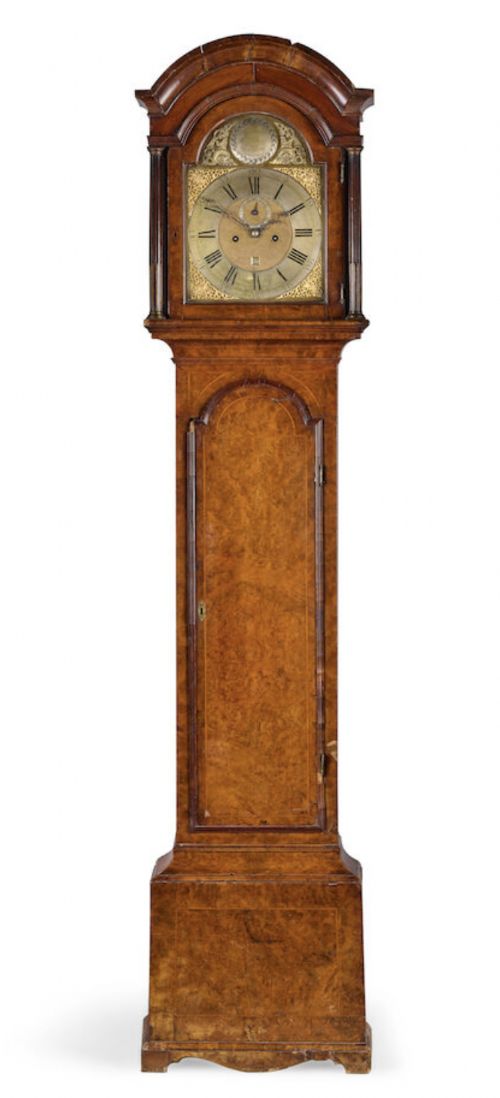
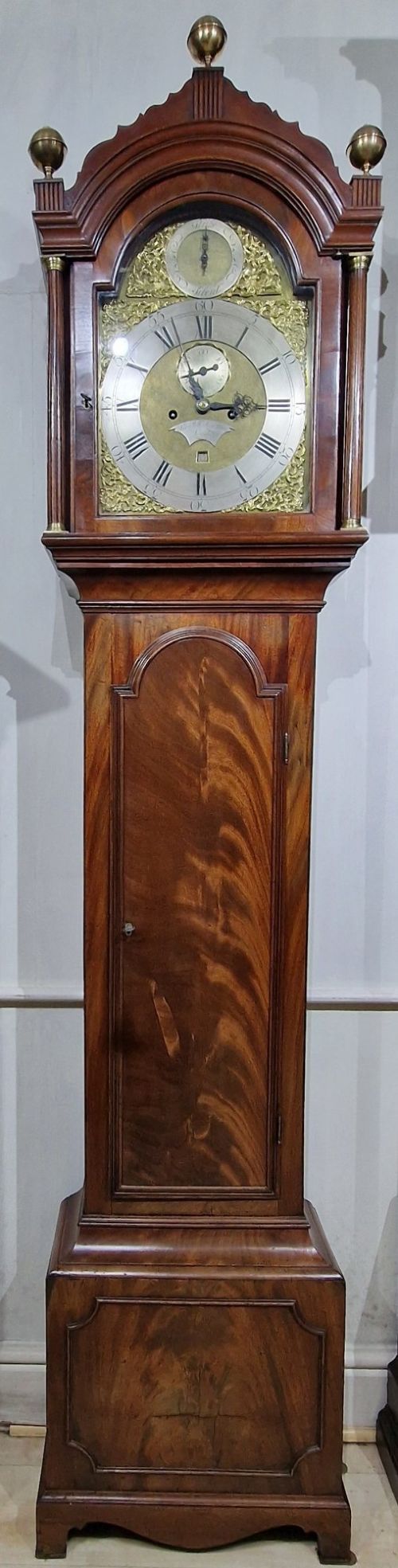


London Tall Case Clock
When a collector asks for a london tall case clock, they are seeking a floor-standing timekeeper that unites mechanical precision with cabinet-making craft.
London Tall Case Clock
A london tall case clock is a floor-standing timepiece housed in a tall wooden trunk with a glazed door revealing the swinging pendulum and weights. The examples found here span from the seventeenth century through to the nineteenth century, encompassing periods from William and Mary to the Regency era.
The dominant forms on this page include mahogany, walnut, and burr walnut longcase clocks alongside grandfathers and regulators. These pieces originate directly from workshops operating in the capital, often bearing the signature of the maker upon the brass or painted dial.
Makers working within the city limits constructed these timepieces to serve as both domestic anchors and status symbols for wealthy households. Buyers encounter variants featuring eight-day movements, quarter-striking mechanisms, and moonphase dials housed within architectural wooden cases.
Materials and construction
Cabinet-makers utilised dense timbers such as mahogany, oak, and figured walnut, frequently applying burr veneers to the trunk doors and base panels to create striking visual patterns. These wooden housings protect the intricate brass and steel gear trains that drive the mechanical movements.
Dial construction typically involved engraved brass plates with applied chapter rings, or later painted surfaces featuring subsidiary seconds and calendar indications. Movement plates, wheels, and escapements were laboriously hand-cut and finished by specialist horologists in London workshops.
London Tall Case Clock Retail Price Guide 2026
Typical asking prices for london tall case clock among the pieces listed under this phrase on Sellingantiques today, from the lower quarter to the upper quarter. They describe what is for sale here now, not the wider market.
Listings feature movements housed in mahogany, walnut, and oak cases spanning the seventeenth to the twentieth centuries.
Variations in quality
The standard of a london tall case clock rests upon the sophistication of the movement and the fidelity of the cabinet-making. Higher quality examples feature complex complications such as quarter-striking gear, silent switches, and grid-iron pendulums designed to compensate for temperature changes.
Cabinet work distinguishes finer pieces through the selection of richly figured timbers, precise marquetry, and well-proportioned architectural hood mouldings. The synergy between a reputable horologist's signed movement and an undamaged, patinated wooden case defines the upper tier of these timepieces.
Charles Shuckburgh·James McCabe·Handley and Moore·William Jourdain·Windmills and Wightman·Henry Weedon·William Kipling·William Moon·Thomas Vernon·Edin Burgis·William Allam·James Tregent·John Rainsford·Francis Perigal·Mappin and Webb·Parkinson and Frodsham·John Shelton·Dwerrihouse and Carter·James Bullock·George Graham·William Tomlinson·Dent·Chater and Son·Joseph Saer·Matthew and Thomas Dutton
The London Tall Case Clock Glossary
- Longcase clock
- A tall, floor-standing weight-driven timepiece with a pendulum enclosed within a wooden trunk. Also commonly referred to as a grandfather clock.
- Hood
- The upper portion of the case that encloses and protects the dial and movement, often featuring glazed side panels and columns.
- Chapter ring
- The circular metal ring affixed to the dial that displays the hour and minute numerals. It is frequently silvered and engraved.
- Escapement
- The mechanical linkage that transfers energy to the pendulum and controls the rotation of the gear train. Common types include anchor and deadbeat variants.
- Moonphase
- A dial mechanism that tracks the lunar cycle through a rotating disk displaying the phases of the moon. This complication appears on higher grade movements.
London Tall Case Clock: Frequently Asked Questions
How do I wind an antique longcase clock?
Winding requires inserting a crank key into the winding holes on the dial face and turning it clockwise until the weights reach the top of the trunk.
Care must be taken not to overwind the mechanism, stopping as soon as resistance is felt against the key.
Where should I place a tall clock in my home?
These timepieces require a stable, dry interior location away from direct sunlight, central heating vents, and exterior doorways where temperature fluctuations occur.
Placement against a solid masonry wall ensures the case remains plumb and the pendulum swings without interference.
How do I tell the difference between George III and Regency cases?
George III cases generally exhibit classical architectural proportions with architectural cornices, fretwork friezes, and flame mahogany veneers.
Regency examples tend to incorporate bolder neoclassical motifs, brass inlay, Gothic arched doors, and heavier mouldings.
Why does the clock need to stand level?
A level stance ensures the escapement mechanism delivers an even impulse to the pendulum, creating a balanced tick and preventing the clock from stopping.
Most cases feature adjustable feet or require shimming at the base to achieve the precise vertical alignment necessary for accurate timekeeping.