


London Silver Jug
A London silver jug carries the weight of centuries of assay office heritage, offering both functional grace and enduring metalwork.
London Silver Jug
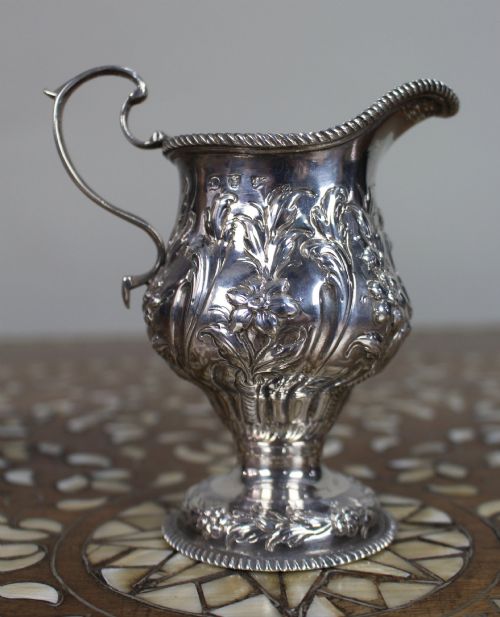
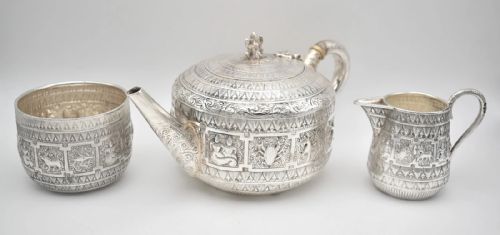
A london silver jug encompasses various forms designed for pouring wine, water, cream, or hot liquids during dining and tea rituals. The selection spans compact Georgian cream jugs to large Victorian claret jugs mounted with cut crystal glass.
Makers produced these vessels in distinct styles ranging from plain Neoclassical curves to ornate Victorian naturalistic designs featuring chased foliage and animal figures.
How they were made
Silversmiths shaped sterling silver through hammering, casting, and soldering, frequently employing silver gilt interiors for acid resistance in wine vessels. Glass bodies on claret jugs utilise cut crystal and hobnail cutting techniques combined with hallmarked silver mounts and hinged lids.
Decorative elements involve chasing, engraving, and applied cast motifs such as grapevines or acorns soldered directly to the metal body.
Keep an eye out for mischievous novelty monkey mounts gripping the rims of Victorian wine vessels.
What varies in quality
The weight of the metal and the thickness of the silver gauge dictate the structural integrity of each london silver jug. Heavy construction prevents denting and ensures balanced handling during service.
The crispness of chased decoration and the precision of the assay office hallmarks reflect the skill of the original workshop. Finer pieces maintain sharp relief in foliage and animal subjects without softening from excessive polishing.
John Emes·John Rawlings·John Scofield·George Fox·Robert Hennell·Benjamin Montagu·Henry Holland·George Campar·William Robertson·Henry Chawner·Robert and David Hennell·Thomas Whitehead·Samuel and Edward Davenport·John and George Angell·Daniel and Charles Houle·Pairpoint Brothers·John Wilmin Figg·Edgar Finley and Hugh Taylor·Charles Boyton·John Keith·Edward H Stockwell·Charles Hougham
The London Silver Jug Glossary
- Sterling silver
- An alloy containing ninety-two point five percent silver by mass, with the remainder comprising copper or other metals. This standard ensures durability for functional holloware.
- Claret jug
- A vessel specifically created for serving red wine at the table. These examples typically combine glass bodies with silver handles, mounts, and spouts.
- Chasing
- A metalworking technique where the smith pushes the surface of the silver from the exterior using punches to create raised ornamental designs. This method differs from engraving by displacing metal rather than removing it.
- Silver gilt
- Sterling silver that has undergone a process of being coated with a thin layer of gold on the interior surface. This application protected the silver from corrosion caused by acidic liquids such as wine or cream.
- Assay office
- An official body responsible for testing the purity of precious metals and stamping them with statutory hallmarks. London silver carries the leopard head mark designating origin.
London Silver Jug: Frequently Asked Questions
What is a claret jug?
A claret jug is a serving vessel designed for red wine, typically featuring a glass body paired with a hallmarked silver handle, collar, and hinged lid.
Victorian makers frequently combined cut crystal glass with naturalistic silver mounts shaped as vines or animal figures.
How do I identify the date?
British silver bears clear hallmarks stamped by the assay office, including a date letter that corresponds to the specific year of testing.
Additional marks indicate the maker's initials and the standard sterling silver purity guarantee.
Were these used for cream?
Many smaller vessels function as cream jugs or milk jugs, intended for tea service use during the Georgian and Victorian eras.
Their forms range from three-footed bodies to sparrow beak profiles designed for controlled pouring.
Can I use them today?
These vessels remain entirely functional for serving water, wine, or cream during modern dining occasions.
Gentle hand washing without harsh abrasives preserves the historic silver surfaces and any applied gilt interiors.