
Locking Tallboy Drawers
Locking tallboy drawers are secure narrow chests designed to keep papers and valuables safe behind a locking side flap.
Locking Tallboy Drawers
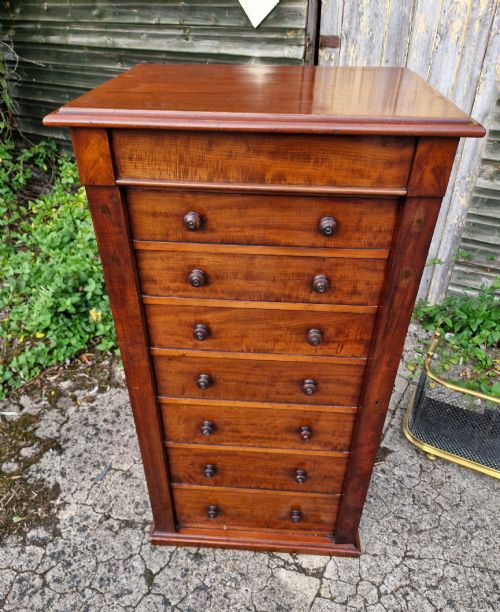
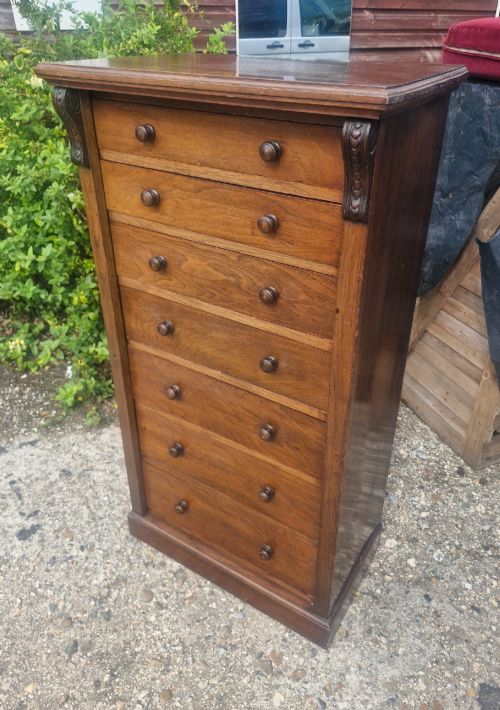
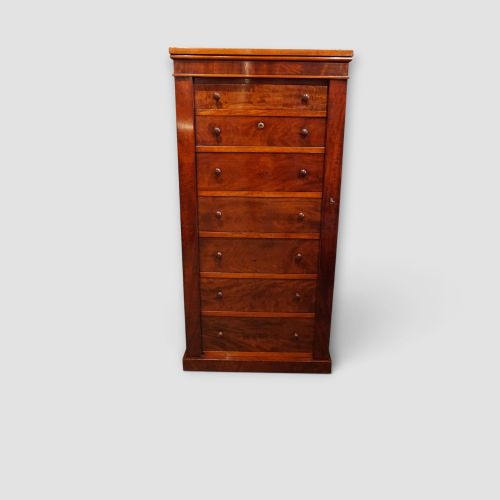
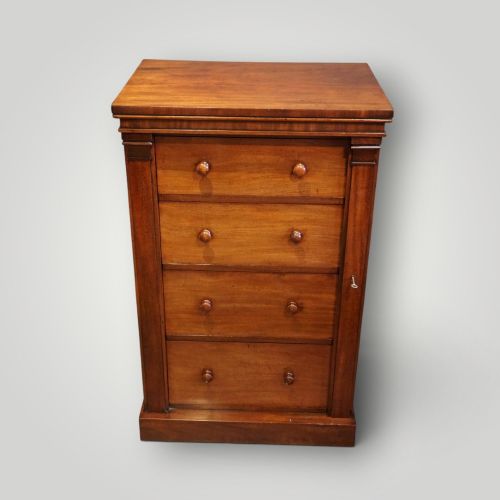
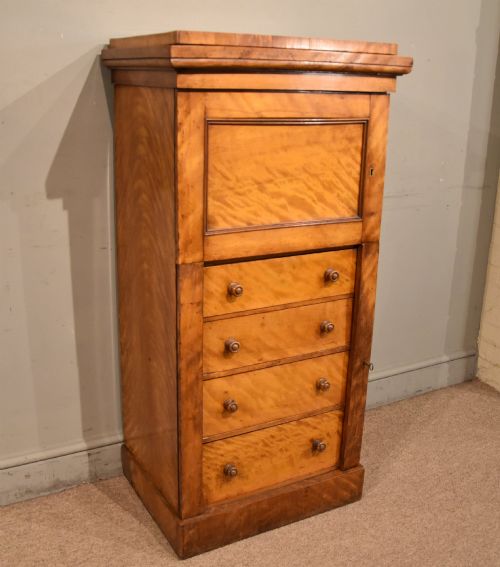
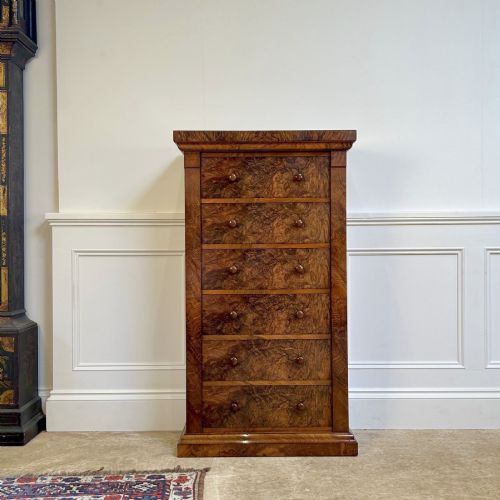
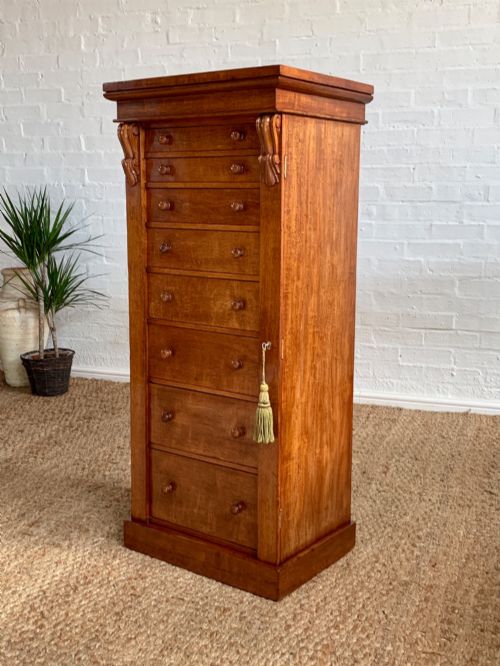
Locking tallboy drawers, commonly known as Wellington chests, present a tall and narrow profile built with multiple stacked drawers. These vertical chests originate primarily from the nineteenth century, spanning the Victorian and Edwardian eras.
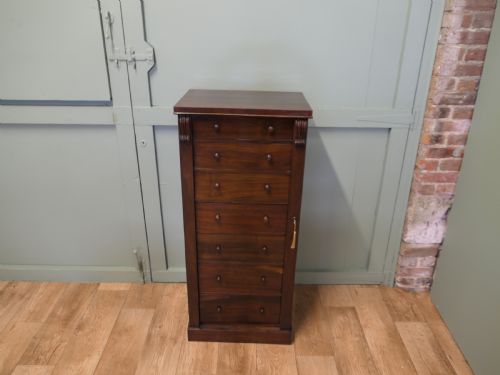
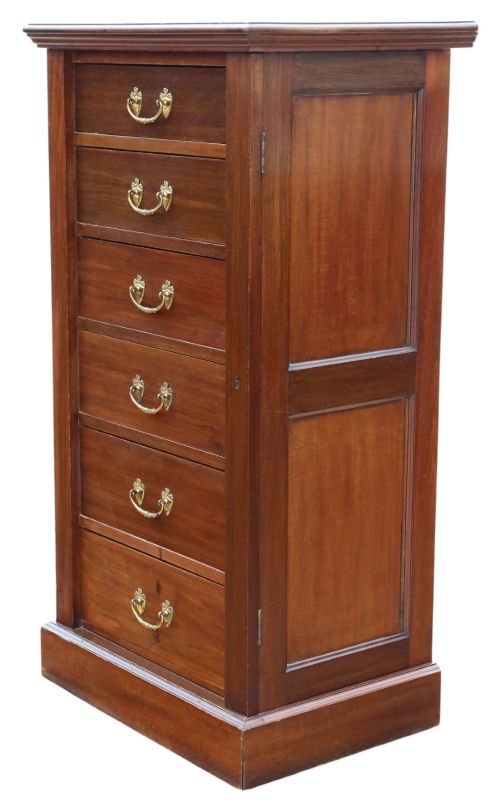
Makers designed these compact pieces to fit tight spaces while offering substantial storage capacity. The defining feature is a hinged vertical locking stile on one side that secures all the drawers simultaneously when locked with a key.
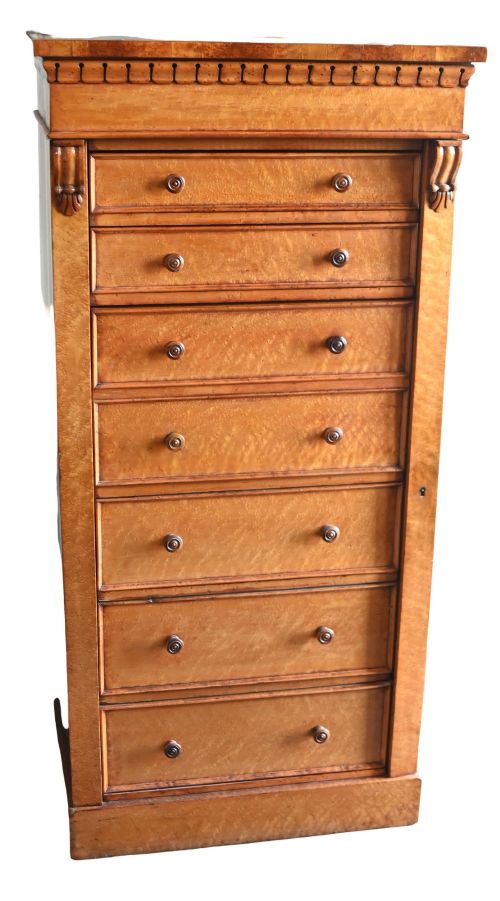
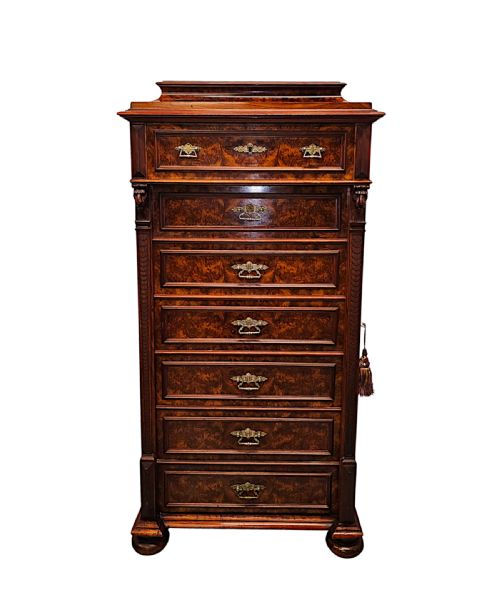
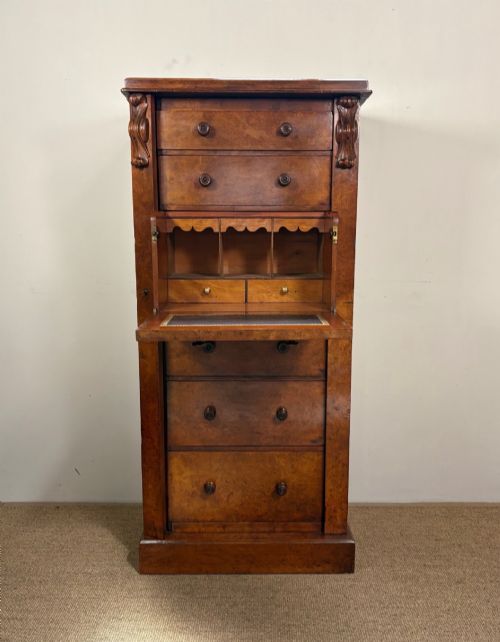
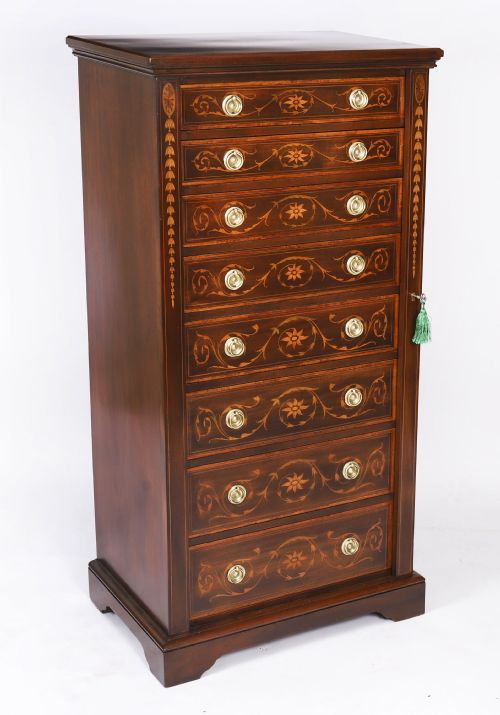
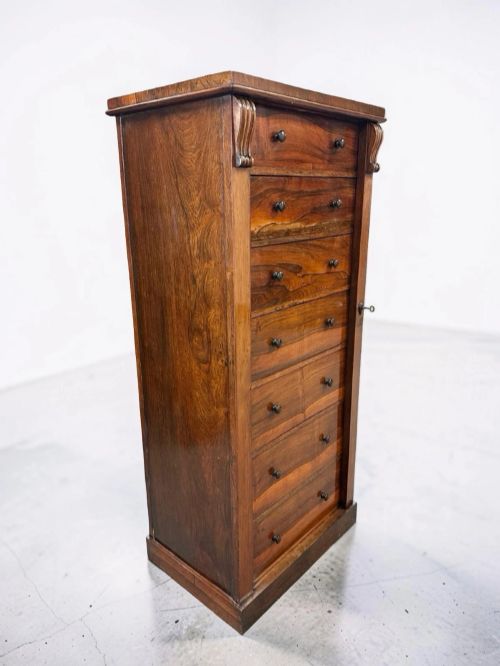
Victorian mahogany and walnut examples dominate the selection, accompanied by variations in satin birch, oak, and rosewood. Buyers will also encounter specialised forms incorporating secretaire drawers with drop fronts or collector's compartments.
Materials and Construction
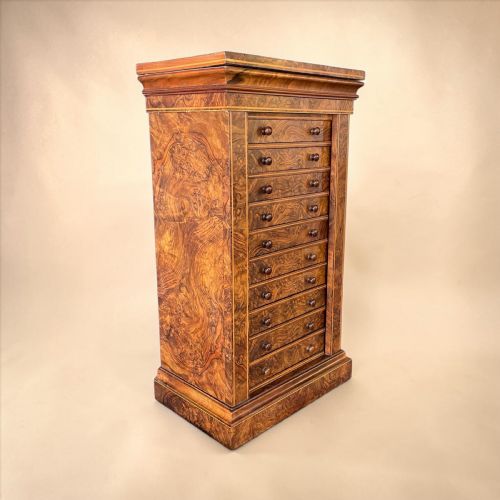
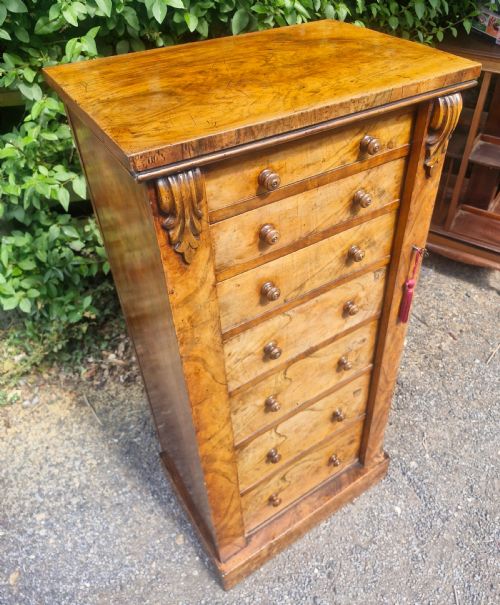
Cabinet makers built the carcase and drawer frames using dense timbers like mahogany, walnut, and oak, frequently applying flame mahogany veneer or burr walnut to the primary exterior surfaces. These figured veneers showcase rich natural grain patterns across the drawer fronts.
The signature locking mechanism relies on a hinged wooden stile positioned down the right or left edge of the drawer stack. Turning the key engages a mechanism behind this flap that blocks the drawer lips from opening.
Distinguishing Quality
The choice of timber figure and veneer selection separates standard utility pieces from exceptional commissions. Master workshops utilised highly figured burr walnut, flame mahogany, or satin birch to elevate the visual impact of the narrow facade.
Gillows·J Shoolbred·Holland and Sons·S Mordan and Co
The Locking Tallboy Drawers Glossary
- Wellington chest
- A tall, narrow chest of drawers secured by a hinged locking flap on one side. This form emerged in the nineteenth century and typically contains six or seven drawers.
- Secretaire
- A desk drawer featuring a drop-front flap that reveals a writing surface and small interior pigeonholes. It allows a tall chest to function as a compact bureau.
- Stile
- The vertical framing member on the side of the chest that hinges outward to lock the drawers. When closed and locked, it prevents any drawer from being pulled open.
- Burr walnut
- A highly prized wood veneer showing knotted, swirling grain patterns formed from tree growths. Cabinet makers utilised it on high-status Victorian furniture.
- Flame mahogany
- A veneer cut from the fork of the mahogany tree to produce a distinctive flickering flame pattern. It appears frequently on nineteenth-century case furniture.
Locking Tallboy Drawers: Frequently Asked Questions
What is a Wellington chest?
A Wellington chest is a tall, narrow set of drawers featuring a hinged locking side flap. This design secures all the drawers at once with a single key.
Cabinet makers developed this vertical format during the nineteenth century to provide secure storage in bedrooms and dressing rooms without occupying excessive floor space.
How does the locking mechanism work?
The locking mechanism uses a vertical wooden flap attached to one side of the chest frame with hinges. When closed against the drawer fronts, turning the key locks this flap in place so the drawers cannot be opened.
Opening the side flap requires unlocking it first, which then swings clear to allow each individual drawer to pull out freely.
What were these chests used for?
Owners used these narrow chests to store personal valuables, private correspondence, and small garments. The secure locking bar kept sensitive items protected from unauthorized access.
Some specialist versions included fitted interior drawers for coin collections, natural specimens, or writing materials with fold-down desk flaps.
How do I identify Victorian examples?
Victorian examples display characteristic timber choices such as solid mahogany, walnut, and burr walnut veneers. Look for traditional hand-cut dovetails on the drawer sides and original turned wooden knobs.
The proportions tend to be tall and slender, housing six or seven graduated drawers behind the signature locking side stile.