


Locking Glass Tantalus
A locking glass tantalus keeps your spirits secure behind a clever mechanism, combining fine barware with ingenious Victorian engineering.
Locking Glass Tantalus
When you search for a locking glass tantalus, you encounter drinking cabinets and barware designed to restrict access to decanters. These pieces appear most frequently from the Victorian, Edwardian, and Art Deco periods, spanning the nineteenth and early twentieth centuries.
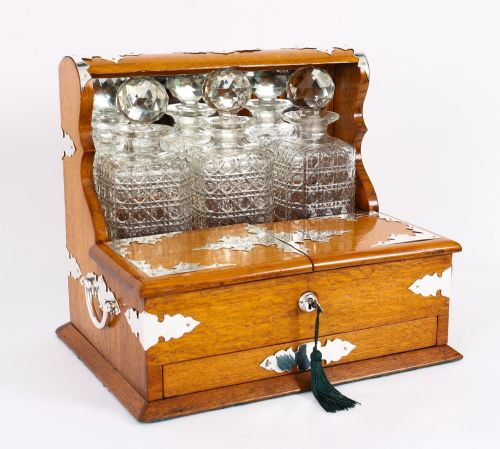
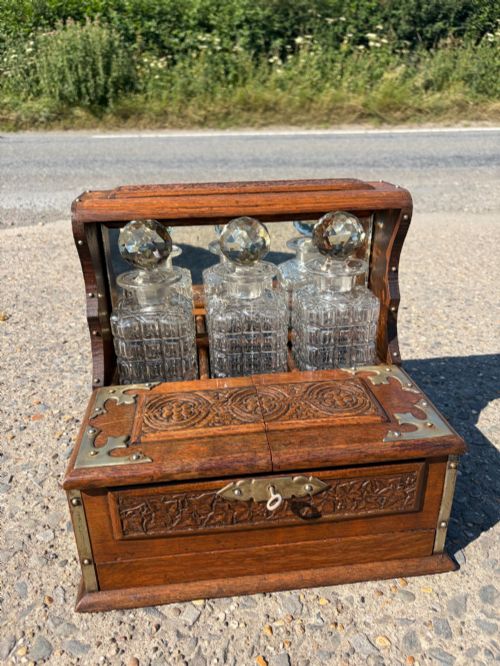
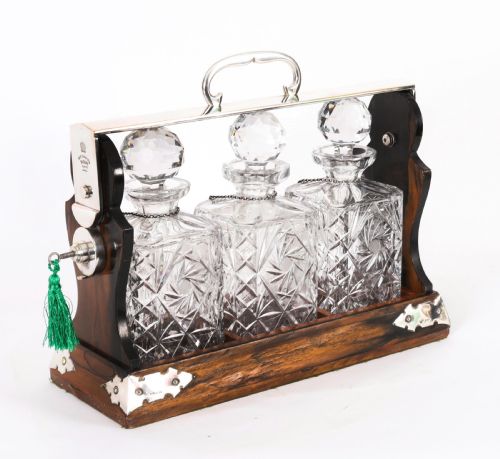
The standard format involves a wooden frame holding two or three cut glass or crystal decanters secured by a metal locking bar. Oak forms the most common housing, often complemented by coromandel or walnut in more elaborate examples.
Makers integrated practical storage for after dinner entertaining, sometimes combining the decanter set with a games compendium or a dry bar. These items served a social function in period homes, keeping expensive liquor safely locked away from domestic staff.
What varies in quality
Quality rests upon the execution of the mechanism and the choice of materials, distinguishing standard production from high end manufacturing. Finer pieces display precision engineered brass locking bars, substantial silver plate mounts, and fully integrated functional components like games drawers.
The glass vessels show distinct tiers of craftsmanship, moving from simple pressed glass to deeply cut crystal with matching numbered stoppers. Superior timber selection and crisp inlay work further separate exceptional examples from simpler utilitarian versions.
Victorian guests faced perpetual temptation, staring at amber whiskey through locked crystal while the host kept the only key.
Betjemann Brothers·Hukin and Heath
The Locking Glass Tantalus Glossary
- Compendium
- A multi-purpose box containing items for games, writing, or smoking alongside the primary barware. These fitted interiors organise various social pastimes into a single case.
- Coromandel
- A dense, dark tropical hardwood featuring dramatic figuring, utilised for luxury nineteenth century cabinetry. It provides a striking contrast against brass mounts and glass decanters.
- Sterling silver
- A silver alloy containing ninety-two point five percent pure silver by mass, often used for bottle collars and maker plaques. Pieces bearing these marks indicate higher manufacturing status.
Locking Glass Tantalus: Frequently Asked Questions
How do you open a locking glass tantalus?
A key turns in the lock to release the metal retaining bar, allowing it to pivot or lift away from the necks of the decanters. Once the bar clears the glass stoppers, individual bottles can be lifted from their fitted bases.
Without the key, the mechanism remains securely locked over the stoppers, preventing the decanters from being removed from the wooden frame.
What periods do these pieces come from?
Most surviving examples date from the Victorian and Edwardian eras, spanning the late nineteenth and early twentieth centuries. Production continued into the Art Deco period of the 1930s with streamlined designs.
Earlier pieces typically feature heavy oak and brass mounts, while later twentieth century versions adopt geometric metalwork and simplified wood housings.
Were these used in dining rooms?
These pieces functioned primarily as after dinner barware, placed on sideboards or tables in reception rooms for entertaining guests. The locking mechanism allowed hosts to control access to spirits.
Some versions integrated games compendiums, serving a dual purpose for evening gatherings and social pastimes in domestic interiors.
Are the decanters original to the case?
Many pieces retain their original cut glass or crystal decanters, often shaped specifically to fit the contours of the wooden base and locking bar. Matching patterns and stoppers indicate an intact set.
Replacement decanters occur frequently due to accidental breakage over time, making the match between the glass and the locking geometry an important consideration.