
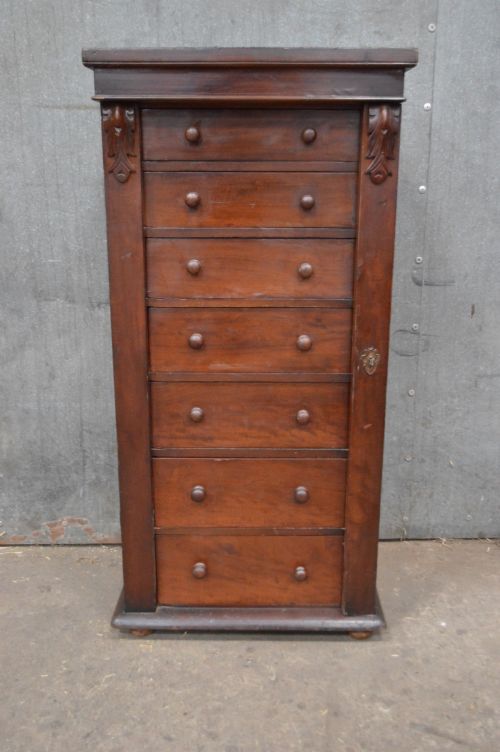
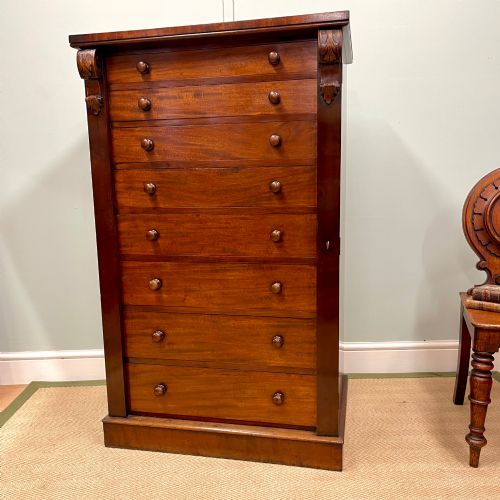


Locked Mahogany Collector Chest
These locked mahogany collector chests are timber cabinets fitted with locking mechanisms designed to secure specimens, documents, and small valuables.
Locked Mahogany Collector Chest
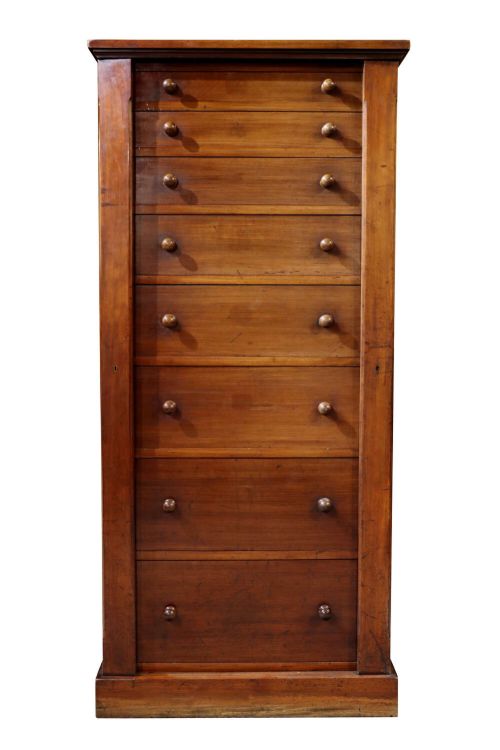
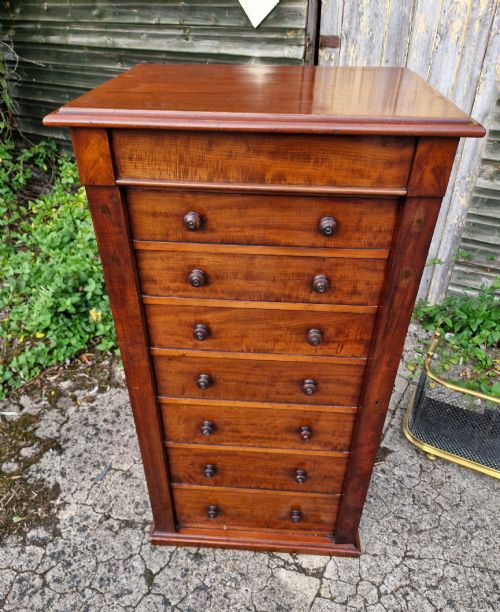
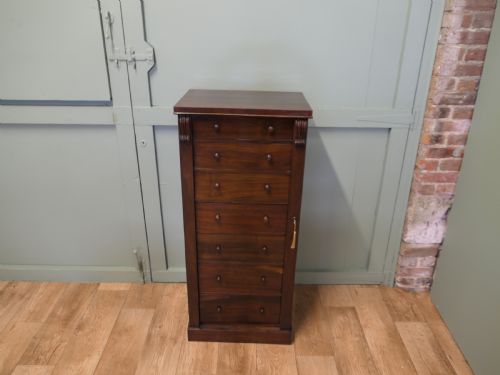
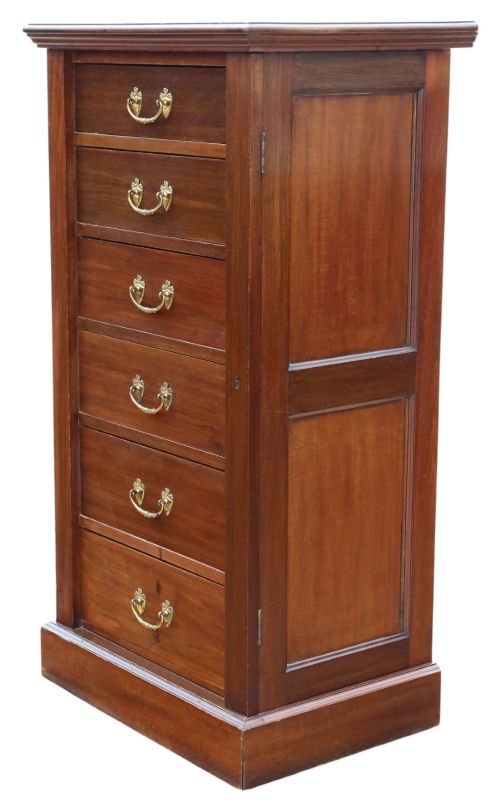
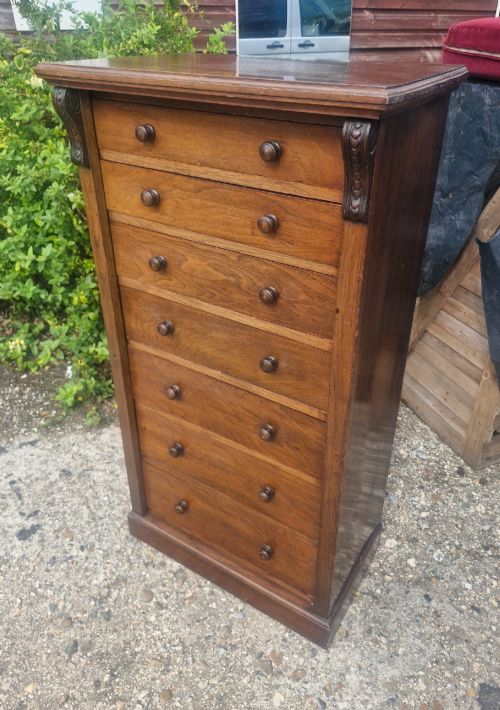
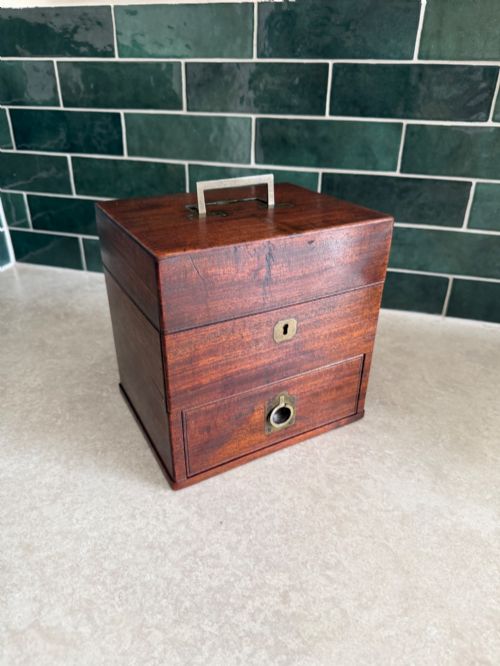
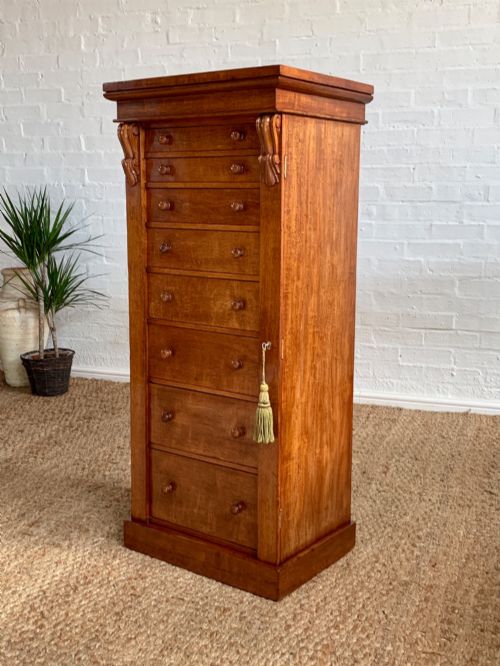
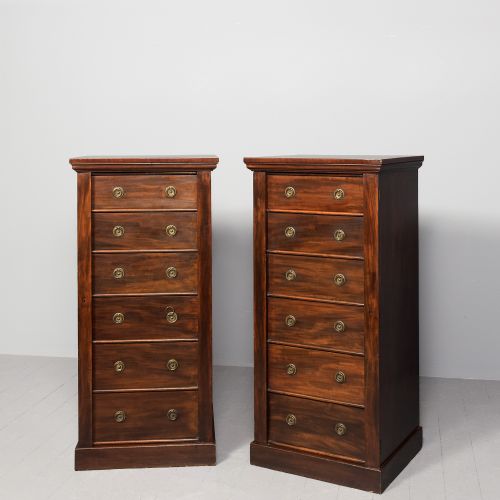
A locked mahogany collector chest is a tall, narrow cabinet typically configured with multiple graduating drawers secured by a single locking side bar or hinged stile. When people search for a locked mahogany collector chest, they generally encounter tall vertical forms known as Wellington chests, alongside miniature chests of drawers, apothecary boxes, and dedicated collectors cabinets.
The pieces appearing here span the nineteenth century, Victorian, Edwardian, and Regency periods, originating from English and occasionally French workshops. Mahogany forms the primary structure of these chests, frequently enhanced by figured veneers, flame mahogany veneer, and accents of satinwood or walnut.
How they were made
Cabinet makers constructed these chests using solid mahogany and supportive secondary timbers, applying figured mahogany veneers or flame mahogany veneer to primary visual surfaces. Brass fittings, including locks, handles, and turned knobs, provide structural reinforcement and functional operation across the drawers and locking stiles.
Internal drawer construction relies on traditional dovetail joints, ensuring durability for housing heavy mineral, coin, or insect collections. Leather inserts occasionally line writing surfaces or internal compartments within specialised apothecary and collector formats.
Listings feature pieces spanning the Regency, Victorian, and Edwardian periods, utilising mahogany, brass, leather, satinwood, and walnut.
What varies in quality
The caliber of a locked mahogany collector chest depends heavily on the selection and matching of wood veneers, such as flame mahogany or figured mahogany, across the drawer fronts and side panels. Superior examples exhibit precise dovetailing, intact original turned wooden or brass knobs, and fully functioning locking mechanisms with original keys.
Proportions also distinguish the range, with scarce double chests, childs chests, and miniature versions demonstrating exceptional joinery and cabinet-making skill compared to standard domestic variations.
Druce and Co
The Locked Mahogany Collector Chest Glossary
- Wellington chest
- A tall, narrow chest of drawers secured by a hinged locking bar on one side that fastens over the drawer edges. This specific form became popular during the nineteenth century.
- Flame mahogany veneer
- A sliced sheet of mahogany timber exhibiting a distinctive flickering flame pattern derived from the branch junctions of the tree. Cabinet makers applied this to front surfaces for visual impact.
- Apothecary box
- A compact fitted box designed to hold medical phials, scales, and ingredients securely. These portable containers often feature internal compartments and robust brass carrying handles.
- Figured mahogany
- Timber featuring natural decorative grain distortions, including mottle or fiddleback patterns. This wood was selected for high-status furniture pieces.
Locked Mahogany Collector Chest: Frequently Asked Questions
What were collector chests used for?
These specialised cabinets served naturalists, numismatists, and gentlemen scholars for organising delicate specimens, coins, minerals, and manuscripts. The shallow drawers kept items separated and protected from dust and light.
Locked mechanisms ensured that valuable or fragile collections remained secure from unauthorized handling.
How do I date a Victorian mahogany chest?
Dating relies on examining construction methods, timber choices, and hardware styles recorded across the nineteenth century. Victorian pieces often display machine-sawn secondary woods alongside hand-cut dovetails and turned wooden knobs.
Reference to specific periods such as Regency, Victorian, or Edwardian in the piece titles helps establish a chronological baseline.
Are all these chests made of solid mahogany?
While the primary frames utilise solid mahogany, many surfaces incorporate flame mahogany veneer or figured mahogany veneer applied over secondary woods. Secondary timbers provide structural stability for the internal drawer carcases.
Brass hardware, leather, satinwood, and walnut also appear as complementary materials across the listed pieces.