
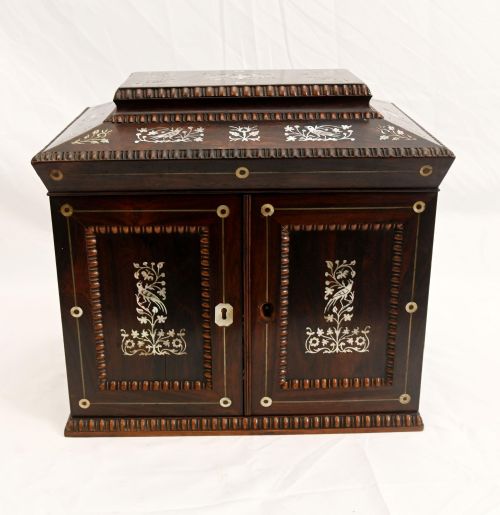
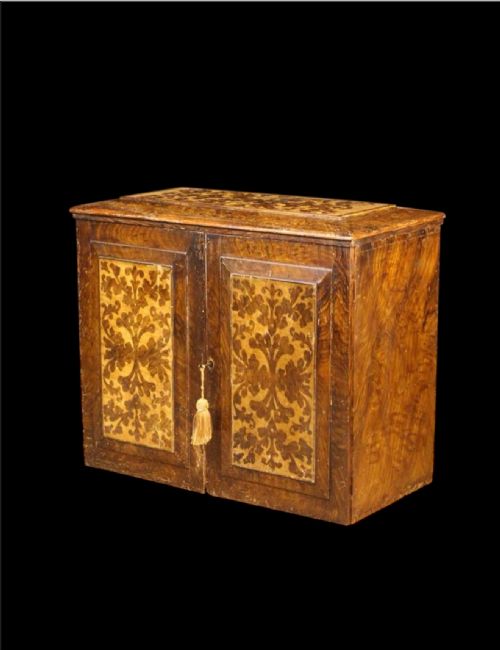


Lockable Wooden Cabinet
A lockable wooden cabinet secures personal treasures, correspondence, or spirits behind fitted doors, offering both practical containment and period presence.
Lockable Wooden Cabinet
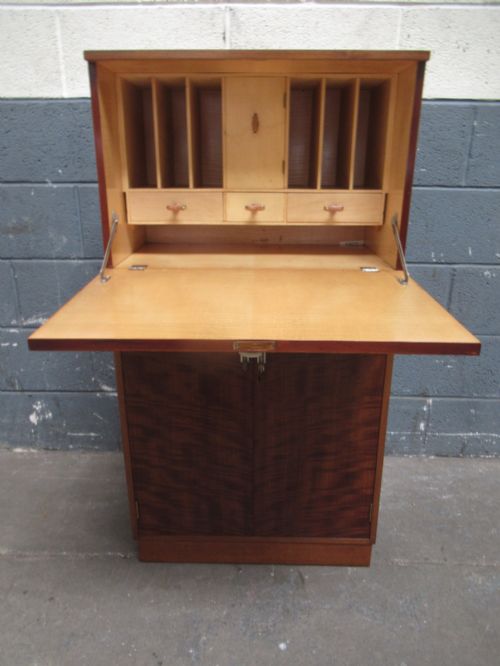
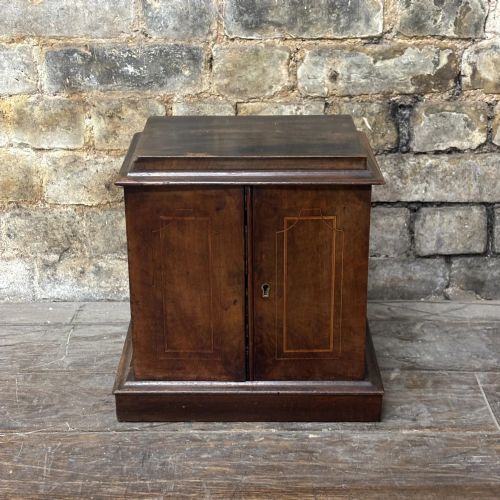
A lockable wooden cabinet encompasses several forms designed to secure valued items, from desktop stationery boxes and jewellery chests to drinks tantaluses and tabletop collectors' cabinets. Buyers seeking a lockable wooden cabinet will frequently encounter nineteenth-century Victorian and Edwardian examples alongside Art Deco pieces from the nineteen-thirties.
The assortment on this page spans utilitarian apothecary boxes and humidores to decorative music cabinets and inlaid writing desks. Oak, mahogany, and walnut dominate the construction, often enhanced with brass mounts, glass panels, or satinwood stringing.
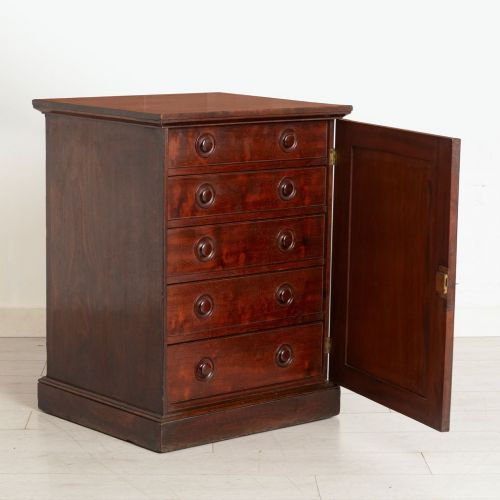
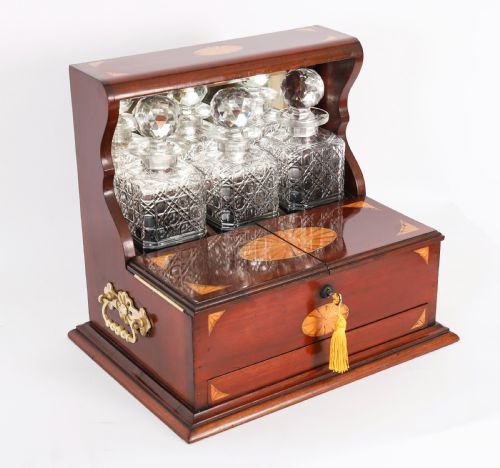
Specialised storage defines many of these pieces, such as multi-drawer collectors' cabinets and fitted cocktail units. Each surviving item reflects the domestic or professional security needs of its period, relying on functional locks and keys to protect contents.
How they were made
Cabinet makers utilised dense hardwoods such as mahogany, oak, walnut, and rosewood, frequently selecting figured veneers like burr walnut or satinwood for external surfaces. These timbers provided the structural stability required for fitted interiors and hinged doors.
Construction techniques incorporated brass hardware, including carrying handles, escutcheons, and robust locking mechanisms to secure the contents. Decorative detailing often involved marquetry inlay, mother of pearl embellishments, and glass panelling for display items.
Listings feature mahogany, oak, walnut, rosewood, and satinwood across Victorian, Edwardian, and Art Deco periods.
What varies in quality
The refinement of timber selection and the precision of veneer work separate standard examples from finer productions, particularly in the handling of burr walnut or mahogany. Marquetry stringing and the integration of mother of pearl demand high levels of artisanal skill.
Hardware quality also dictates distinction, with heavy cast brass mounts and fully operational lock mechanisms indicating superior original manufacture. The complexity of internal fittings, such as multiple drawers in a collectors' cabinet or a fitted decanter frame in a tantalus, further elevates the piece.
The Lockable Wooden Cabinet Glossary
- Tantalus
- A locking frame that holds decanters securely to prevent unauthorised access to spirits while displaying the bottles. These frames typically feature brass handles and matching locks.
- Escutcheon
- A protective plate surrounding a keyhole that guards the surrounding wood from wear. They are commonly cast in brass on period cabinetry.
- Humidor
- A specialised storage chest designed to keep tobacco moist. These often appear in golden oak or other dense hardwoods.
- Stringing
- Thin inlay lines of contrasting timber used to outline panels or drawers. It provides subtle linear definition on cabinet surfaces.
Lockable Wooden Cabinet: Frequently Asked Questions
What were lockable wooden cabinets used for?
These cabinets served to safeguard private possessions, important papers, correspondence, and precious jewellery from casual access.
Specific variants also housed collectible specimens, medical supplies, or bottled spirits under lock and key.
How do I date a wooden cabinet?
Dating relies on examining the timber species, construction methods, hardware styles, and overall aesthetic characteristics.
Victorian and Edwardian pieces often display distinct brass mounts and veneer choices that align with nineteenth and early twentieth-century production.
Are original keys usually included?
Original keys accompany some surviving pieces, though many historical cabinets operate with replacement keys or functional period locks.
The presence of an operational lock and matching escutcheon plate adds practical utility to the cabinet.
How should I care for a wooden cabinet?
Maintenance involves keeping the timber away from direct heat sources and sudden humidity changes to protect the wood and veneer.
Gentle dusting and occasional appropriate wax treatment help preserve the finish of mahogany, oak, and walnut surfaces.