
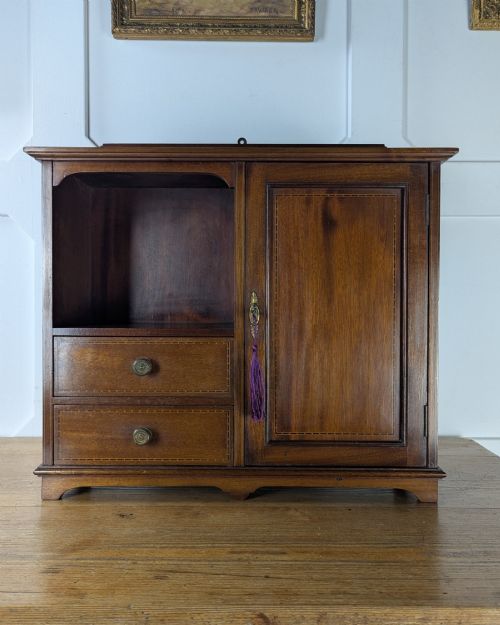
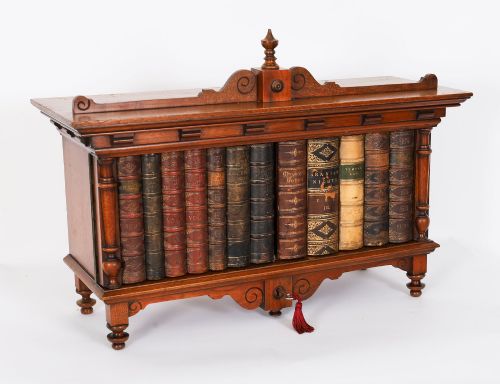
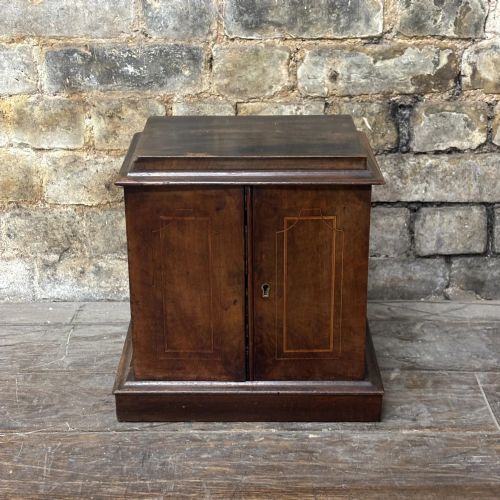


Edwardian Tabletop Cupboard
An Edwardian tabletop cupboard is a compact piece of furniture designed for desktops and surfaces, offering practical storage with period character.
Materials and Construction
Cabinet makers utilised solid timbers and veneers like mahogany, oak, satinwood, and walnut to build these compact carcasses. Brass fittings provide hinges, locks, and handles, while glass panels allow visibility in display pieces.
Inlay work using boxwood and mother of pearl adds surface decoration to mahogany and satinwood bodies. Interiors often feature fitted drawers, shelves, or compartments tailored for specific uses like pipes, stationery, or small collections.
Quality and Craftsmanship
The choice of timber and the precision of the joinery set pieces apart, with solid hardwoods and figured veneers indicating higher grade construction. Finer examples feature intricate inlay work and well-fitted interior compartments rather than plain surfaces.
Hardware quality contributes significantly to the overall merit of a piece, where heavy brass hinges and original working locks with keys distinguish better examples. The integrity of the glass panels and the smoothness of drawer movement reflect the original maker's standard of work.
Listings feature pieces from the 19th century, Edwardian era, and the 1920s and 1930s, utilising mahogany, oak, walnut, and satinwood.
Manoah Rhodes & Sons Ltd
The Edwardian Tabletop Cupboard Glossary
- Stationery cabinet
- A tabletop cabinet fitted with sloping compartments, pigeonholes, and small drawers designed for letter paper and writing equipment.
- Smokers cabinet
- A small enclosed cupboard, often featuring internal racks and small drawers, built to store pipes, tobacco, and smoking accessories.
- Inlay
- A decorative technique where contrasting materials such as boxwood or mother of pearl are set into recesses flush with the wood surface.
- Collectors cabinet
- A specialised small cabinet containing multiple shallow drawers intended for organising specimens, coins, or small objects.
- Satinwood
- A durable, hard timber with a natural golden sheen and satin-like lustre, frequently used for decorative veneers in cabinet making.
Edwardian Tabletop Cupboard: Frequently Asked Questions
What were edwardian tabletop cupboards originally used for?
These compact pieces served various specialised storage needs in homes and offices, depending on their internal fittings. Many housed writing paper, documents, tobacco pipes, or small collections of curiosities.
Their tabletop design kept everyday items organised and secure within arm's reach on a desk or sideboard. Owners appreciated the combination of functional compartmentalization and decorative exterior woodwork.
How do I identify an Edwardian piece?
Edwardian items typically date from the reign of King Edward VII and share characteristics with late 19th-century and early 20th-century design. They often combine traditional forms with lighter proportions and subtle inlay work.
Examining the construction methods, wood types like oak and mahogany, and hardware styles helps place a piece within this broader period.
Where should I place a tabletop cabinet in my home?
These versatile cupboards suit surfaces with adequate depth, such as desks, chests of drawers, sideboards, or console tables. Their enclosed storage keeps small items tidy while displaying the timber grain and brass details.
Placing them away from direct heat sources and strong sunlight protects the wood finish and any internal leather or fabric linings.
Are keys usually included with these cabinets?
Some pieces retain their original working keys for the brass door locks, while others do not have them. The presence of a key is typically noted in individual listings.
Even without a key, the door latches securely for display and general use on a tabletop.