
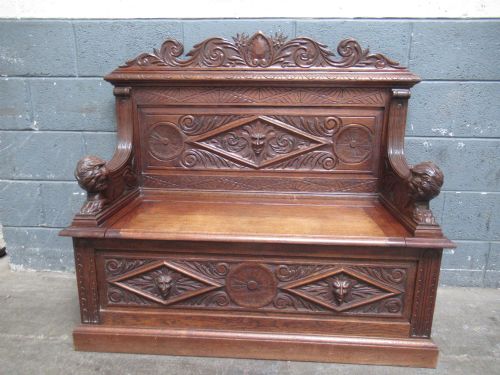
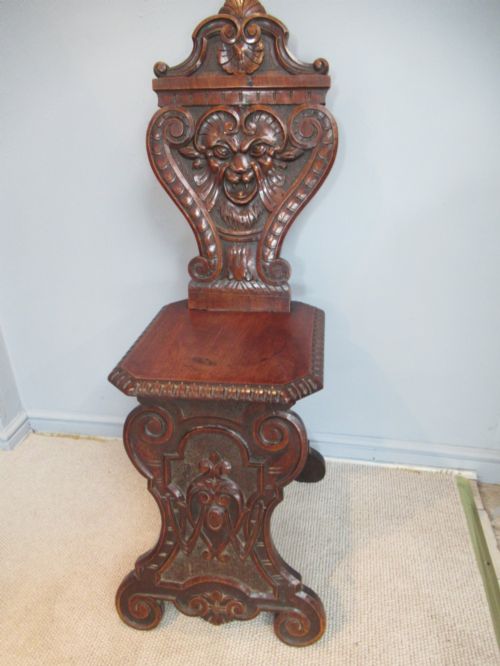


Lion Carved Hall Bench
These heavy timber seats are lion carved hall bench examples, built for grand entranceways and practical daily use.
Lion Carved Hall Bench
A lion carved hall bench serves as a substantial hallway seat, drawing on Victorian, Arts and Crafts, and Jacobean Revival traditions. These pieces combine seating with architectural presence, often incorporating high backs and panelled construction.
The selections here span from the late nineteenth century through to the 1930s, featuring forms such as monks benches and settles. Oak predominates as the primary timber, complemented by occasional examples in mahogany and metal inlay.
Makers and origins vary across the surviving pieces, including Scottish examples and manufacturer-attributed work. Buyers encounter traditional bench formats alongside convertible monks bench designs that transform into tables.
Assessing Craftsmanship and Design
Quality rests upon the depth and definition of the carved ornamentation, distinguishing spirited handwork from mechanical or shallow execution. The crispness of the timber detailing determines the visual impact of the piece in a hallway.
Proportion and timber selection set the better examples apart, with well-figured oak and balanced panel proportions commanding attention. The integrity of the original construction and the preservation of the surface finish dictate the standing of each bench.
Keep an eye out for hidden storage compartments under folding seats, designed for stashing muddy boots or stray gloves.
Wylie Lockhead Manufacturers
The Lion Carved Hall Bench Glossary
- Monks Bench
- A convertible piece of furniture that functions as a bench with a backrest which folds down to form a table. This dual-purpose form appears frequently in early twentieth-century oak.
- Settle
- A wooden bench with a high back, solid arms, and often a box base for storage. These seating forms provided shelter from draughts in traditional hallways.
- Jacobean Revival
- A nineteenth-century revival style copying seventeenth-century English furniture characteristics. It relies heavily on geometric panelling, strapwork, and dark oak.
- Green Man
- A sculptural motif showing a human face sprouting foliage or vines. This ancient symbol appears frequently within the carved decoration of revival hall furniture.
Lion Carved Hall Bench: Frequently Asked Questions
Where should I place a hall bench?
These pieces suit entrance halls and large reception rooms where their substantial timber presence and high backs make an architectural statement. They require adequate floor space to be appreciated from multiple angles.
Positioning them away from direct heat sources protects the timber from drying out and splitting over time.
How do I care for antique oak?
Maintenance involves dusting with a soft cloth and applying a traditional beeswax polish periodically to nourish the wood grain. Avoid using modern silicone sprays that can build up and attract dust.
Keeping the furniture in a stable environment with moderate humidity prevents the solid oak from warping or cracking.
What is a monks bench used for?
A monks bench provides a dual function as both a comfortable seat and a convenient table surface when the backrest is flipped forward. This clever engineering made them popular in smaller spaces or multipurpose rooms.
In a hallway, the lifting seat often conceals a storage compartment for blankets or everyday items.
How do I identify the period?
Dating relies on examining the timber species, joinery techniques, and the specific revival style prevalent at the time of manufacture. Victorian pieces often display heavier proportions and darker finishes compared to later Arts and Crafts examples.
Documentation or maker stamps, where present, offer direct evidence of the workshop and decade of origin.