


Linenfold Oak Cabinet
Linenfold oak cabinets are timber storage pieces featuring stylised textile carvings, prized for warmth and historic character.
Linenfold Oak Cabinet
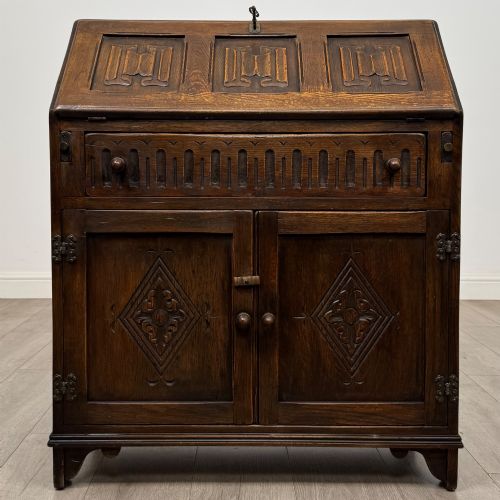
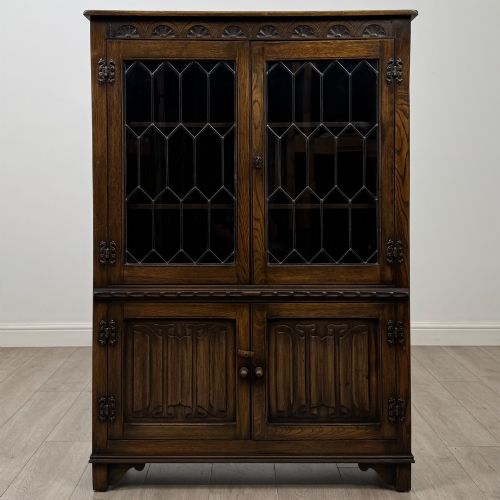
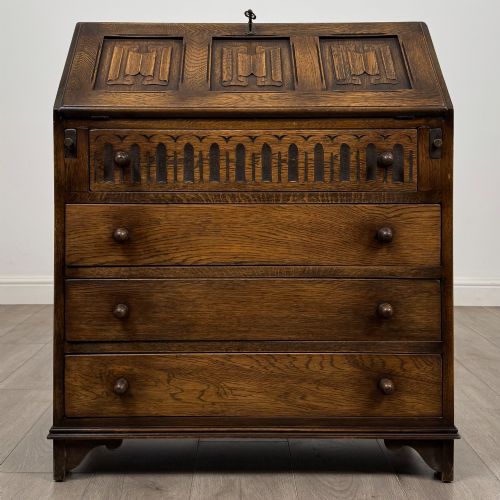
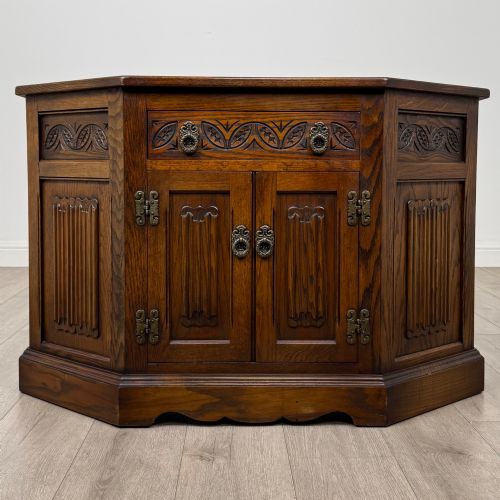
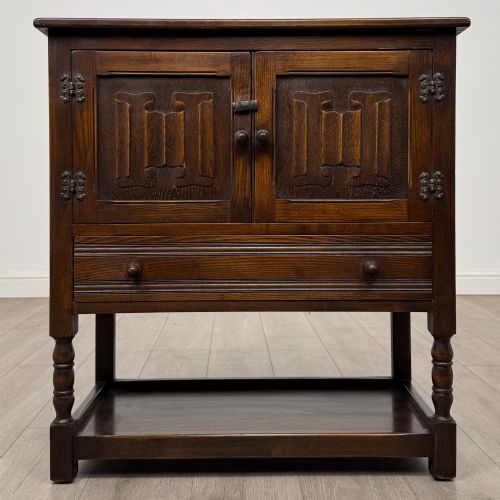
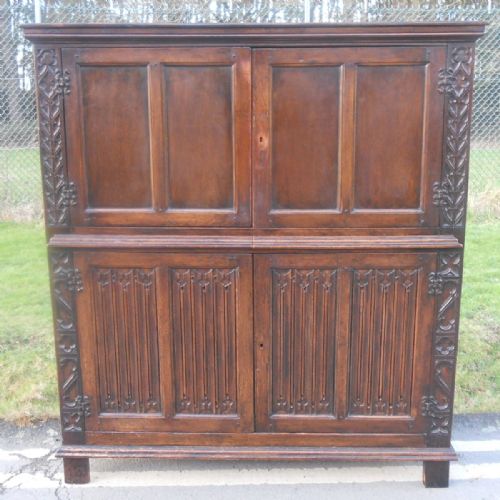
A linenfold oak cabinet is a storage piece defined by carved wooden panels that mimic folded cloth, echoing medieval church vestments and domestic panelling. When you search for a linenfold oak cabinet, you encounter formats ranging from Edwardian writing bureaus and display cabinets to Victorian cupboards and bedside units.
The material foundation across these pieces is predominantly oak, often paired with brass or iron hardware and occasionally glass or fabric elements. They appear in revivals spanning Tudor, Gothic, Renaissance and Arts and Crafts styles, reflecting later periods reinterpreting earlier aesthetics.
You will most commonly meet Edwardian examples and nineteenth-century interpretations on this page, alongside specific forms such as open bookcases, chests of drawers and carved panels. These storage items serve as practical furniture while carrying deep historical references through their carved surfaces.
Materials and construction
Makers built these pieces primarily from solid oak, sometimes utilising limed finishes or traditional joining techniques to construct heavy storage bodies. The timber provides a durable structural frame that takes deep, crisp carving across the door and panel surfaces.
Hardware elements incorporate brass, iron, and lead, fastening doors and drawers while adding functional contrast to the dark wood. Glass panels appear in display cabinets and bookcases, allowing visibility into shelved interiors alongside solid wooden cupboard doors.
Bedside cabinets hiding their linenfold panels behind small doors offer a quiet place to store your night-time reads.
Assessing quality and craftsmanship
The depth and precision of the carved linenfold panels determine the visual success of the piece, with sharper folds showing greater sculptural skill. Timber selection also dictates the standard, as dense grain and uniform colour separate superior cabinets from simpler constructions.
Structural integrity depends on the quality of the original joinery and the condition of the timber over time. Period hardware, original hinges, and intact glass contribute to the overall integrity of the piece.
The Linenfold Oak Cabinet Glossary
- Linenfold
- A style of relief carving on wooden panels resembling stiffly folded fabric. It became popular in late medieval architecture and was revived during the nineteenth and early twentieth centuries.
- Tudor Revival
- An architectural and decorative style popular in the nineteenth century that mimics sixteenth-century building traditions. It frequently incorporates dark oak timber, linenfold panels, and heavy hardware.
- Gothic Revival
- A design movement drawing inspiration from medieval forms, pointed arches, and ecclesiastical motifs. It appears in bookcases and cabinets through vertical emphasis and traceried panels.
- Writing Bureau
- A desk featuring a hinged sloping flap that opens to reveal a fitted interior of small drawers and pigeonholes. These often incorporate carved linenfold panels on the fall-front.
- Renaissance Revival
- A eclectic nineteenth-century style borrowing motifs from fifteenth and sixteenth-century European architecture. It uses heavy carving, symmetrical layouts, and architectural mouldings.
Linenfold Oak Cabinet: Frequently Asked Questions
What is a linenfold oak cabinet?
A linenfold oak cabinet is a storage unit featuring wooden panels carved to resemble folded cloth. These pieces draw on historical architectural motifs.
They appear primarily in revival styles from the nineteenth and early twentieth centuries, functioning as practical storage with decorative character.
How do I date an oak cabinet?
Dating relies on examining construction methods, hardware types, and stylistic indicators present in the woodwork. Edwardian and Victorian pieces show distinct manufacturing traits compared to earlier items.
Looking at the backboards, drawer construction, and joint types helps establish the period of manufacture.
Where were these cabinets used?
These cabinets served in domestic settings for storing books, linens, tableware, or writing materials. Bookcases and display cabinets occupied libraries and parlours.
Smaller bedside units and cupboards functioned in bedrooms and living spaces for everyday storage needs.
How do I care for antique oak?
Antique oak benefits from stable room temperatures away from direct heat sources and strong sunlight. Regular dusting with a dry, soft cloth preserves the timber surface.
Application of traditional wax polish occasionally helps nourish the wood and maintain its natural lustre without building up heavy residues.
What styles influence these cabinets?
The primary design influences include Tudor, Gothic, and Renaissance revivals, alongside Arts and Crafts ideals. These movements looked back to medieval and early modern craftsmanship.
Cabinetmakers adapted historic motifs like linenfold carving to suit Edwardian and Victorian domestic furniture forms.