


Gothic Corner Cupboard
A gothic corner cupboard brings architectural pointed arches and sturdy timbers straight into empty wall spaces.
Gothic Corner Cupboard
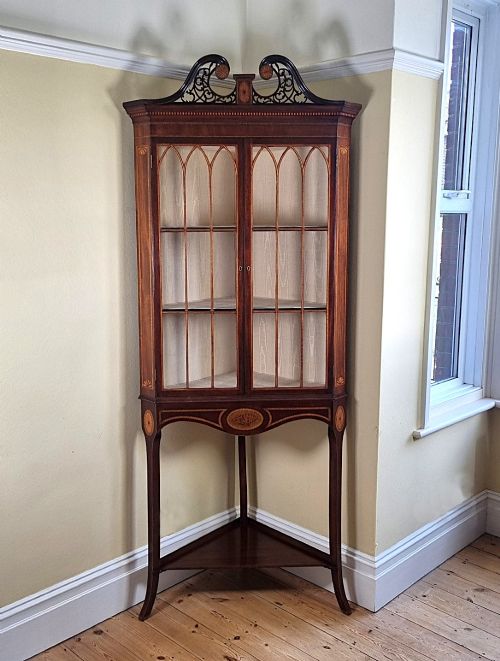
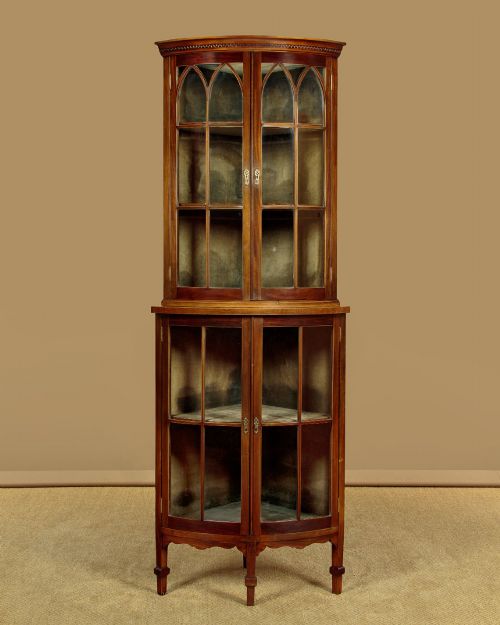
A gothic corner cupboard is a fitted or freestanding storage unit designed to slot neatly into room intersections while displaying distinct medieval architectural influences. These pieces emerge across Georgian, Victorian, and Edwardian periods, utilising the corner space effectively.
The versions most frequently met here span robust Victorian oak interpretations and earlier Georgian mahogany variants. They include both wall-mounted cabinets and larger cupboard formats standing on stands or floors.
How they were made
Cabinet makers constructed these cupboards using solid timbers like oak, mahogany, and elm, often joining panels with traditional framing techniques. Glass panels feature in display doors, while brass or iron hinges and hardware secure the heavy timber doors.
Surface decoration relies on deep hand-carving displaying gothic motifs, alongside occasional satinwood inlay or faux tortoiseshell paint treatments. These applied finishes highlight the structural lines and regional cabinet-making traditions of the period.
Some secretive Victorian cupboards hide small interior drawers behind heavy carved oak doors, perfect for misplacing house keys.
What varies in quality
Quality differences rest primarily in the crispness of the timber carving and the selection of figured wood grains. Superior examples display deeply chiselled tracery and well-balanced proportions that respect architectural rules.
The integrity of the original hardware, hinges, and glass panes alters the standing of a piece considerably. Finer cabinets show careful interior shelving and seamless alignment of doors within their frames.
The Gothic Corner Cupboard Glossary
- Tracery
- Openwork ornamentation resembling stonework patterns, often seen carved into the wooden doors of these cupboards. It defines the gothic aesthetic.
- Corner cabinet
- A storage piece specifically built with angled backs to fit snugly into the meeting point of two walls. This form maximises floor space.
- Bow front
- A convex, outwardly curved front facade common on later Edwardian and 19th century cabinets. It softens the strict angles of the room.
- Satinwood inlay
- Contrasting light timber inserted into a darker wood surface to create decorative borders. This technique adds subtle ornamentation.
Gothic Corner Cupboard: Frequently Asked Questions
How do I hang a wall cabinet?
Wall-mounted versions require secure fixing into solid masonry or proper wall studs to bear the substantial weight of old timber and glass.
Professional installation ensures the cabinet remains level and stable once loaded with contents.
Are these cupboards suitable for small rooms?
Their angled design allows them to utilise unused wall intersections without protruding heavily into living space.
Compact models fit well in hallways or corners where rectangular furniture would block movement.
How do I clean antique oak surfaces?
Dust regularly with a dry cloth and apply a quality beeswax periodically to nourish the dry timber.
Avoid modern liquid polishes that can build up sticky residues and dull the natural grain.
What is the difference between Georgian and Victorian styles?
Georgian pieces often utilise smoother mahogany finishes and refined proportions, reflecting classical influences.
Victorian iterations lean towards heavier carved oak with pronounced gothic revival motifs and darker patination.